
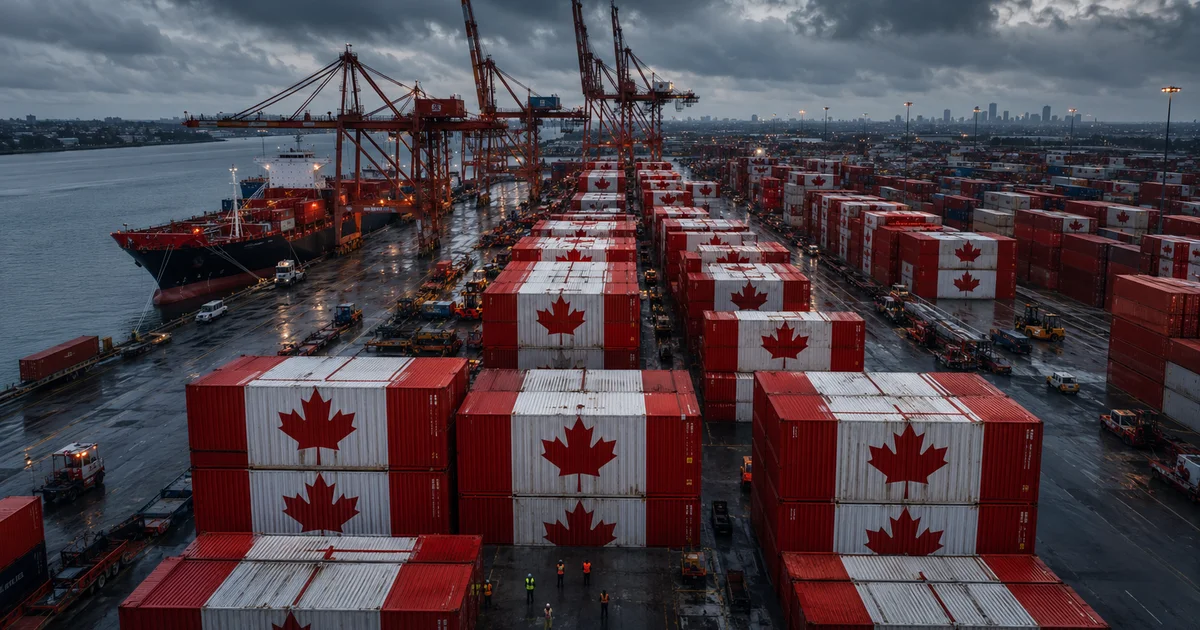
President Trump signed three proclamations Monday imposing 50% tariffs on a sweeping range of Canadian imports, from dairy and alcohol to automobiles and hockey sticks, declaring that Canada has “unfairly discriminated” against American products.
The move, which takes effect August 19, effectively shreds key protections of the United States-Mexico-Canada Agreement that Trump himself negotiated during his first term and raises the question nobody in the White House seems willing to answer: what exactly is the endgame?
What the Tariffs Actually Cover
The three proclamations, issued under Section 338 of the Tariff Act of 1930, each target a different category of Canadian goods. NPR reported that the tariffs cover products ranging from wine to cement, including goods that had previously entered the U.S. duty-free under the USMCA. The White House fact sheet frames the action as “leveling the playing field” for American cars, alcohol, and dairy exports that face Canadian restrictions.
The exemptions tell you as much as the tariffs themselves. Energy products, potash, fish, and critical minerals are excluded, which means the administration is perfectly willing to let strategic imports flow freely while taxing consumer goods that hit Canadian exporters where it hurts most. The message is not about trade balance. It is about leverage.
Canada’s Response and the USMCA Question
Canadian Prime Minister Mark Carney called the tariffs a “direct violation” of the USMCA and said Ottawa was “ready to intensify discussions” to resolve disputes with Washington. That diplomatic language understates the severity of what just happened. The USMCA was Trump’s signature trade achievement from his first term, the deal he used to replace NAFTA and campaign on as proof that he could renegotiate America’s way to better terms. Now he is unilaterally overriding it.
CNBC reported that the tariffs could add hundreds of dollars to the cost of a new vehicle for American buyers, since Canadian-made auto parts are deeply integrated into North American supply chains. A 50% tariff on finished vehicles and components does not just punish Canada. It punishes Detroit, because the Big Three automakers move parts across the border multiple times during assembly.
Who Actually Pays
This is the part the White House never explains clearly. Tariffs are not paid by the exporting country. They are paid by American importers, who pass the cost to American consumers. A 50% tariff on Canadian dairy means higher cheese prices at the grocery store. A 50% tariff on Canadian alcohol means a more expensive bottle of wine at a moment when household budgets are already stretched by $4-a-gallon gas.
The dairy tariff is particularly loaded. Canada’s dairy supply management system has been a sore point in trade negotiations for decades. American dairy producers want access to the Canadian market, and Canadian producers argue that supply management protects family farms from being undercut by larger U.S. operations. The tariff does not open the Canadian market to American dairy. It just makes Canadian dairy more expensive for Americans who buy it, which in practice is a relatively small volume. The symbolic politics outweigh the economic impact.
The Why: Section 338 Is Not About Trade, It Is About Presidential Power
The use of Section 338 is the tell. This obscure provision of the 1930 Tariff Act gives the president unilateral authority to impose tariffs when a foreign country is found to be discriminating against American commerce. It does not require congressional approval, it does not require a finding from the International Trade Commission, and it does not have a built-in sunset clause. It is, in effect, a blank check for executive action on trade.
Axios reported that this is the first time Section 338 has been used this aggressively since the statute was enacted nearly a century ago. The administration is not just picking a trade fight with Canada. It is establishing a precedent that the president can override existing trade agreements at will, without legislative input, by invoking a Depression-era statute that most trade lawyers considered dormant.
What Comes Next
The August 19 effective date gives both sides 30 days to negotiate, but the history of Trump-era tariff threats suggests that the administration views the tariff as the opening position, not the fallback. Canada’s retaliatory options are limited. The country runs a trade deficit with the U.S. in goods, and its economy is far more dependent on American demand than vice versa.
For American consumers, the practical impact depends on which products they buy and how quickly importers adjust their supply chains. For the broader trading system, the damage is already done. The USMCA was supposed to be the stable framework that gave businesses on both sides of the border the certainty they needed to invest. That certainty just evaporated.