
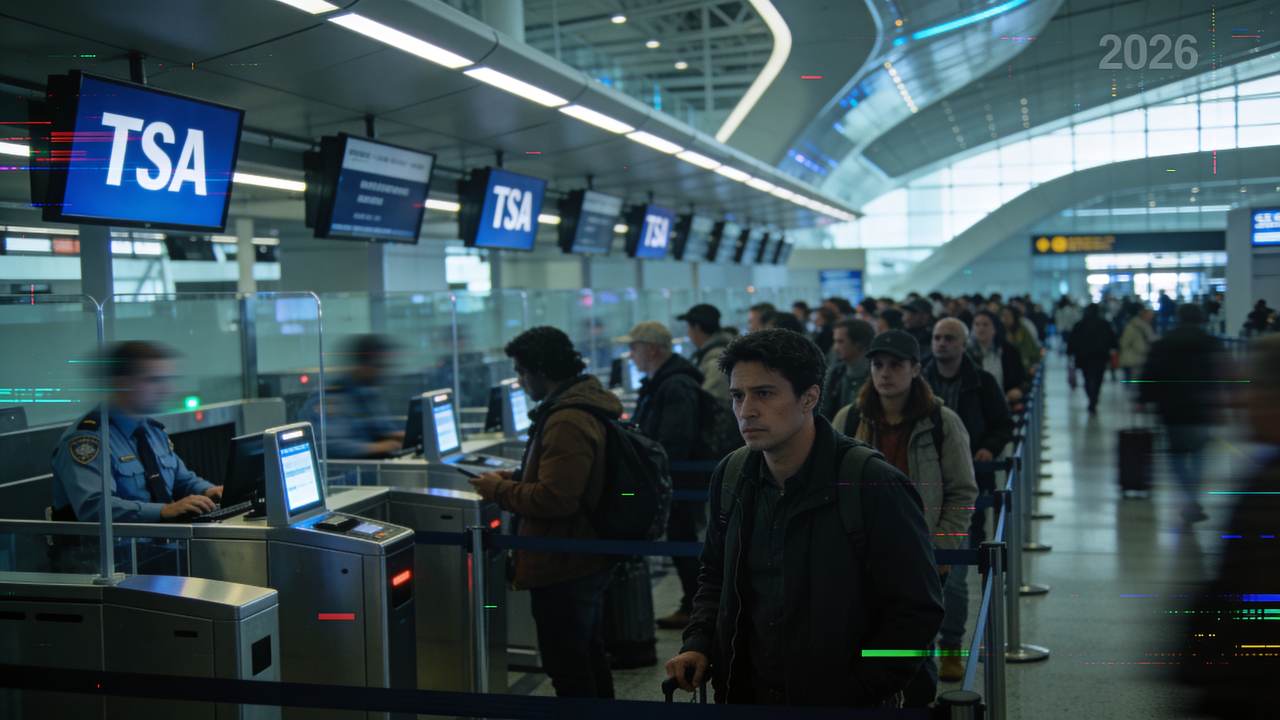
On Sunday, March 15, the nation’s airport security systems reached a breaking point. The Transportation Security Administration reported a 10.19% callout rate among its roughly 50,000 officers, the highest figure since the government funding lapse began on February 14.
At Houston’s Hobby Airport, the situation was even starker: 55% of the TSA workforce didn’t show up on Saturday. These aren’t abstract percentages. They’re the scaffolding of total system failure, and they tell us something uncomfortable about what happens when we ask people to work without pay while Congress bickers.
The 2026 government shutdown has become a referendum on whether federal employees are actually essential, or just disposable. For TSA officers, the answer has been clarified in the most brutal way possible: they’re essential when it serves political purposes, and expendable when it doesn’t.
When Workers Choose Dignity Over Paycheck
The raw numbers reveal a workforce in open rebellion. Between February 14 and March 9, 305 TSA employees separated from federal service entirely. They quit. Not because they hated the job, but because the job stopped respecting them enough to pay them. The pre-shutdown callout rate hovered around 2%. Now it’s averaging 6%, with regular spikes to double digits. This isn’t a technical problem or a scheduling quirk. This is human judgment being rendered in real time: the job isn’t worth it at any price.
Consider what the callout rate actually means. When 10% of your security workforce doesn’t show, you don’t have 90% capacity. You have something closer to 60% or 70% capacity, because the remaining officers are running the equipment, managing the queues, and trying to prevent catastrophic lapses in security all at once. They’re operating at maximum stress in an environment designed for distributed load. One TSA officer at Houston described waiting lines that extended so far that passengers were told to arrive four to five hours before their flights. Another traveler in New Orleans reported spending four hours just getting through TSA to reach the actual security checkpoint. At that point, you’re not screening passengers for threats. You’re creating them.
Houston Hobby emerged as the epicenter of the crisis. On March 8, it recorded 53% absence. On March 9, 47%. On March 14, it hit 55%. The airport wasn’t exceptional in its dysfunction, though. JFK averaged 21% absence, Atlanta 19%, New Orleans 14%, Pittsburgh 13%. These weren’t isolated incidents. They were the daily reality across America’s busiest transit hubs.
The Morale Mathematics Of Coercion
What makes this shutdown different from previous ones is context. In 2025, the TSA endured another shutdown. When it ended, nearly 1,100 security officers resigned. They’d had enough. Some took jobs in the private sector, some retired early, some simply decided they didn’t want to work for an employer that would demand their labor without compensation. Those resignations took months to recover from, through a replacement training pipeline that requires four to six months per officer.
Now, in March 2026, the government has shut down again. For the third time in nearly six months, according to DHS spokespeople. The message couldn’t be clearer to TSA workers: we’ll burn you out, make you redundant, burn you again, and expect you to show gratitude. It’s a recipe for institutional collapse, and it’s working exactly as you’d expect it to.
John Pistole, who ran the TSA during the last major security threat, called the situation “a huge morale hit.” He understood something crucial: when foreign adversaries watched American airport security crumble because Congress couldn’t fund the government, they didn’t see stability. They saw vulnerability. They saw an institution under strain, staffed by people who were actively leaving. A security apparatus optimized for chaos is a security apparatus waiting to fail.
Spring Break Hasn’t Even Arrived
The timeline makes the situation especially precarious. Spring break travels haven’t peaked yet. Easter week is coming. The TSA knows from years of operational data exactly when the system will face its maximum load. They also know they’ll face it with a depleted workforce, no new training pipeline flowing, and officers who are actively traumatized from unpaid labor. The 4,000 flight cancellations recorded on Monday, compounded by severe weather, hint at what’s coming.
The Democrats offered a straightforward solution: fund the TSA separately from the broader shutdown. Let the agency pay its people and function. Senate Republicans blocked it. The politics here matter less than the mechanics. When an institution can’t keep the lights on because funding is hostage to broader political disputes, you’re not running a government. You’re running a hostage negotiation.
The Incompetence Of Leverage
What makes this particularly infuriating is that it’s entirely preventable. The TSA doesn’t need policy innovation or structural reform to function. It needs money. It needs Congress to say, “We will fund airport security because Americans need to be able to fly safely.” Instead, it’s being used as a bargaining chip in a larger game that has nothing to do with airport security.
The replacement training pipeline will take months to refill. The officers who quit won’t come back. The ones still showing up are operating under the knowledge that they’ve been betrayed once, twice, and now a third time in rapid succession. That’s not a work environment. That’s psychological warfare by an institution against itself.
When 55% of your security staff doesn’t show up on a given day, you’re not facing a staffing problem. You’re facing a legitimacy crisis. The government has lost the basic ability to command respect or loyalty from its own workforce, not through malice but through incompetence and indifference. That’s the real security threat, and no amount of metal detectors can solve it.
The airports will muddle through. Airlines will adjust. Some flights will be cancelled, some passengers will miss connections, travel will become more complicated and expensive. But the deeper damage is already done. The TSA workforce has learned that their labor is only valuable when convenient and utterly disposable otherwise. That’s a lesson institutions don’t recover from quickly, if they recover at all.