
Last week the European Society of Cardiology published a finding that people with the most xylitol in their blood had a 57 percent higher rate of heart attacks, strokes and cardiovascular death than people with the least. Within about a day the story had been rewritten across the American health press as advice about your chewing gum.
Those are not the same claim, and the distance between them is the whole story. The study measured a molecule circulating in people’s blood. It did not measure what any of those people ate, chewed or brushed with. The ESC’s own press release says as much, noting that the work does not establish whether dietary xylitol intake produces the blood levels it observed. Nearly every consumer writeup dropped that sentence and kept the 57.
Blood Is Not a Diet Diary
The research, led by Dr. Marco Witkowski of Charité University Hospital in Berlin and presented at ESC Congress 2026 in Munich on August 26, pooled 17,710 people from two long-running observational cohorts. In the Canadian Longitudinal Study on Aging, followed six years, the top quartile of blood xylitol carried that 57 percent higher risk of major adverse cardiovascular events after adjustment for age, sex, smoking, diabetes, hypertension and lipids. In EPIC-Norfolk, followed thirty years, the same comparison produced 18 percent. Both showed a dose response.
That is a real, carefully constructed finding, and Witkowski described it carefully. His stated conclusion was that the results “highlight how little we know about the cardiovascular safety of xylitol.” Professor Dan Atar, discussing the work at the congress, added the standard and correct caution that with observational studies, causalities are difficult to infer.
Here is what neither of them said, and what CBS News, Newsweek and NBC’s Chicago station variously implied by leading readers straight to gum, toothpaste and sugar-free candy: that the people with high blood xylitol got it from eating xylitol.
Your body makes xylitol. It is a byproduct of glucose metabolism, and the machinery that produces it, the polyol pathway, runs much harder when blood sugar runs high. Under hyperglycemic conditions, as much as a third of the glucose inside a cell can be shunted down that route. So a high circulating polyol level is exactly what you would expect to find in someone whose glucose handling is deteriorating, whether or not that person has ever touched a sugar-free mint.
The study adjusted for a diabetes diagnosis. A diagnosis is a threshold, not a measurement. Metabolic dysfunction is a continuum that people travel for years before anyone writes it in a chart, and adjusting for the label does not adjust for the state.
The Samples Predate the Product
Now the detail that should have appeared in every one of these articles and appeared in none of them.
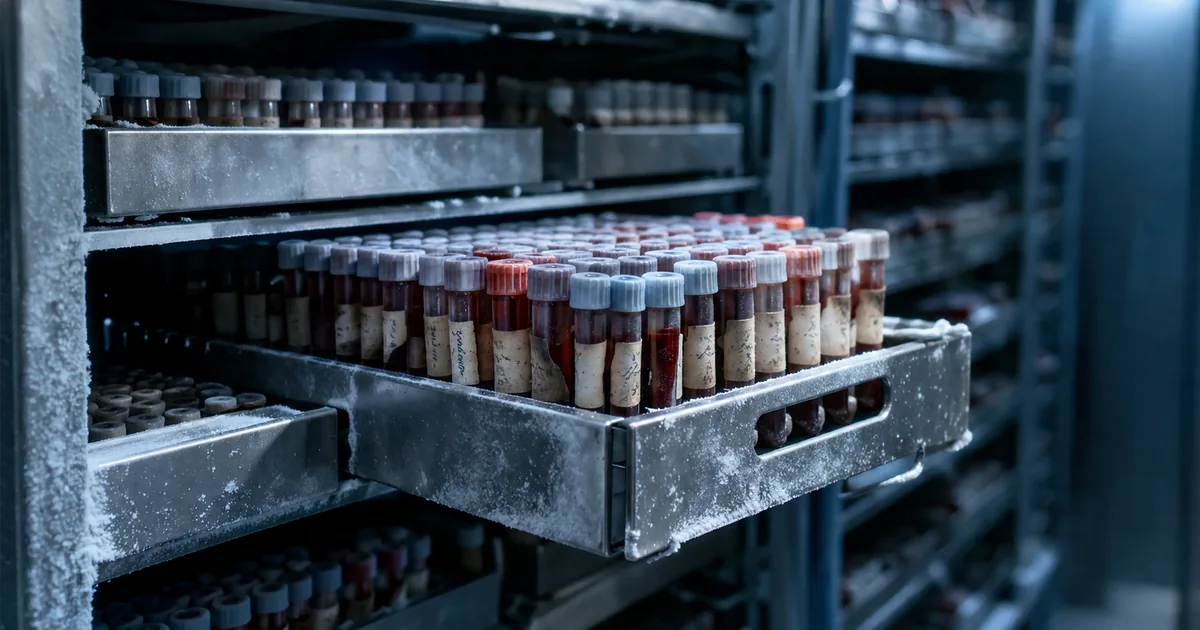
EPIC-Norfolk, the cohort supplying the thirty-year arm, recruited its participants between 1993 and 1998. More than 30,000 Norfolk residents aged 40 to 79 gave blood at a baseline health check that was then banked for future analysis. The xylitol measurements in this study come from those banked samples.
Think about the timeline. Those vials were filled in Norfolk in the mid-1990s. The mass-market moment for xylitol as a consumer sweetener, the keto products, the “natural sugar alcohol” positioning, the wall of sugar-free gum, arrived in the years and decades after. Whatever was elevated in a 1995 blood draw from a British 60-year-old, it was almost certainly not the sweetener boom that had not happened yet.
That does not make the 18 percent meaningless. It makes it a finding about a metabolic marker, which is a genuinely interesting thing to have found. It is simply not a finding about anybody’s shopping habits, and it cannot be converted into one.
Worth holding onto:
- The study measured xylitol concentration in blood, not xylitol consumption.
- The 57 percent figure comes from the six-year Canadian cohort. The thirty-year British cohort produced 18 percent.
- Neither cohort was designed to study sweeteners, and the older one was recruited before xylitol was widely sold as one.
- This was a conference presentation. It has not yet cleared peer review.
There Is Real Evidence on Xylitol, and This Study Is Not It
None of the above means xylitol has been cleared, and pretending otherwise would be its own kind of dishonesty.
Witkowski has been working this problem for years alongside Stanley Hazen at the Cleveland Clinic, and their 2024 paper in the European Heart Journal is a much stronger piece of evidence than the one making headlines now. That work went past association. It showed xylitol increasing platelet reactivity in human blood in the laboratory, showed it accelerating clot formation in a mouse arterial injury model, and, critically, ran a human intervention study in which volunteers ate a typical dietary quantity of xylitol in a sweetened food and had measurable increases in platelet responsiveness afterward. The same group’s 2023 Nature Medicine work found a comparable pattern for erythritol.
That is the actual case for caution about sweetener intake, and it is a serious one. It is mechanistic, it includes a controlled feeding experiment, and it was peer reviewed.
So the irritating thing about the last week is that the press had a legitimate story available and reached for a weaker one, because the weaker one had a bigger number attached. A 57 percent risk increase from a biomarker association makes a better headline than “controlled feeding study finds platelet changes,” even though the second sentence is the one that actually implicates the product on the shelf.
What to Do With Your Gum
Our position, plainly: the researchers behaved well here and the coverage did not, and the cost of that is not zero.
Every cycle like this one spends down a little more of the public’s willingness to take nutrition science seriously. A reader who throws out their gum this week because of a 57 percent figure, then reads next year that the study could not distinguish diet from metabolism, does not become better calibrated. They become someone who ignores the next warning, including the ones that are well founded. Health desks that flatten “we found a marker” into “stop eating this” are not being cautious on the reader’s behalf. They are borrowing credibility they will have to pay back.
If you want a defensible response to the last week, it is not about the gum. High circulating polyols may be telling you something about how your body is handling glucose, which is a conversation to have with a doctor who can order an A1C, not a reason to audit your bathroom cabinet. And if you are eating xylitol in quantity, in keto baking or sweetened drinks rather than a stick of gum, the 2024 intervention data is a reasonable basis for moderating that, entirely independent of anything announced in Munich.
The next version of this study, the one that measures what people actually consume alongside what is in their blood, is the one worth waiting for. Until somebody runs it, the honest headline was always going to be less exciting than the one that ran.