
Michigan health officials reported two deaths in the state’s cyclosporiasis outbreak on Monday, the first fatalities in a run of illness that has now reached 11,234 confirmed cases.
The parasite is not really the story here, because the state itself calls death from cyclosporiasis uncommon, and what actually failed is the machinery built to find contaminated food quickly.
What the State Actually Said About the Two Deaths
The Michigan Department of Health and Human Services chose its words carefully, and the care is worth reading closely. Both people who died had significant underlying health conditions that, as the department put it, “may have been impacted by cyclosporiasis and dehydration.” No names, no ages, no counties, and the state said it would release nothing further about the two cases. MDHHS is not claiming a parasite killed two otherwise healthy adults, and nobody should read it that way.
The hedge cuts in both directions, though. Dehydration is precisely how a gastrointestinal infection kills someone who is already fragile, and it is among the most preventable causes of death in medicine, provided somebody catches it early. Cyclosporiasis is confirmed with a stool test that most labs do not run by default. A physician has to order it specifically, and physicians order it when they know an outbreak is underway. Every week the source of an outbreak stays unconfirmed is a week that diagnostic suspicion stays low, in exactly the emergency rooms where the fragile patients turn up.
Eleven Thousand Cases and a Six Week Head Start
The scale is genuinely unusual. ClickOnDetroit reported that the outbreak began on June 22 and climbed from 10,773 cases on July 31 to 11,234 by Monday, an increase of 461 in three days. FOX 2 Detroit put the hospitalization count at 193 as of the state’s Monday morning update. It is the largest outbreak of its kind in Michigan’s history and one of the largest in the country in years.
Set that against where this stood three weeks ago. When the case cluster first spread across Michigan and Ohio, the count was around 1,400. It has grown roughly eightfold since. That curve is not a story about a nastier parasite. Cyclospora cayetanensis has not changed. It is a story about a contaminated product sitting in the supply chain, and in people’s lunches, while the investigation ran.
The Traceback Converged, Then Came Apart
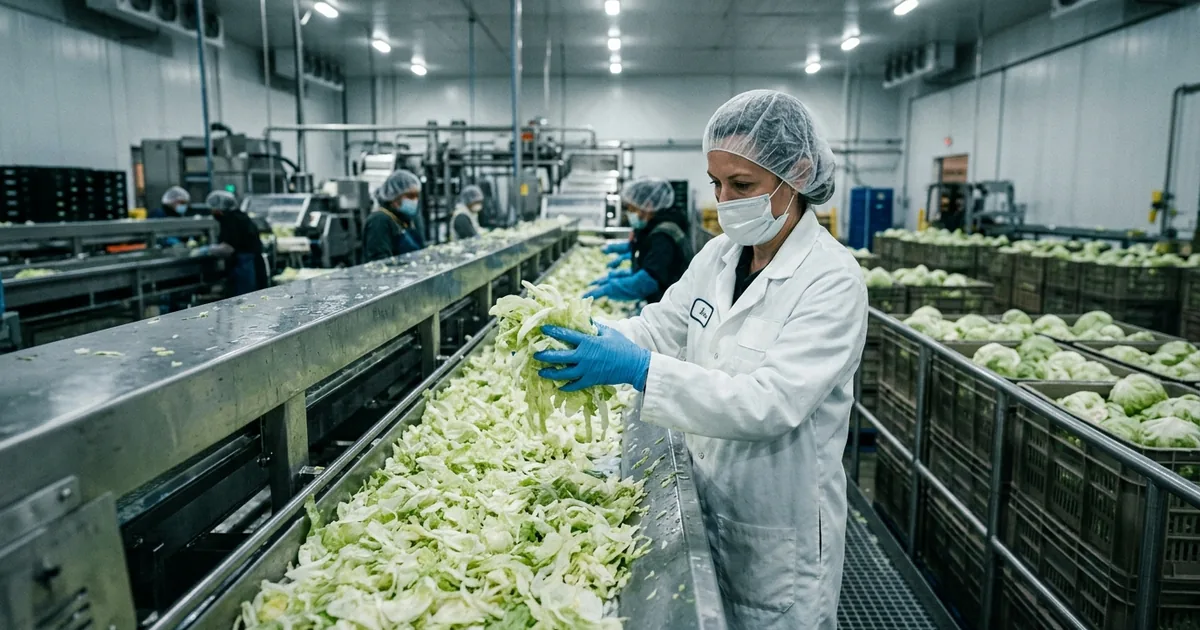
Here is the sequence that matters. The CDC eventually tied the illnesses to shredded iceberg lettuce served at Taco Bell locations, and WWMT reported that the FDA’s traceback found convergence on a single supplier of iceberg lettuce from Mexico serving the restaurants where sick people had eaten. Ninety percent of interviewed patients reported eating iceberg lettuce. The affected locations sat across five states: Indiana, Kentucky, Michigan, Ohio and West Virginia. Iceberg lettuce sold in grocery stores and at other restaurants was not implicated.
Then the confirmation slipped. The positive sample that briefly appeared to pin the contamination on Taylor Farms de Mexico was reclassified as a false positive, leaving the supplier unconfirmed as the source even as Taylor Farms voluntarily recalled all of its iceberg lettuce anyway. The company noted that the independent Mexican farm in question accounts for less than one percent of the American iceberg supply.
Read that last detail again, because it is the whole problem in one line. Less than one percent of the national iceberg supply produced an outbreak of more than eleven thousand cases, and the system still took six weeks to get within arm’s reach of it. A supply chain where a rounding error of the total volume can sicken a stadium’s worth of people is a supply chain where speed of identification is the only real safety control. Everything else is cleanup.
The Rule Built to Stop Exactly This Is Parked Until 2028
The FDA already has the tool for this. The food traceability rule requires companies to keep the granular lot-level records that let investigators walk a contaminated product back to a specific farm in days rather than weeks. Its compliance deadline was pushed out to 2028, which means the recordkeeping that would have shortened this investigation was not in force while this investigation was happening. That is not a hypothetical cost. It is a six week gap with a case curve running through it.
It compounds with the erosion on the detection side. Cyclospora surveillance depends on labs, epidemiologists and interviewers who actually call patients and ask what they ate, and that capacity has been thinned by CDC cuts running alongside this outbreak and several others. Detection and traceback are the same system viewed from two ends. Weaken both and you do not get a slightly slower response, you get an outbreak that runs to its natural conclusion and stops when the growing season does.
The litigation is already moving faster than the regulation. Attorney Ron Simon has filed the first lawsuit against Taco Bell and Taylor Farms, which is how food safety accountability tends to arrive in the United States: after the fact, through the courts, priced as damages rather than prevented as policy.
August Is the Part That Matters Now
The CDC expects cases to keep climbing through August, when the typical Cyclospora season ends. That forecast is doing something uncomfortable if you sit with it, because it describes an outbreak expected to resolve on a seasonal schedule rather than an enforcement one. The parasite will run out of summer before the regulatory system runs out of delay.
Two families now have a death certificate that names underlying conditions and a parasite nobody in their household could have identified from a menu. The open question for Michigan is not whether the lettuce is gone, because it is. It is whether the next contaminated lot gets traced in days, or whether 2028 is still the answer.