
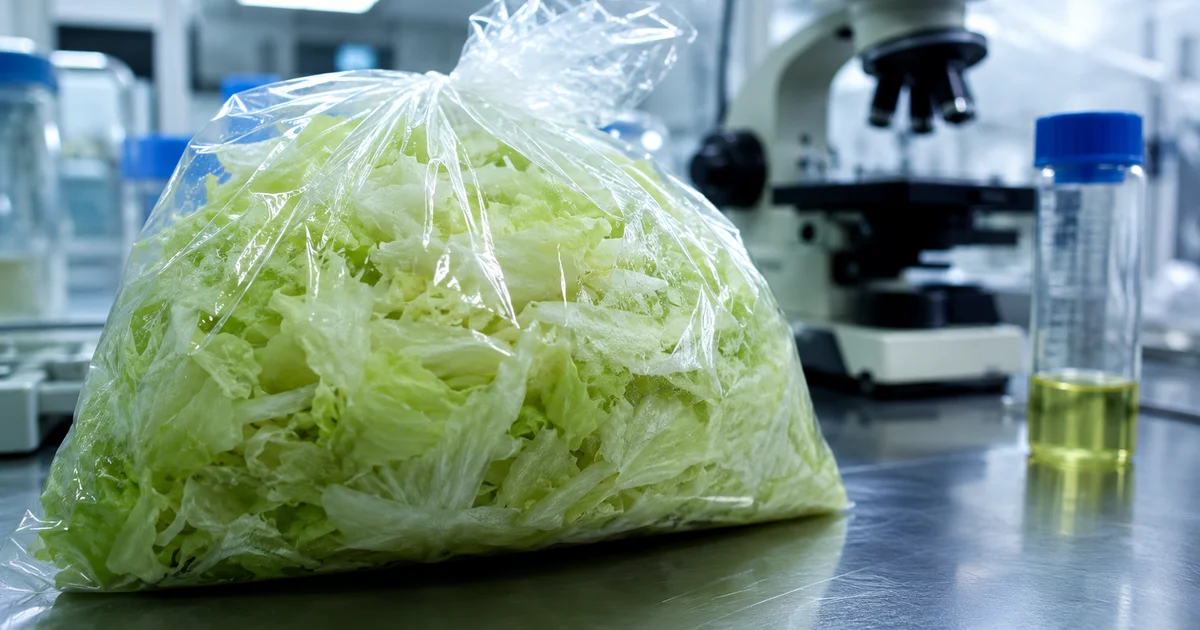
The agency spent Saturday telling the public its lab had found the parasite in shredded iceberg lettuce from a major Taco Bell supplier.
By Sunday night, it was walking the whole thing back.
Late Sunday, the FDA admitted that a sample of shredded iceberg lettuce from Taylor Farms de Mexico, which had tested positive for Cyclospora the day before, was not actually positive at all. The agency’s own laboratory experts “re-reviewed the sample results” and concluded that the finding “does not represent true amplification and should be considered a false positive.” In other words: the test was wrong. As of July 19, the FDA says there are no confirmed positive product test results for Cyclospora in this investigation. None.
Taylor Farms was blunter about it. “Today, we were informed that FDA made a mistake, and this was a false positive,” the company said in a statement Sunday night. “FDA apologized to us.”
What Happened Here
The timeline matters, because it illustrates exactly how quickly things can go sideways when a regulatory agency is under pressure.
A multistate Cyclospora outbreak has been building for weeks. Michigan alone has reported over 5,000 cases of cyclosporiasis, with at least 102 people hospitalized, according to state health officials. The CDC has tracked cases in 34 states. This is a serious, sprawling illness event: Cyclospora is a microscopic parasite spread through contaminated food or water that causes prolonged, miserable gastrointestinal illness, sometimes lasting weeks without treatment.
Taylor Farms, one of the largest fresh produce companies in the country and a supplier to Taco Bell and major grocery retailers, had already initiated a voluntary recall of iceberg lettuce sourced from central Mexico on Friday. That recall covered product distributed between June 29 and July 16 across 27 states. The company says all its other products, including all Taylor Farms-branded retail products, are not affected.
Then on Saturday, the FDA escalated: it announced that a separate sample of shredded iceberg lettuce from Taylor Farms de Mexico had tested positive for Cyclospora during what the agency described as “targeted import surveillance.” That sample was not even part of the existing recall. The implication was significant: here was potential lab confirmation linking the product to the outbreak.
By Sunday, that finding evaporated.
A Lab Error During an Active Outbreak
This is not a procedural footnote. The FDA’s credibility during a foodborne illness outbreak depends almost entirely on its ability to accurately test products and trace the source of contamination. When the agency announces a positive test result and then retracts it within 24 hours, the consequences ripple outward.
For consumers, the message is scrambled. Should the recall still stand? (Yes, it does, even without a confirmed positive test.) Is Taylor Farms lettuce safe now? (The investigation is ongoing; nobody knows where the outbreak originated.) Is this the agency that’s supposed to catch these things before they make thousands of people sick? (Yes, and it just admitted it got a critical result wrong.)
The FDA’s own explanation gestures at the difficulty of detecting Cyclospora, as CNBC reported Sunday. The parasite is notoriously hard to identify using standard testing methods. PCR-based detection can produce false positives, particularly when sample quality is variable or when the lab is under pressure to produce results quickly. None of that is a secret in food safety circles. Which raises the obvious question: why announce a positive result publicly before that re-review had happened?
What the Recall Status Actually Means Right Now
Despite the false positive, Taylor Farms’ voluntary recall of iceberg lettuce from central Mexico remains in effect. The FDA says it is “continuing to work with the firm to ensure product implicated in this outbreak has been removed from the market.” That’s carefully worded: the FDA is not saying Taylor Farms is confirmed as the outbreak source. It’s saying that because the epidemiological evidence pointed toward iceberg lettuce, and because Taylor Farms was already the subject of investigation, the precautionary recall stays in place.
There is a real distinction there, and it matters. Epidemiological evidence (who got sick, what they ate, where they ate it) is different from microbiological evidence (finding the parasite in the actual product). Right now, investigators have the former but not the latter.
Cyclospora outbreaks linked to fresh produce are notoriously difficult to trace because the parasite degrades quickly in samples and contamination is often uneven across a batch. A negative product test does not mean the product was clean. It means the specific sample tested was clean, or that the test didn’t work.
So the investigation continues, the recall stands, and the source remains unconfirmed. NewsNation reported Sunday that federal and state officials are continuing to collect and analyze samples.
What Consumers Should Know
If you have Taylor Farms iceberg lettuce from central Mexico purchased between late June and mid-July, the guidance hasn’t changed: don’t eat it. Check the FDA’s recall page for lot codes and use-by dates. The company’s other products, including bagged salads and other lettuce varieties, are not part of the recall.
Cyclospora symptoms typically show up one to two weeks after exposure. They include watery diarrhea, cramping, nausea, fatigue, and weight loss. The illness can drag on for weeks without treatment, but it responds well to the antibiotic combination trimethoprim-sulfamethoxazole. If you’ve had these symptoms and ate salad or fresh produce in recent weeks, it is worth talking to a doctor, specifically requesting a Cyclospora test, since many standard stool panels don’t test for it by default.
The Bigger Picture
The false positive is embarrassing for the FDA, but the deeper issue is structural. Food safety testing in the United States relies heavily on a system where the agency tests samples after people are already sick. By the time a product tests positive, the contaminated food has often already moved through the supply chain, been served at restaurants, and consumed. The Taylor Farms recall covered product distributed over nearly three weeks. Thousands of people may have eaten it before a single test was run.
The agency’s ability to quickly and accurately identify contaminated product is one of the few mechanisms that can stop an active outbreak. A high-profile false positive, retracted within 24 hours, does not inspire confidence in that mechanism. It doesn’t mean the FDA is incompetent across the board. But when the stakes are highest, the system produced a wrong answer.
That’s worth sitting with, even as investigators keep looking for the right one.