
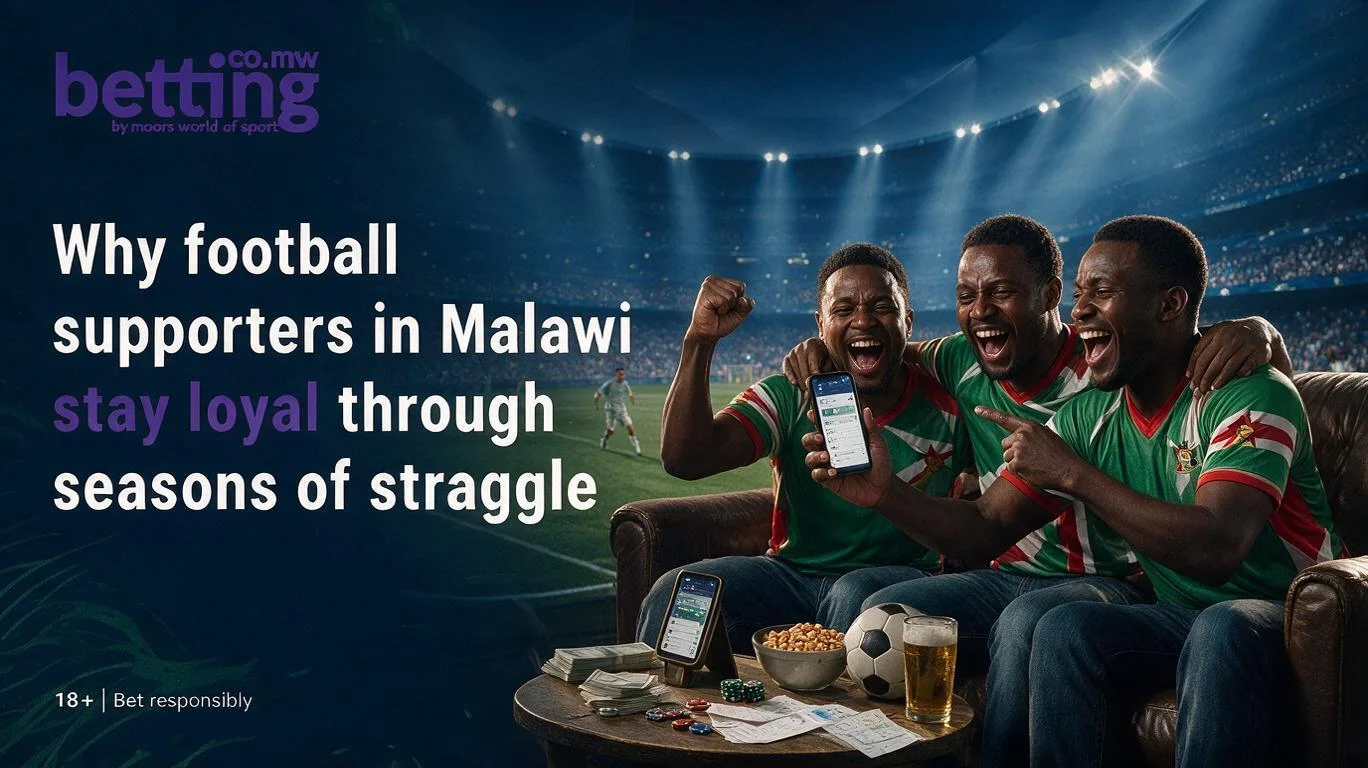
Every weekend across Malawi, thousands gather in bottle stores, community centres and living rooms to watch football. They arrive wearing their colours, already debating team selections and refereeing decisions from matches that have not yet kicked off. The rituals are familiar. The passion rarely dims, even when results disappoint.
What keeps supporters coming back when their team goes through a difficult run? Why do fans defend players who have not been scoring, or managers whose tactics seem baffling? Football loyalty operates on a logic that makes little sense to outsiders but feels entirely natural to those inside it.
The burden of family tradition
For many Malawian supporters, team allegiance was never a choice. A father who followed a particular club raised children in those colours. A grandmother who cheered for a local team passed that connection down through generations. Switching sides would feel like betraying family history.
This inheritance creates a bond stronger than performance. When a team endures a difficult season or loses an important match, the pain is shared across households. The next season begins with cautious hope, not because logic suggests improvement but because walking away is unthinkable.
Children absorb this loyalty before they understand league tables or transfer windows. They learn songs, recognise badges, and memorise player names. By the time they can articulate why they support a particular side, the decision has already been made for them.
The community that forms around struggle
Suffering together builds connection. A supporter base that celebrates only victories remains shallow. The real bonds form during losing streaks, disappointing defeats, and moments that go the wrong way.
In Malawi, football creates communities that extend beyond the ninety minutes. Supporters meet at the same viewing spots week after week, recognising familiar faces and sharing frustrations. These gatherings become social anchors. Missing a match means missing conversations that will be referenced for months.
When a team finally wins after a drought, the relief is collective. Strangers embrace. Messages fly across group chats. The joy feels earned because everyone remembers the difficult stretch that preceded it.
Hope resets faster than memory
Football supporters possess a remarkable ability to forget recent pain and imagine better days ahead. A new signing, a managerial change, or even a promising friendly can reignite optimism. The slate feels clean, at least until the opening whistle of the next competitive match.
This cyclical hope is not naive. Supporters understand that most seasons will not end in silverware. Most matches will not produce brilliant performances. Yet the possibility of something special happening this time remains psychologically real.
Platforms that serve football fans recognise this rhythm. Whether following local leagues or international competitions, supporters engage most when they believe a turnaround is possible. Those who Bet with Moors on their favourite teams understand that loyalty and probability do not always align, but the emotional stake remains.
The opponent as necessary villain
Supporting a team means embracing rivalries. The club from the next district, the side that won a controversial match in the past, or simply the team that seems to attract fortune becomes a focal point for frustration.
These rivalries give structure to the season. Derby matches carry weight beyond league points. A supporter whose team finishes mid-table can salvage the campaign by winning against the local rival. The opponent’s failures bring almost as much satisfaction as their own team’s success.
In Malawi, where football conversation dominates public transport and market stalls, knowing your rival’s weaknesses and recent disappointments is social currency. These arguments are rarely bitter. They serve as entertainment, a way to process disappointment and assert identity.
Identity built on imperfect foundations
Football clubs are not rational choices. They underperform, disappoint, and frustrate. They make signings that baffle and part ways with managers who seemed promising. Yet supporters remain because the team has become part of how they understand themselves.
Asking someone to abandon their club after a bad season is like asking them to change their accent or forget their childhood neighbourhood. The identity is embedded too deeply. Even when results are poor and hope is scarce, showing up feels important.
The rituals continue. The colours get worn. The debates rage on after matches. Supporters across Malawi find ways to follow their teams and engage with the matches that matter to them. Week after week, the cycle continues. Fans gather, watch, debate, and return. They wear their colours with pride regardless of league position. They defend their choices even when those choices seem to defy logic. Football loyalty, at its core, is not about rational calculation. It is about belonging to something that feels like home.
18+ only. Betting is for adults aged eighteen and over and should be done responsibly.