
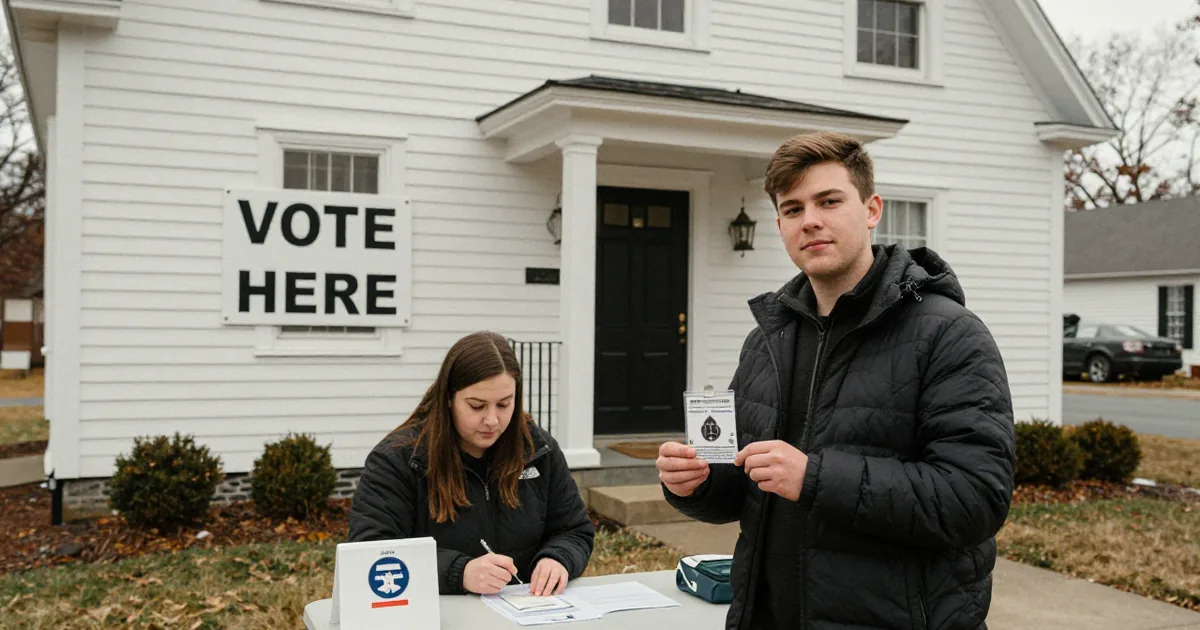
“This Court has repeatedly emphasized that lower federal courts should ordinarily not alter the election rules on the eve of an election.” That is the Supreme Court’s reasoning, as Democracy Docket quotes the unsigned order, for letting New Hampshire tell its election officials on Thursday that they may not weigh a student ID as evidence of who a voter is. The fight is narrower than the “students can’t vote” version going around, and the narrowness is the story: the justices did not rule on New Hampshire’s voter ID law, and they did not say a student cannot vote. They paused two federal court orders, and the effect is to restore a blanket instruction from the Secretary of State that a federal judge had found the state could not justify.
What the Court Actually Did
On the docket for No. 26A512, the Court granted the state’s application and stayed the District of New Hampshire’s October 2 and October 5 orders granting preliminary injunctive relief. The stay lasts pending the appeal in the First Circuit and any petition for certiorari, so it does not expire on Election Day. Justice Ketanji Brown Jackson dissented. No other dissent is noted, and the order carries no vote count.
The calendar is the part nobody has put on one line. The state filed its application on October 15. The Republican National Committee filed an amicus brief the next day. The student-voting coalition answered on October 19, the state replied on October 20, and the Court ruled on October 22. That is seven days from filing to ruling. Election Day is November 3, so the Court acted 12 days out. The judge it overruled acted on October 2, which was 32 days out.
Put those numbers next to the principle the order invokes. The “eve of an election” the majority wants lower courts to respect was 32 days away when the district judge acted, and the Court’s own stay arrived at 12. For the 20 days in between, New Hampshire’s clerks and poll workers were working under the judge’s order. Thursday’s ruling flips their instructions again with less than two weeks left.
What the Fight Was Over
New Hampshire’s voter ID law, House Bill 323, was signed by Governor Kelly Ayotte in April and took effect June 2. It requires government-issued photo identification, such as a driver’s license or a passport, and it dropped student IDs from the accepted list. Federal Judge Joseph Laplante left that law standing. A student with a license or a passport is untouched by any of this.
The law also has a safety valve: a voter who lacks a listed ID can establish identity with any other evidence that reasonably shows it is more likely than not that they are who they say they are. Secretary of State David Scanlan then told election officials that a student ID could not count even as that kind of evidence, whether the voter was registering, requesting an absentee ballot or checking in at the polls. Laplante ruled that Scanlan had gone too far, writing that the state “has offered no independent justification for that broader prohibition.” His order suspended the guidance, and under it, officials were free to look at a student ID and decide for themselves whether it helped.
That is the whole dispute. It is not about whether a student ID is a valid photo ID, because the legislature already said it is not. It is about whether a poll worker may glance at one and weigh it, which the statute’s own text allows and the Secretary told them not to do.
The Dissent Says the Quiet Part
Jackson, writing alone, said she would “not disturb a clearly justifiable federal court order issued to ensure that the public receives accurate information about a State’s electoral processes.” Her dissent adds that this holds “even, and perhaps especially, when an election is looming,” which turns the majority’s timing argument around: an approaching election is a reason to protect an order like this, not a reason to undo it.
We think she is right, and the reason is the thing the majority skips. The rule against late changes exists to keep courts from rewriting how an election works. Laplante rewrote nothing. He declined to block the law and blocked only an executive official’s instruction to disregard part of it. The status quo that the Court chose to protect is the Secretary’s April guidance, not the statute, and the guidance was an instruction layered on top of the statute. A doctrine meant to keep elections predictable ended up protecting the one actor in this case who was found to have overreached.
The Court has used timing arguments in both directions this fall. In September it left the Postal Service’s mail ballot rule frozen through the midterms, with Justice Kavanaugh writing that election officials lacked the time to implement it. The shared logic is that late changes hurt the people running the election. Applied here, it cuts the other way: the people who have to absorb a reversal this week are town clerks and poll workers who have worked under the judge’s order since October 2 and are now told, 12 days from the vote, to stop weighing a student ID.
What Nobody Can Say Yet
None of the sources we read says how many students the guidance reaches, and we are not going to guess. The order does not say whether the First Circuit will rule before November 3. And because the stay runs through appeal and certiorari, the underlying question, whether a Secretary of State can forbid officials from weighing evidence a statute tells them to weigh, will not be answered before this election is over.
For now the practical advice is the dull kind. A New Hampshire student who wants a smooth day at the polls should bring a license, a passport or another listed photo ID, because the Court has just shut the door on a clerk looking at a student card and using their judgment.