
What residents heard: Toledo’s health commissioner said there is “no immediate danger” from the plume.
What the chemical is: a liquid the EU’s own classification lists as a presumed human carcinogen, in a tank the mayor says could turn explosive.
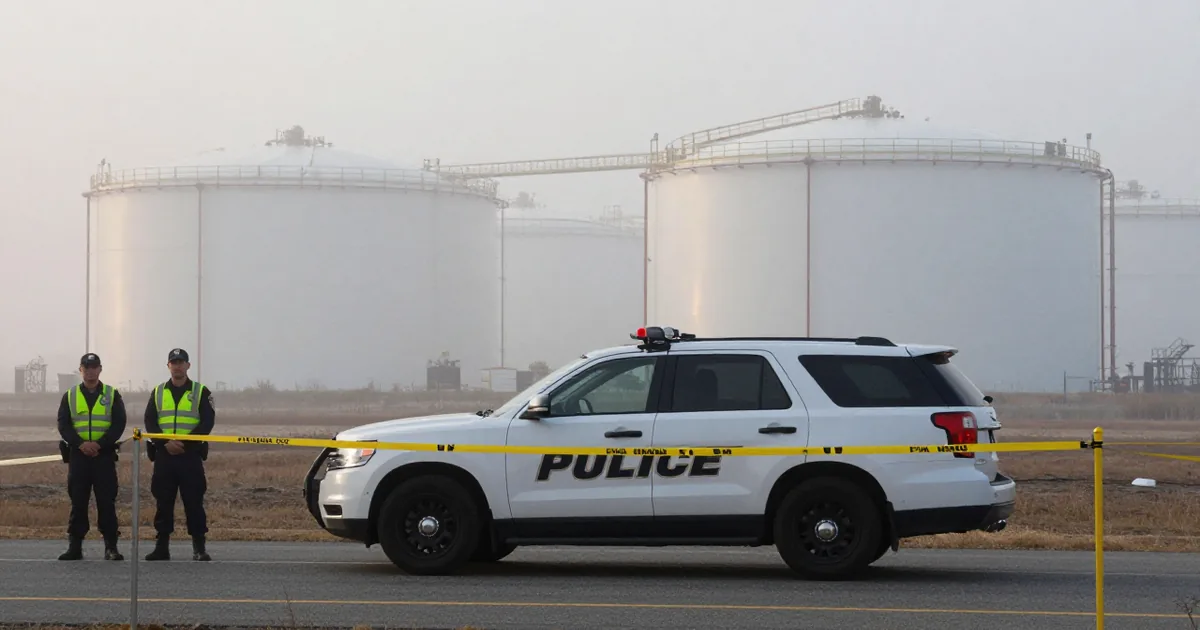
A 5,500-gallon tank of industrial chemical ruptured in north Toledo, Ohio, on Tuesday night, and by Wednesday morning more than 900 people had been moved out of their homes with the tank still venting and nobody willing to walk up to it. Mayor Wade Kapszukiewicz said the tank “is emitting this chemical and it has the potential within 12 hours of the incident to be explosive,” which is why hazmat crews were holding back until a reassessment planned for Wednesday morning.
What nobody has put in one place is the order of events, and the order is the story. We built it from the timestamps in WDIV’s coverage:
| Time | What happened | Elapsed since the rupture |
|---|---|---|
| About 9:30 p.m. Tuesday | A worker at MC Tank Transport reports the rupture | 0 |
| 10:48 p.m. Tuesday | One-mile evacuation ordered | 1 hour 18 minutes |
| 4:24 a.m. Wednesday | Shelter-in-place ordered within three miles | 6 hours 54 minutes |
| About 9:30 a.m. Wednesday | The mayor’s 12-hour window closes; crews to reassess the tank | 12 hours |
The gap is the number to look at. Everyone between one and three miles of a leaking tank, roughly 25 square miles of a city of about 265,000, was told to close their windows nearly seven hours after the leak started, and about five and a half hours after the people closest to it were told to leave. The area math is ours: the shelter zone is a circle of radius three miles, about 28.3 square miles, against 3.1 for the evacuation zone. It is nine times the size.
The night was not quiet for residents. NBC reported dense fog hanging over the area, and people described a potent plastic-like smell and burning in the eyes, nose, mouth and skin. The evacuation started at a half-mile, about 300 people, and grew to a mile and roughly 1,000 as the night went on. Doubling the radius quadruples the area, from 0.8 to 3.1 square miles. That is what an incident that was not understood at 9:30 p.m. looks like when it is understood at 10:48.
The cause is partly known and partly not. An Ohio EPA spokesperson, Bryant Somerville, said the release followed an “error that occurred when the material was being transferred.” What caused the explosion itself is still unexplained in the midday reporting. A sheriff’s deputy who responded was hurt and drove himself to the hospital.
The chemical is glycidyl methacrylate, a monomer used in coatings, adhesives and resins. Its supplier data puts the density near 1.075 g/mL and the flash point at 86 C. Our arithmetic: 5,500 gallons is about 20,800 liters, and at that density the tank held roughly 22,400 kilograms, about 49,000 pounds. The city has not published an explanation of why the risk runs 12 hours, and we are not going to guess at the chemistry.
What we think is simple. Toledo’s responders did what the situation allowed: moved people out, kept their own people away from a tank that might go, and said openly that they did not know how toxic the air was. The city’s health director told residents it is “really toxic if you touch it, if you ingest it” while also saying the air readings were still being worked out. Those two statements cannot both comfort anyone for long.
The company is a different matter. MC Tank Transport has said only that it is working closely with Toledo Fire & Rescue and other agencies. That is a sentence, not an account. People who were told to leave at 10:48 p.m. are owed a plain statement of what was being transferred, who was doing it, and what failed. So are the people who were told to shut their windows at 4:24 a.m., more than six hours in.
For comparison, LNC covered the Garden Grove, California, tank scare in May, where 50,000 people were evacuated over a cracked tank and the same fear of an explosion. Two tanks, two states, the same instruction to leave and the same open question about who answers for it.
The evacuation and shelter orders were still in place at the latest reporting. The thing to watch is not the reassessment itself. It is whether the city publishes its air-monitoring results, and whether the state says what the transfer error was before the evacuees go home.