
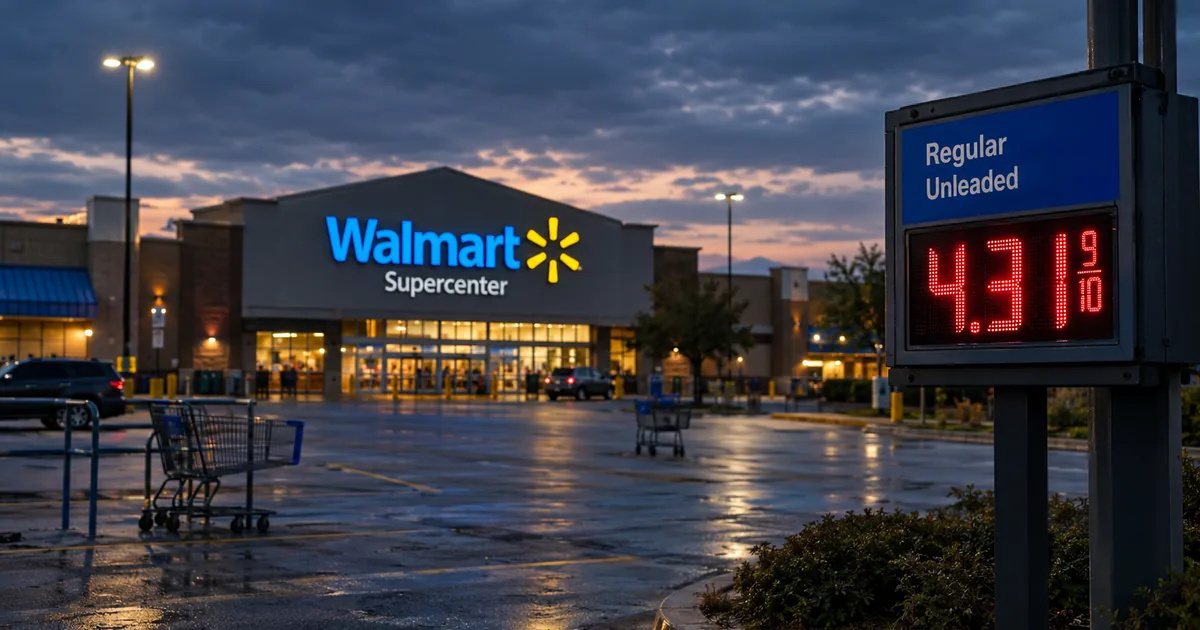
Walmart just posted its weakest U.S. sales growth in six years, and its own finance chief told investors exactly why. “As fuel prices increased above $4, there’s a psychological impact to consumer choices,” CFO John David Rainey said, as NBC News reported. When the country’s biggest retailer says its shoppers are rationing, the recession question stops being abstract.
Same-store sales rose 2.6% in the quarter, the slowest pace since late 2020 and well short of the 3.5% Wall Street expected, and the stock had its worst day in four years. CEO John Furner put it plainly: “Customers tell us they’re still feeling some pressure.” Rainey went further, saying consumers have been more pressured than earlier in the year.
Walmart Is the Early Warning System
Walmart matters here because of who shops there. When budgets tighten, it is usually the last place people cut back and the first place wealthier households trade down to. Both things are happening. Higher-income shoppers are showing up in bigger numbers, while the core customer is dropping the extra item. You fill the tank, watch the pump roll past sixty dollars, and the second pack of chicken goes back on the shelf.
The rest of retail is flashing the same light. Retail sales fell 0.6% in July, the steepest monthly drop in more than a year. Lowe’s cut its full-year comparable sales outlook to flat. Even TJX, which usually wins when shoppers hunt for bargains, managed just 1% growth at its Marmaxx division.
So Is a Recession Coming?
Not yet, and the reason is paychecks. Employers added 162,000 jobs in August, roughly triple the forecast, and unemployment held at 4.1%, CNN reported. Recessions usually begin when people lose income. Right now the income is still arriving; a bigger share of it is simply going straight into the gas tank.
Walmart is betting the same way. It still expects full-year sales to grow 4% to 5%, and it is turning nearly $3 billion in tariff refunds into more than 11,000 price rollbacks to keep those shoppers coming in. A company that saw a collapse coming would be hoarding cash, not cutting prices.
The squeeze is getting worse, though. AAA put the national average at $4.27 on September 10, up 13 cents in a single week, as fighting around the Strait of Hormuz pushed crude back to $100. Before the U.S. and Israel struck Iran, it was $2.98. We tracked gas crossing $4 again in July, and it has kept climbing since.
A War Tax Paid at the Pump
Here is where we come down. What Walmart is describing is not a demand collapse. It is a war tax, collected at the gas station and passed along at the checkout, and the administration that chose this war owns the bill. Families are not spending less because they stopped working. They are spending less on groceries because filling up now costs a third more than it did before the strikes.
That can still tip into a real downturn, and the number to fear is not Walmart’s. Consumers now expect 4.6% inflation over the next year, up from 4.0% a month ago, as University of Michigan sentiment sank to 47.8. Expectations that high keep the Federal Reserve from cutting rates, which leaves households squeezed at the pump and at the credit card bill at the same time.
The next test arrives Wednesday, when the Census Bureau releases August retail sales. Watch gas station receipts against everything else. If fuel is up and the rest is flat, this is still a squeeze. If restaurants and big-ticket stores fall too, the recession talk gets a lot less hypothetical.