
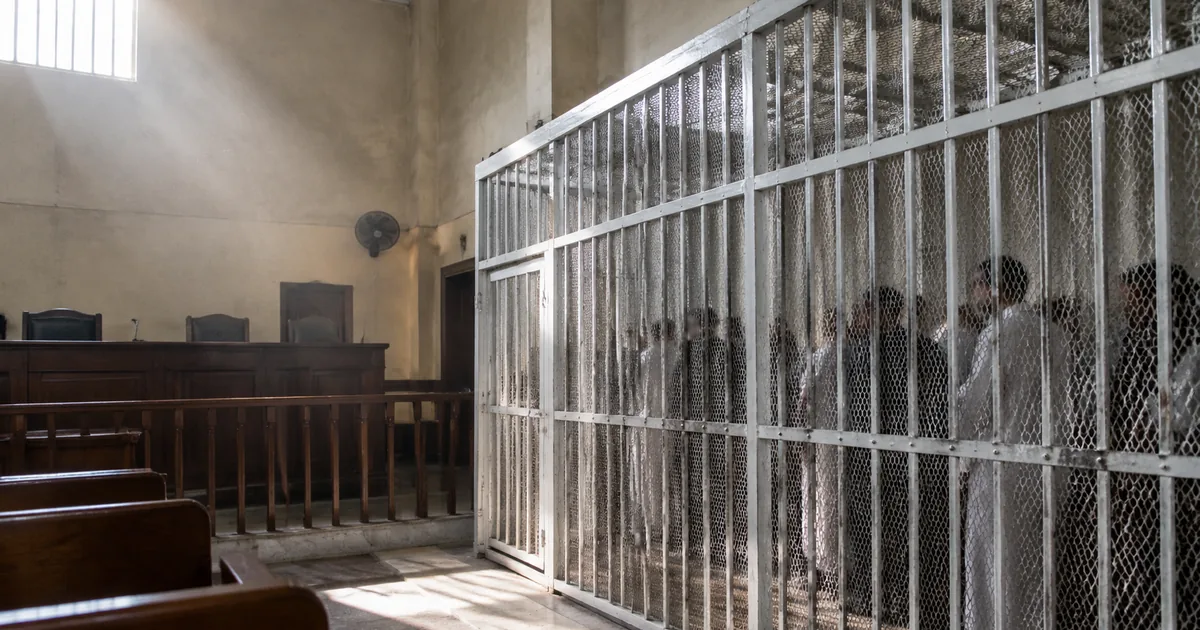
A Cairo criminal court sentenced twelve people to death by hanging on Saturday in a narcotics case, and nearly every account of it has been about one of them. Amnesty International recorded at least twelve drug-related death sentences in the whole of Egypt for the whole of 2025.
That is the comparison the coverage skipped, and it is the story. The defendant everyone named is Sarah Khalifa, a 39-year-old television presenter who hosted a crime programme on the private channel Al-Mehwar, and the wires ran her because a famous face makes a mass capital sentence legible as an entertainment item. Strip her out and what remains is a single verdict, on a single afternoon, that equalled a full year of Egypt’s recorded drug-related death sentences. Eleven other people are also scheduled to hang. Almost nobody has printed a word about who they are.
The Number the Wires Had and Did Not Use
Amnesty’s global death penalty report for 2025, published in May, is not obscure. It found that Egyptian courts handed down 492 death sentences last year, a 35 percent jump from 365 in 2024, and that Egypt carried out 23 executions, nearly double the 13 recorded the year before. Buried in the country breakdown is the line that matters here: at least twelve of those 492 sentences were for drug offences, about two percent of the total.
So drug cases were a small share of an enormous number, right up until Saturday. Amnesty’s own summary of the 2025 figures also notes that close to half of all executions it recorded worldwide, 1,257 of them, were for drug-related offences, which is the context that makes Egypt’s jump worth flagging rather than filing under celebrity crime.
What the Court Actually Decided
The case was large and the outcome was split. According to CNN’s account of the ruling and Al Jazeera’s reporting from the same day:
- Twenty-eight defendants stood trial over an alleged ring that imported precursor chemicals and manufactured synthetic narcotics for sale.
- Twelve were sentenced to death by hanging and fined 500,000 Egyptian pounds each, roughly $9,800.
- Nine received life imprisonment. Seven were acquitted.
- Investigators seized more than 750kg of narcotics and raw materials, along with two apartments used as laboratories and unlicensed firearms.
- Khalifa, arrested in April 2025, was separately sentenced by the same court to three years over an assault on her driver.
One procedural detail is being reported in a way that flatters it. Egyptian law requires a court to refer capital cases to the Grand Mufti for a religious opinion before sentencing, and several outlets have presented that referral as a check on the process. It is not one. The Mufti’s opinion is advisory and carries no binding force, and the court had already reached its conclusion. The genuine avenue is appeal, which Euronews reports Khalifa’s defence intends to pursue through the Court of Cassation, and which is open to all twelve.
Where We Stand on This
Hanging twelve people for manufacturing drugs is not proportionate punishment, and it is not permitted by the standard international law actually sets. Article 6 of the International Covenant on Civil and Political Rights restricts capital punishment to the “most serious crimes,” and the UN Human Rights Committee’s 2018 guidance on that article is explicit that drug offences do not clear the bar. Amnesty makes the same point in its report. This is not a matter of Western sensibilities about Egyptian sovereignty. It is a written threshold, and a court in Cairo sailed past it a dozen times in an afternoon.
The celebrity frame is doing real work, and it is worth naming what that work is. When a story about twelve death sentences is filed as “TV host convicted,” the other eleven defendants become extras in someone else’s biography, the year-on-year escalation in Egyptian capital sentencing never gets mentioned, and the readers who arrive for the famous name leave without learning that Egypt nearly doubled its executions last year. That is a failure of framing, not of access. The numbers were sitting in a public Amnesty report the whole time.
The Court of Cassation should vacate these sentences, and the governments that route security cooperation and military assistance through Cairo should be asked, on the record, whether a dozen drug-related hangings changes anything about that relationship. The honest expectation is that it will not. Egypt handed down 492 death sentences last year while remaining a partner in good standing, which is roughly the answer.
Watch the appeal, and watch the count. If Saturday’s verdict holds, the more useful figure will arrive next May, when Amnesty publishes the 2026 numbers and we find out whether one courtroom was an outlier or the new baseline.