
Dice feel almost too simple to have much of a fascinating history. Roll them and let the result decide what happens next. The idea is simple. Yet that basic idea may be far older than most people realize.
Some of the earliest known dice were associated with ancient civilizations in Mesopotamia and elsewhere in the Old World. New archaeological research has pushed the story back much further. A 2026 study published in American Antiquity argues that Indigenous people in North America were using two-sided dice in games of chance around 12,000 years ago. That is near the end of the last Ice Age.
That means dice gaming may be one of humanity’s oldest forms of organized entertainment!
Dice Games Are Still Thriving Today
The remarkable thing about dice is not simply their age. They remain extremely popular. New technology never seems to take the appeal of the simple dice.
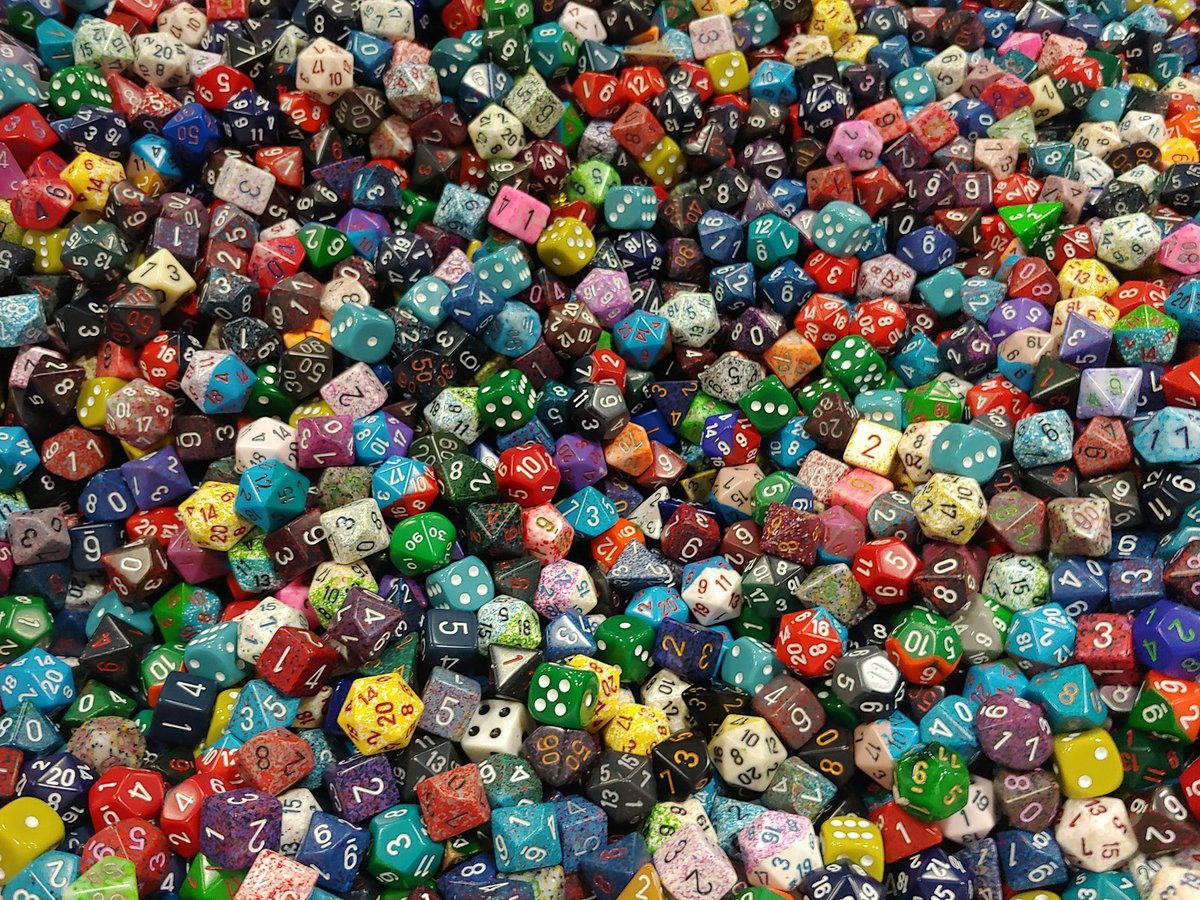
Modern players encounter them in casinos plus board games and even video games. Sometimes the dice are physically rolled across a table. It is also possible that a computer quietly handles the same idea in the background.
Craps is probably the best-known casino dice game.
The game revolves around the outcome of two dice and developed from earlier European dice games before becoming closely associated with American casinos. Its reputation partly comes from the atmosphere surrounding the table. Several people can follow the same roll with interest. It means a much more communal experience than many individual casino games.
That social side helped Craps become a familiar casino fixture. The rules can initially look busy because there are numerous possible bets on the table. The central action is uncomplicated: the dice are thrown and everybody waits to see where they land.
Online casinos have carried that experience into the digital world too and many people play craps games online. Computer-generated versions recreate the table. Some live formats use cameras and real equipment to stream to a user’s home.
Games such as Yahtzee show another side of dice play. Players decide which dice to keep and which to roll again. This means a mixture of chance and decision-making.
Tabletop role-playing games take the idea even further. Dungeons & Dragons is immensely popular. It uses several types of dice to decide whether attacks and other actions succeed. A twenty-sided die can change the direction of an entire story in one throw. There are estimates that over 50 million people have played the game.
The Earliest Dice May Be Around 12,000 Years Old
The most surprising chapter of the story comes from recent archaeological research.
Robert J. Madden of Colorado State University studied prehistoric artefacts and compared them with hundreds of documented sets of historic Indigenous North American dice. His research suggests that carefully shaped objects found at Folsom-period archaeological sites were actually two-sided dice used as randomizing devices.
Some date back roughly 12,000 years.
The objects come from sites on the western Great Plains and appear to predate the earliest currently known Old World dice by several thousand years.
These were not necessarily little cubes with dots from one to six.
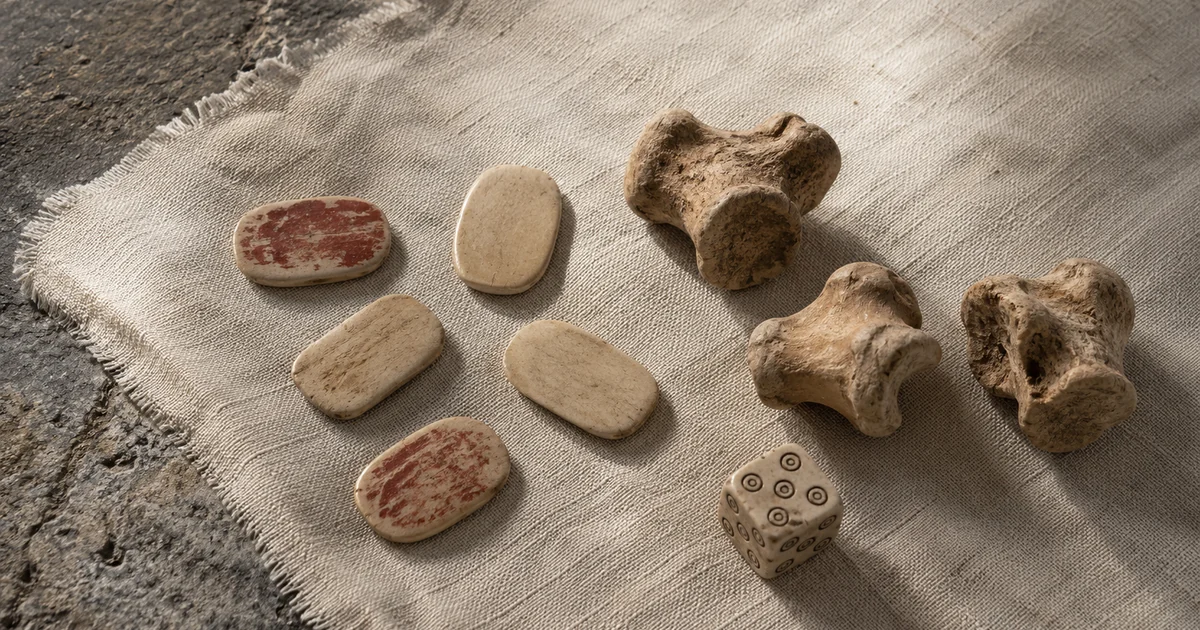
Early dice could take completely different forms. Two-sided pieces might be thrown and scored according to which face landed upwards. This is basically a simple version of the same uncertainty found in modern dice.
That discovery also tells archaeologists something about how ancient people thought. Players did not need mathematical equations for probability to know that a throw could go either way. Chance itself had become part of the game.
Ancient Mesopotamia Had Its Own Dice Games
Dice also appear throughout the archaeological record of the ancient Near East.
One famous example is the Royal Game of Ur. This was played in Mesopotamia more than 4,000 years ago. Surviving boards have been found alongside tetrahedral throwing pieces that acted much like dice.
The game later spread widely across the region.
Examples of related twenty-square games have been found from Iran to the eastern Mediterranean. It suggests that gaming travelled between cultures just like stories and other ideas.
Ancient Egypt Mixed Boards And Chance
Egypt also had a strong tradition of board gaming.
Senet is perhaps the most famous example. There have been boards found in tombs and represented in ancient artwork. Other games used throwing sticks or knucklebones to control movement.
There is evidence of games being combined on reversible boards, with one game on each side and compartments for storing pieces and throwing objects.
Greece And Rome Loved Dice Too
Dice became deeply embedded in Greek and Roman leisure.
Knucklebones were particularly common. Originally made from animal ankle bones, their uneven shapes allowed different sides to carry different values when thrown.
More familiar cube-shaped dice also became common.
Games could be casual social entertainment or simple ways to pass time between other activities. Archaeologists have found dice at settlements and military sites. It shows just how widely the idea travelled.
The history of dice appears to stretch far beyond ancient casinos or famous civilizations. There is proof of dice being useful many thousands of years ago.