
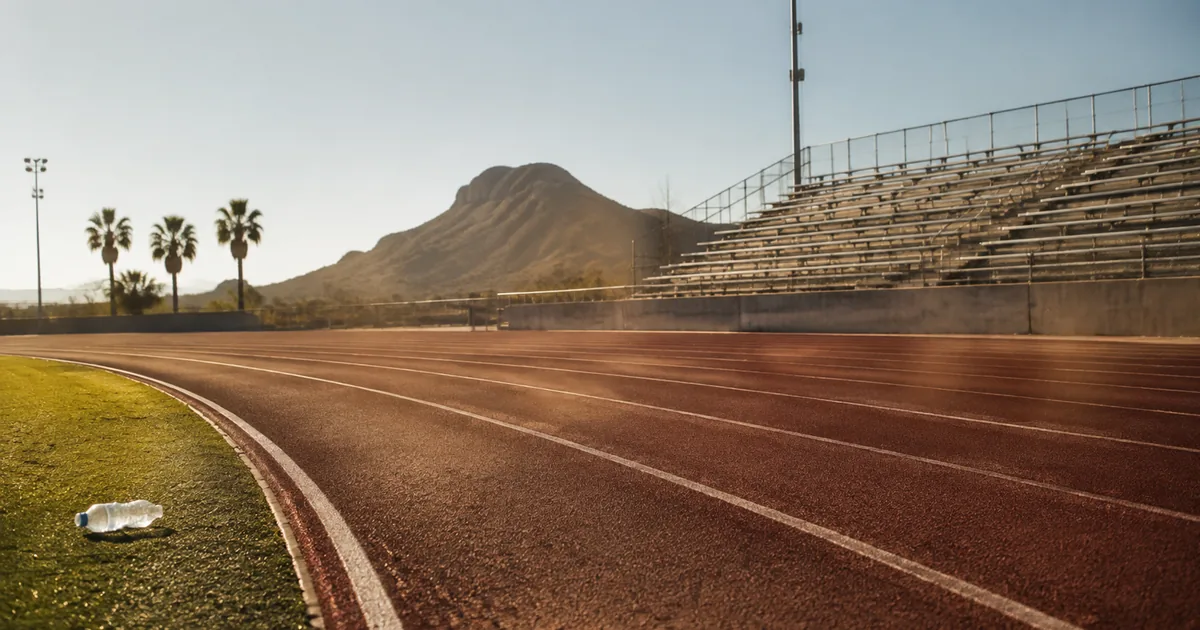
Matthew Mayich, a 21-year-old defenseman and a sixth-round St. Louis Blues draft pick, collapsed during an outdoor team workout at Arizona State on August 20, and the attorney for his family said this week that he is incapacitated and unlikely to recover.
- Tempe Fire Medical Rescue reached ASU’s track at 8:31 a.m. and logged the call as a heat-related illness.
- The session ran roughly 50 to 60 minutes outdoors: sprints, planks, push-ups, bear crawls.
- It was led by Tim Zeisel, a former military service member who is not an ASU employee.
- Temperatures were near 90 degrees that morning and reached 104 by afternoon, ESPN reported, citing the National Weather Service.
- It was the first day of ASU’s fall semester, the earliest date NCAA rules permit a hockey team to hold formal activity.
- Mayich had transferred in from Clarkson and had been in Arizona less than a week.
The coverage since has settled into a swearing match about how hard the workout was. Family attorney Rob Carey, a former deputy chief attorney general of Arizona now at Hagens Berman, says players told him Zeisel yelled like a drill instructor and rationed water by who was working hardest, while Zeisel’s attorney Buddy Rake told Daily Faceoff that there is not a Division I athlete on the planet who would call it a hard day of exercising, and that coaches and medical staff were present throughout. Settling which account is right does not resolve much, because nobody covering this has asked the question that governs prevention and liability alike: what written standard was Arizona State obliged to meet that morning? For a hockey team in August, the answer is close to nothing.
The NCAA Published This Exact Warning in 2019 and Made It Voluntary
In the summer of 2019 the NCAA Board of Governors adopted, as association-wide policy, a document called Interassociation Recommendations: Preventing Catastrophic Injury and Death in Collegiate Athletes, endorsed by thirteen medical and sports medicine organizations. Its central finding, published in the British Journal of Sports Medicine, is that non-traumatic deaths in college athletes cluster in the first week of a transition period, the window when athletes return from inactivity to organized training, and that the first four days carry the highest risk of all. Mayich collapsed in hour one of day one of that window, having arrived in a desert climate days earlier with no acclimatization behind him. The scenario the NCAA’s own safety literature calls the most dangerous in college athletics is, more or less exactly, the scenario that has left him in a hospital bed.
What that literature does not carry is force. The NCAA’s mandatory heat-acclimatization legislation, extended in 2021 from five days to seven with a required off day, applies to football and only football. Every other sport gets recommendations.
| Protection | NCAA football | NCAA ice hockey |
|---|---|---|
| Mandatory heat-acclimatization period | 7 days, legislated | None |
| Capped first-week practice length and intensity | Legislated | None |
| Athletic trainer required at conditioning sessions | Legislated | Recommended |
| Transition-period workload limits | Legislated | Recommended |
| Rules covering non-employee instructors | None | None |
The bottom row is the one nobody has written about. The NCAA requires a school’s own strength staff to hold accreditation and says nothing whatever about an outside contractor brought in to run a team, which is what happened here on the calendar’s highest-risk morning.
A Review Is Not an Investigation, and ASU Picked the Word on Purpose
Athletic director Graham Rossini has called what ASU is doing a review, adding that nobody is suggesting anything went wrong. It is being run by James Rund, a sitting senior vice president who reports to the president of the institution now facing an obvious liability claim. Carey has said he has no confidence in Rund, has asked for the coaching staff to be placed on leave pending an independent inquiry, and told College Hockey Insider that ASU is not handling this responsibly.
He is right on the process point, and not because Rund is compromised as a person. A university cannot credibly determine whether its own compliance was adequate when the answer sets its exposure. ASU should hand this to an outside reviewer and publish the finding. Declining to, while calling the exercise a review and asserting in advance that nothing went wrong, is how an institution turns a safety failure into a records dispute.
The Rule That Does Not Exist Is the Story
There is a version of this that ends with a finding that Zeisel pushed too hard, a settlement, and a policy memo, and that version leaves the actual defect untouched. KJZZ reported that ASU says its heat policies align with National Athletic Trainers’ Association guidance, which may well be true, because aligning with guidance is all any non-football program is asked to do. One detail sharpens the point: the National Weather Service issued an extreme heat warning for the Phoenix area at 11:06 p.m. that same night, covering the week ahead. The workout had been over for fifteen hours. Nothing about the morning of the twentieth tripped a wire, because for hockey there was no wire to trip.
Jordan McNair died at Maryland in 2018 and the NCAA answered with a document. Seven years on it is still a document for every sport but one. The question worth putting to the NCAA, rather than to Arizona State, is what it thinks recommendations are for.