
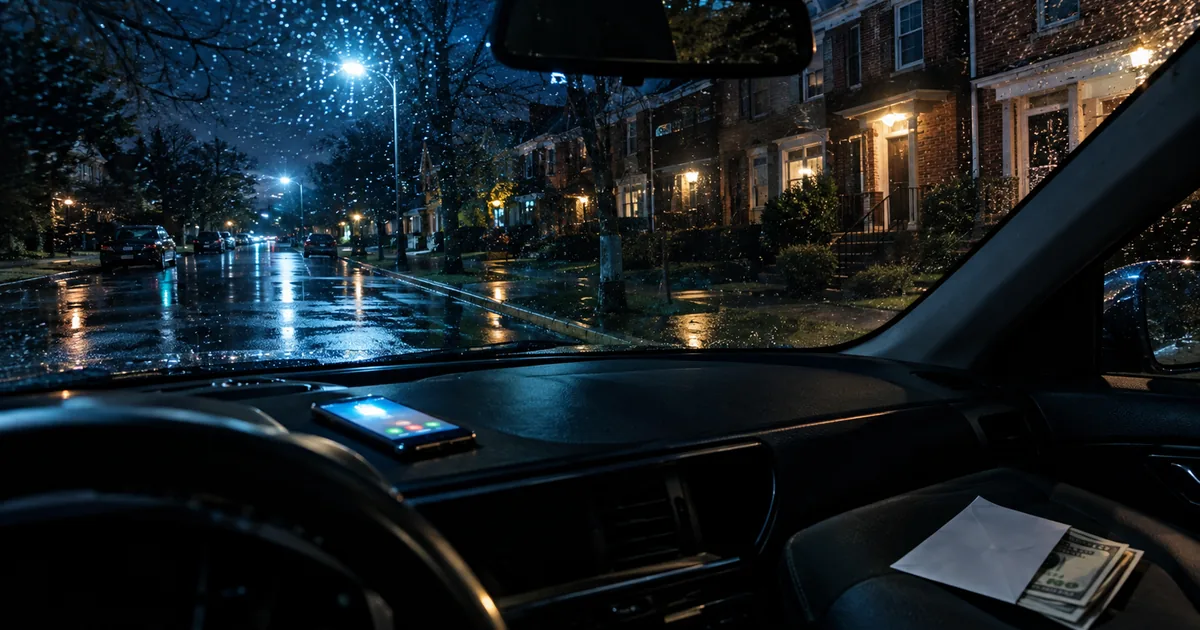
The federal indictment unsealed in Manhattan this week does not read like a spy thriller. It reads like a price list: $200 for surveillance work in Lithuania, $1,000 to $1,500 for photographs of a target living in the United States, $25,000 for a killing in Vilnius, $40,000 for a killing in the Washington area.
The pricing is the part almost nobody has stopped on. Coverage has framed the case as an alarming reach onto American soil, which it is. But the machinery behind it has been documented by European intelligence services for the better part of four years, and this indictment is its American edition. After European governments expelled hundreds of Russian intelligence officers following the 2022 invasion of Ukraine, Moscow largely stopped sending professionals and started buying help retail, from people whose main qualification was needing the money. The five men charged in the Southern District of New York fit that model exactly. So does the fact that all five of them are at large.
What Prosecutors Say the Network Did
The Justice Department charged five men it says were working for the intelligence services of the Russian Federation, a group the indictment calls the RIS Network. Yuri Khrameev, 63, is described as a former colonel in Russian intelligence who recruited multiple people to kill perceived Russian dissidents. His son Kirill Khrameev, 27, is identified as an officer in the FSB. Oemis Romagoza Durruthy, 35, a Cuban national living in Russia, is accused of coordinating attacks. Yaidel Delgado Suarez, 35, also Cuban, and Angel Eduardo Castro, 22, a Venezuelan national, worked as recruiters.
All five are charged with conspiring to finance terrorism. Khrameev, Suarez and Castro face an added count of conspiring to commit murder for hire.
The plot that puts this on American ground involved a Venezuelan citizen living in the United States. Prosecutors say the two recruiters approached him to surveil and then kill a prominent US-based Russian dissident who investigators believed was in the Washington, D.C. area, telling him they wanted the target eliminated and made to disappear. Surveillance photographs were worth $1,000 to $1,500. The killing was worth $40,000. A separate effort described by Courthouse News had three of the defendants trying to recruit an American citizen to go after someone in Lithuania for $200 in surveillance fees and $25,000 for the killing, an offer the recruit turned down. Durruthy is also accused of arranging travel for a criminal associate tied to a failed arson attack in Prague in 2024.
That Prague detail is the thread worth pulling. It places this network inside the same sabotage campaign European agencies have been cataloguing since 2022, rather than outside it as some novel American exception.
Retail Violence Is the Design, Not a Shortcut
NBC News reported last year that Western officials watched Russian intelligence hire local criminals across Europe for arson and attacks on Ukraine-linked sites, part of a pattern of more than 70 incidents linked to Moscow since the invasion. The Financial Times reported in February, as summarized by the Moscow Times, that former Wagner recruiters were given a new assignment: find financially vulnerable people in Europe willing to carry out violence for small payments. European agencies warned openly that this was becoming the standing method rather than an improvisation.
Read that way, the low prices are not evidence of amateurism. They are the point. A network built out of Cuban and Venezuelan nationals, paid in the low thousands, keeps every Russian officer several handoffs away from anyone a US marshal could arrest. It is cheap enough to run dozens of times, deniable enough for a foreign ministry to shrug at, and structured so that the people who face charges are the ones with the least protection and the most to lose. Our read is that the recruiting pool is not incidental either. A network shopping for people who need $1,500 badly enough to photograph a stranger’s front door is shopping for precarity.
An Indictment Is Not a Deterrent Against a State
Assistant Attorney General John A. Eisenberg said the defendants “allegedly operated as part of a global assassination network that reached into the United States.” He is right, and that is exactly why a criminal docket is the wrong primary instrument. Two of the five are Russian nationals and one of them is a serving FSB officer. Russia does not extradite its intelligence officers. Barring a travel mistake, the Khrameevs will never see the inside of a Manhattan courtroom, and Al Jazeera noted that Russia has denied conducting plots like these before. The Russian embassy did not respond to reporters’ questions, according to the Moscow Times.
So here is where we come down. The indictment is valuable as a public record and as evidence that the FBI got inside the operation before anyone was hurt, and the agents who did that deserve the credit. It is not a consequence. If the administration has a response beyond the charging document, it has not said what it is: no announced designations of the handlers who allegedly financed this, no expulsions, no public statement about whether the dissident in question was even warned. A foreign government put a bounty on a dissident living in the Washington suburbs. The answer to that is state to state, and it is overdue.
The political context does not help. This lands in the same week LNC reported that a Putin ally paid for Donald Trump Jr.’s wedding celebrations through a Gazprom-funded boxing organization, which is the kind of entanglement that makes a firm response harder to deliver and easier to quietly skip. An administration that wants credit for the disruption also owns the silence that followed it.
The Part Nobody Has Priced
There is a second cost to outsourcing violence to untrained people, and European officials named it before this case existed: amateurs miss. Someone hired for $40,000 who has never done this before is more likely to hurt the wrong person, in the wrong house, on a street where children live. The reason that matters in Washington and not only in Warsaw is that the model has now crossed the ocean, and this first American attempt was stopped by an FBI investigation rather than by anything structural that would stop the next one.
The dissident at the center of this has not been publicly named, which is appropriate. But someone should be asking, out loud and in a hearing, what protection exists for the next name on a list that clearly has more than one.