
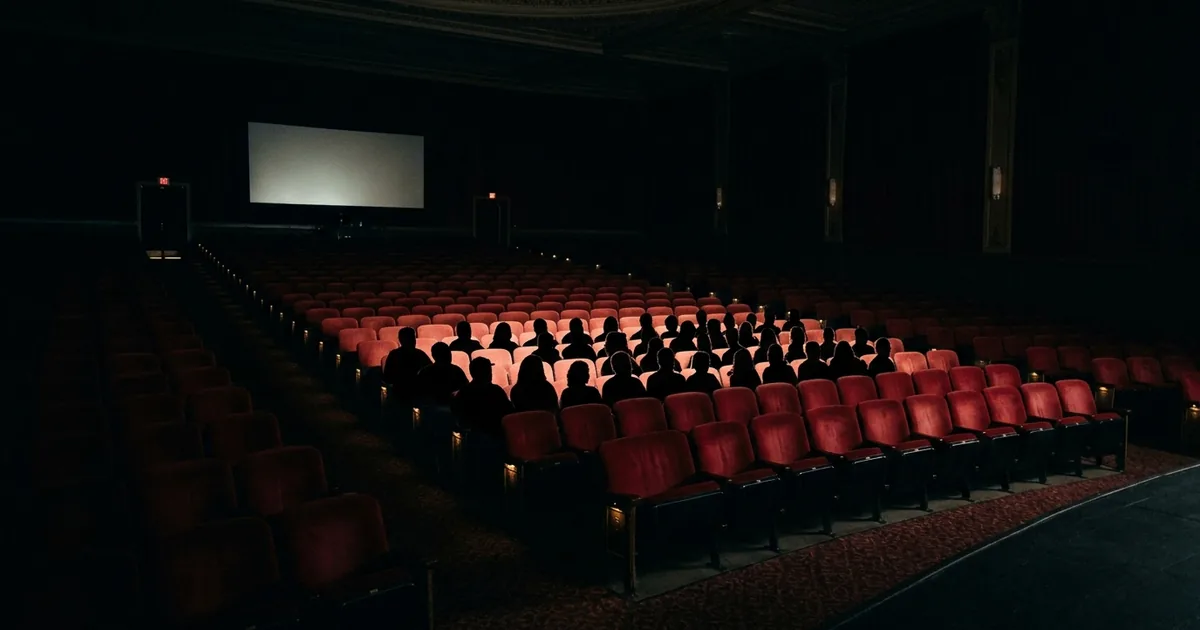
The domestic box office crossed $4 billion this week for only the second summer since the pandemic, a number the industry has been chasing since 2019 and hitting almost never. It is a real recovery and the trades are right to say so.
It is also the most concentrated summer anyone has run in modern memory, and the second fact tells you more about the business than the first one does.
The Arithmetic Nobody Puts in the Headline
Three films are carrying this. Sony’s “Spider-Man: Brand New Day” has taken roughly $655 million domestically and $1.67 billion worldwide. Christopher Nolan’s “The Odyssey” is at about $460 million in North America and $1.1 billion globally after four weekends. Pixar’s “Toy Story 5” added another $470 million stateside.
Add those three domestic figures and you get roughly $1.59 billion, which is close to forty percent of the entire summer, from three titles. Variety put the milestone in context against 2023, the Barbenheimer summer that hit $4.09 billion, and Deadline has the season tracking toward the strongest domestic year since 2019. Fortune noticed the same shape we did and wrote up the concentration directly, which is the smarter read on a headline number that looks like broad health.
We have been tracking both of the big two as they went. Nolan’s $124 million opening weekend in July was the highest of his career, and Spider-Man’s second-weekend hold was the tell that it was going to run rather than front-load. Two enormous, well-received event films landing three weeks apart is not a strategy anyone can repeat on schedule. It is weather.
What a $4 Billion Summer Does Not Include
Here is the part the milestone hides. A record aggregate built from a handful of titles is a different business than a record aggregate built from thirty.
In the 2019 version of a $4 billion summer, the number came from depth: tentpoles on top, but also mid-budget comedies, horror at $20 to $40 million a pop, adult dramas that opened to $12 million and played for eight weeks, and animated films that were not all sequels. The theatrical middle class did real volume. That middle is now mostly on streaming, where a $30 million film gets made for a platform, drops on a Friday, trends for two days and is gone.
What replaced it in theaters is a barbell. Enormous franchise events at one end, cheap horror and faith-based titles at the other, and very little between. When the top of the barbell delivers, as it did this summer, the total looks fantastic. When it misses, as it did in several recent summers, there is nothing underneath to catch the fall.
That is not a moral failing on anyone’s part. It is what happens when the marketing spend required to open a film theatrically climbs past what a mid-budget movie can recoup, so the only movies worth opening wide are the ones that can absorb a $100 million campaign. The economics select for size, and then everybody acts surprised that the slate is all big movies.
Exhibitors feel it as volatility. A theater chain cannot staff and program against a calendar where four weekends a year do most of the work. Neither can a concessions supply chain, a projectionist’s schedule, or a small-town two-screen that needs something to play in late September.
This Weekend Is the Actual Test
Which brings us to Friday. Warner Bros. opens “The End of Oak Street,” the Bad Robot production directed by David Robert Mitchell with Anne Hathaway and Ewan McGregor, tracking somewhere in the neighborhood of a $30 million start. Alongside it: “PAW Patrol: The Dino Movie,” “The Rivals of Amziah King,” a tenth-anniversary re-release of “Train to Busan,” and Willem Dafoe in the limited-release “The Birthday Party.”
That is a genuinely varied slate, which is the point. None of these are Spider-Man. A $30 million opening for an original wide release with two movie stars and a director with a real signature would, in the barbell model, be a good outcome. It would also be the kind of result that used to be the floor rather than the story.
If the mid-tier holds in the back half of August, the honest headline is that theatrical is broadly healthy. If everything outside the top three cratered and the season still cleared $4 billion, the honest headline is that three movies papered over a structural problem for one more year.
The Number Worth Watching Is Not $4 Billion
Wall Street will take the aggregate, because aggregates are what quarterly earnings are made of. NBC News noted that Spider-Man and The Odyssey delivered the biggest box office weekend in history when they overlapped, and that is a genuine achievement worth celebrating on its own terms.
But the number that predicts whether there is still a theatrical business in 2031 is not the summer total. It is how many films cleared $75 million domestic this year, and whether that count is going up or down. A healthy industry has thirty of those. A concentrated one has eight and a very good year.
The 2026 summer will be remembered as the one where it worked. Whether it worked because the business recovered or because Nolan and Sony happened to land in the same ninety days is the question the fall will answer, quietly, in a way nobody writes a milestone story about.