
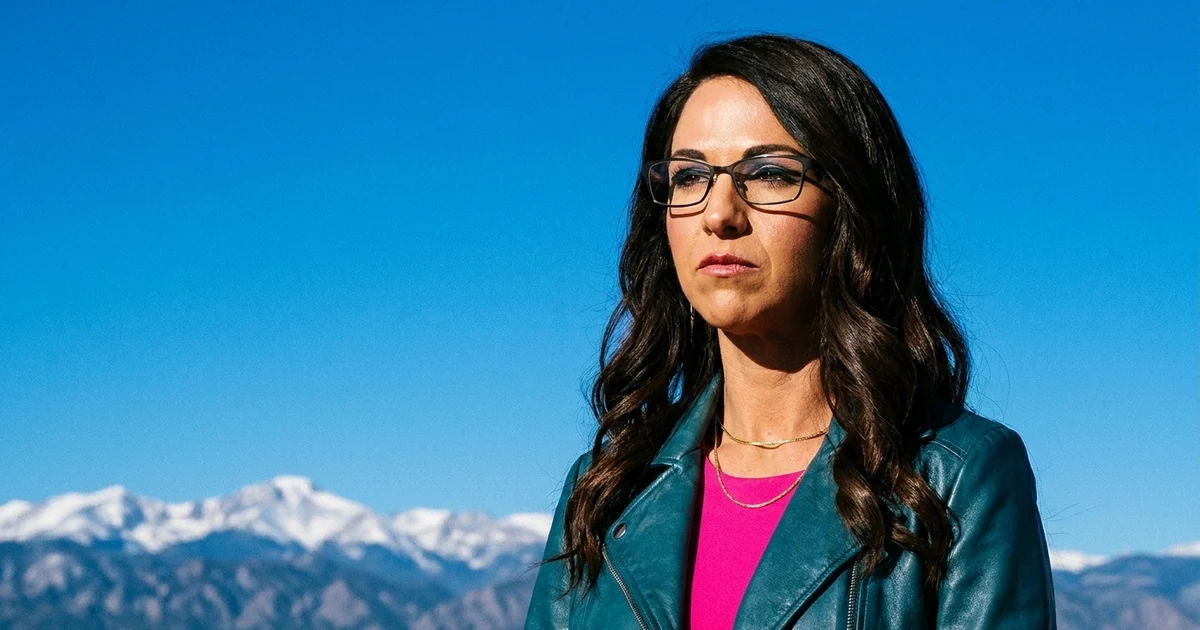
“This doesn’t define me,” Boebert told 9NEWS the day after the election.
CNN projected Monday afternoon that Democrat Eileen Laubacher, a retired two-star Navy rear admiral, beat Rep. Lauren Boebert in Colorado’s 4th District, 48.8% to 47.9% with about 98% of ballots counted. The Cook Political Report had it as a safe Republican seat and the most conservative district in Colorado, and Boebert’s camp is answering the loss with a fraud hint it has not explained.
Two years ago she won the same seat 53.6% to 42.4%. Set the two results side by side and the district moved about 12 points toward a Democrat in one cycle, toward a candidate who left the GOP before running.
On Wednesday, with the count still going, Boebert told 9NEWS anchor Kyle Clark she could move on if she lost. By Thursday her campaign attorney, Scott Gessler, had issued a statement saying the campaign was “investigating some very unusual voting patterns” and expected the race “to head to a recount, one way or another.” It did not say what the patterns were, where they appeared, or which ballots were involved.
Here is what a recount would have to overcome. Laubacher led by 3,069 votes on Friday morning. Colorado orders an automatic recount only when the margin is half a percent of the leader’s vote or less, a line Clark put at 921 votes. Divide one by the other and the lead was about 3.3 times the trigger.
Boebert knows what a recount does. Her 2022 race against Adam Frisch was close enough to force the automatic one, and it moved the result by four votes. This time it would have to move more than 3,000.
A campaign outside the automatic margin can still pay for a recount, and nobody should object if hers does. What we object to is the other half of Gessler’s statement: a claim of irregularity with no specifics, from a congresswoman who backed Trump’s election denial claims. We think it is a stalling tactic. If her team has evidence of bad ballots, it should file it. If it does not, “unusual” is a word doing the work a fact should do.
The paid route has a recent ending worth remembering. Mike Lindell asked Minnesota for a hand recount of a primary he lost by about 45,000 votes, never paid the $825,000 it would have cost, and watched the state Supreme Court reject his theory anyway.
Boebert had not commented on the projection in the coverage we read Monday. Her loss is one piece of a larger result, with Democrats winning control of both the House and the Senate and flipping Senate seats as far afield as Texas, where James Talarico won, and South Carolina, where Annie Andrews did.
What to watch now is procedural and dull, which is the point. Ballot curing and certification are still ahead, and the numbers will shift a little before anything is final. Either the campaign files and pays for a recount, or it lets certification run its course. A candidate who spends days hinting at fraud and then declines the one remedy the law offers is telling you what the evidence looks like.