
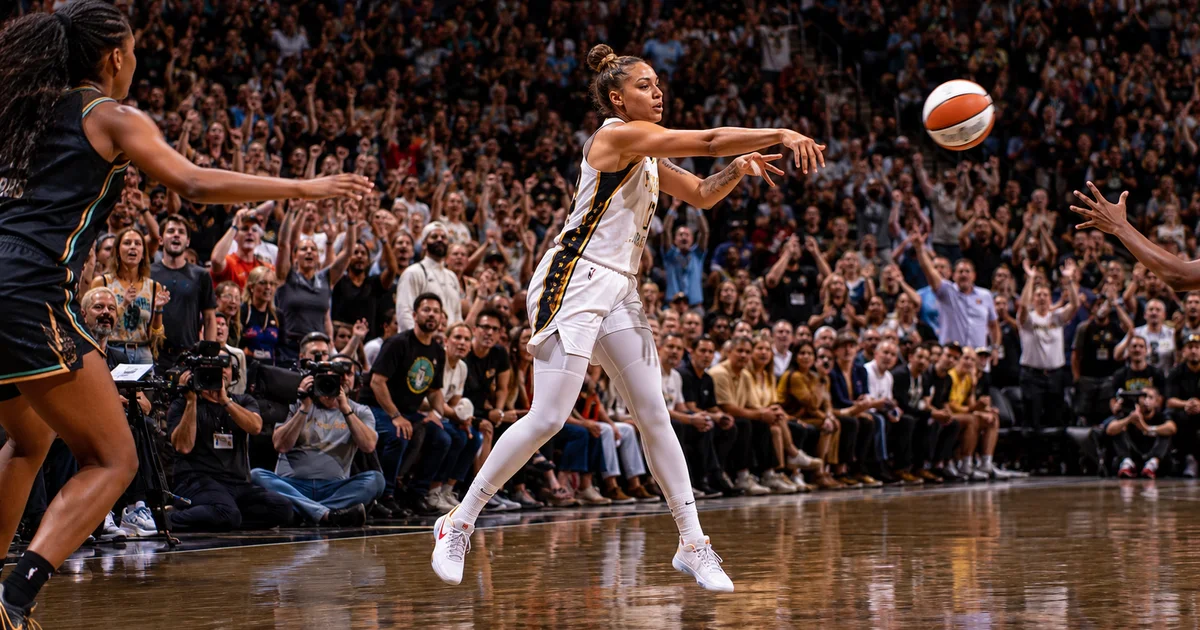
The WNBA has spent years trying to crack the code on mainstream television audiences, and the answer turns out to be a 24-year-old point guard from Iowa who just helped the league hit a late-night cable number that nobody thought was possible. Caitlin Clark and the Indiana Fever drew 1.04 million viewers for a Wednesday night game against the Los Angeles Sparks that did not tip off until 10 p.m. ET, making it the first time in WNBA history that a game starting that late has averaged seven figures on cable.
The Numbers Are Not a Fluke
This is not a single data point being stretched into a narrative. The five most-watched WNBA games of the 2026 season have all featured Indiana, and the Fever’s viewership floor is higher than most teams’ ceiling. A CBS broadcast of Fever-Liberty averaged 2.56 million viewers, the third-largest WNBA audience of any kind since 2000. Their opening-weekend game against Dallas pulled 2.49 million on ABC, good for fourth all-time.
The Sparks game on USA Network was up 149 percent compared to the 2025 cable average for WNBA broadcasts. These are not incremental gains. They represent a structural shift in how audiences engage with women’s basketball, and Clark is the gravitational center of that shift.
What Clark Is Actually Doing on the Court
The ratings conversation sometimes threatens to overshadow the basketball, which is itself remarkable. Clark has been setting WNBA records on the court, not just in the Nielsen numbers. Her combination of deep three-point range, court vision, and a competitive edge that occasionally lands her in controversy, referees and opponents both get the full Clark experience, makes her appointment viewing in a way that transcends the sport’s traditional audience.
The “hostile act” flagrant foul she drew during a recent game, which she responded to by hitting a shot and staring down her opponent, generated the kind of highlight-reel moment that used to be reserved for the NBA’s biggest stars. Love her or find her polarizing, Clark is the rare athlete who makes people who do not normally watch basketball tune in and stay.
The Business Implications Are Massive
The timing of Clark’s ratings dominance is significant because the WNBA is heading into a period of rapid expansion and media rights negotiations. Every viewer Clark delivers strengthens the league’s position in those conversations. When the ESPYs air tomorrow night, Clark is expected to be a central figure, not because of ceremony but because her commercial value now extends well beyond the basketball court.
The Fever’s road games are consistently outdrawing home broadcasts for the opposing team’s local market. That means Clark is not just lifting Indiana’s numbers. She is lifting every team she plays against, which makes her arguably the most valuable player in women’s sports from a pure business perspective.
The Question Nobody Is Asking
The WNBA’s reliance on a single player for its ratings breakthrough is both a strength and a vulnerability. The league’s viewership story in 2026 is functionally a Caitlin Clark story, and the five most-watched games all featuring one team is not sustainable league-wide growth. It is one player carrying an industry.
What happens on nights when the Fever do not play? What happens during the All-Star break? The WNBA’s challenge is converting Clark’s audience into basketball fans rather than Clark fans, and so far, the data suggests the league has not solved that puzzle. The Fever’s dominance of the ratings chart is thrilling and concerning in equal measure, because it means the league’s biggest success story is also its biggest single point of failure.
Clark is making the WNBA impossible to ignore. The next step is making it impossible to ignore without her.