
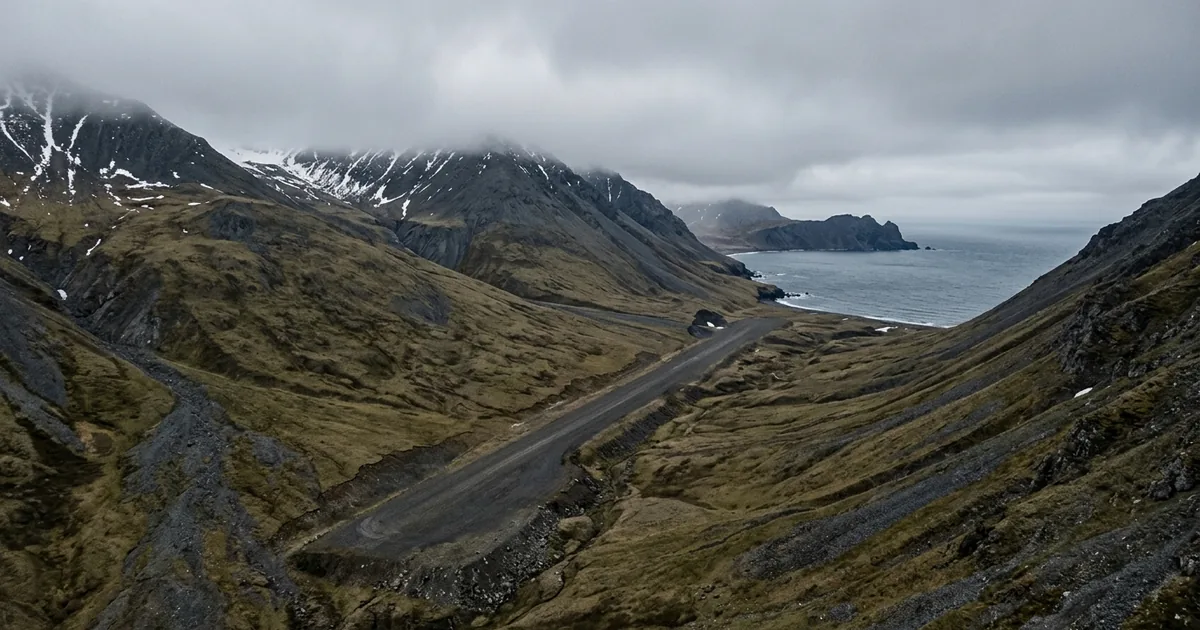
A twin-engine Cessna 441 chartered by the Army Corps of Engineers went down near the Cape Newenham Long Range Radar Site in western Alaska on Thursday afternoon, killing both pilots and all six passengers aboard. The federal government built that radar site, maintains it, and sends its own people out to it, and the only practical way in is a gravel runway pitched on the flank of a mountain with high ground on three sides.
What Investigators Have Confirmed
The aircraft left Anchorage and was approaching Cape Newenham, roughly 450 miles to the west, when it came down near its destination around 12:15 p.m., the Federal Aviation Administration told CBS News. Two pilots and six passengers were on board. Search and rescue crews found no survivors.
The flight was operated by Security Aviation, an Anchorage charter company. Two Army Corps of Engineers employees were among the dead, NPR reported, citing the military. The National Transportation Safety Board is leading the investigation with FAA support, and no cause has been established. It will be months before anyone credibly says why this airplane hit terrain.
That is the honest state of the facts, and it is worth sitting with the part that is not in dispute. Cape Newenham is not a destination. It is a Cold War radar installation, one node in the network that watches the airspace along Alaska’s western approaches, and the people who fly there are almost always there to work on it.
The Runway Removes the Pilot’s Last Option
Every pilot flying an instrument approach carries one reliable escape: if the runway is not there when you break out of the cloud, you push the throttles up and go around. Cape Newenham is a place where that assumption starts to fray.
The strip is gravel, just under 4,000 feet long, and it sits on the slope of a mountain that rises above 2,300 feet, according to Alaska Public Media’s account of the site. There is high terrain on both sides of the runway and more of it off the south end. Past a certain point on the approach, aborting the landing stops being a maneuver and becomes a gamble.
Past a certain point on the approach into Cape Newenham, aborting the landing stops being a maneuver and becomes a gamble.
None of that establishes what happened Thursday. Weather, mechanical failure, and pilot decision-making are all still on the table, and the NTSB will work through them in the order the evidence demands. But it does establish the margin these crews operate inside, every trip, as a routine condition of the job. Security Aviation’s own website describes its fleet of Cessna Conquests as suited to Alaskan flying precisely because the weather and the airports are hard. The company is not overselling. That is the market.
Alaska Already Got Its Safety Report
The temptation with a crash like this is to file it under the cost of doing business in a hard place. Alaska has more pilots per capita than any other state, hundreds of communities with no road to anywhere, and a working aviation culture that treats a 4,000-foot gravel strip as normal infrastructure, because for that community it is.
But the elevated risk is measured, not folkloric. When the NTSB completed its review of Alaskan aviation, it found the state’s accident rate over a decade ran 2.35 times the national figure, with a fatal accident rate 1.34 times higher, and it did not attribute that to bush-pilot bravado. It pointed at infrastructure: weather reporting that thins out where the terrain gets worst, communications and surveillance coverage that fades at low altitude, and airports built to a standard that assumes a pilot has options.
The board asked for a comprehensive federal approach. Six years on, the federal government is still chartering airplanes to fly its own employees into sites that sit at the far edge of that coverage. The Army Corps did nothing unusual on Thursday. There is no alternative to buy. You cannot drive to Cape Newenham, and the government that needs people there has not funded the thing that would make getting there safer.
CNN’s reporting noted the NTSB will lead the probe, which means the eventual report will read like every other one: a probable cause, a chain of contributing factors, a set of recommendations. The recommendations part is where these documents go to die. The 2020 Alaska report was itself a collection of recommendations, and the accident rate that prompted it has not moved the way anyone hoped.
Eight families will spend the next year waiting on a docket. The question that outlives the docket is whether federal work in rural Alaska keeps getting done on aviation infrastructure the federal government has decided it can defer, and how many more of these reports it takes before deferring stops looking like a savings.