
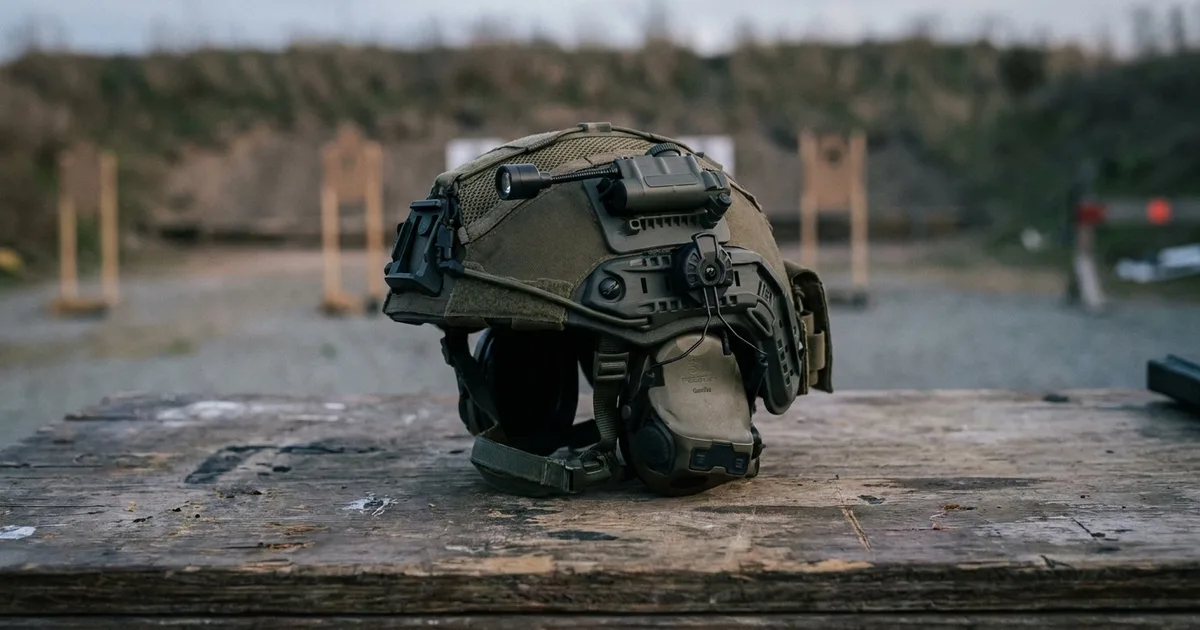
For most of the twentieth century, a soldier’s helmet had one job: stop fragments. Hearing protection, if issued at all, meant a pair of foam plugs in a pocket, and the radio was a handset carried by someone else. A rifle squad today looks different. The helmet carries rails, a night-vision mount and a light, and clipped to its sides sits an electronic headset that protects the ears and connects the wearer to the radio net. Armies no longer treat these as separate pieces of kit. They treat the head as one system.
Three pressures pushed things in this direction: the long-term cost of hearing injuries, the growing amount of electronics a soldier carries, and the simple fact that a helmet and a headset compete for the same few centimetres around the ear.
The most common military injury is not the one people expect
Hearing damage is the most widespread lasting injury of military service in the United States. In the Department of Veterans Affairs’ Annual Benefits Report for fiscal year 2024, tinnitus ranked first among service-connected disabilities and hearing loss ranked fifth. More than 3.2 million veterans were receiving compensation for tinnitus and roughly 1.6 million for hearing loss.
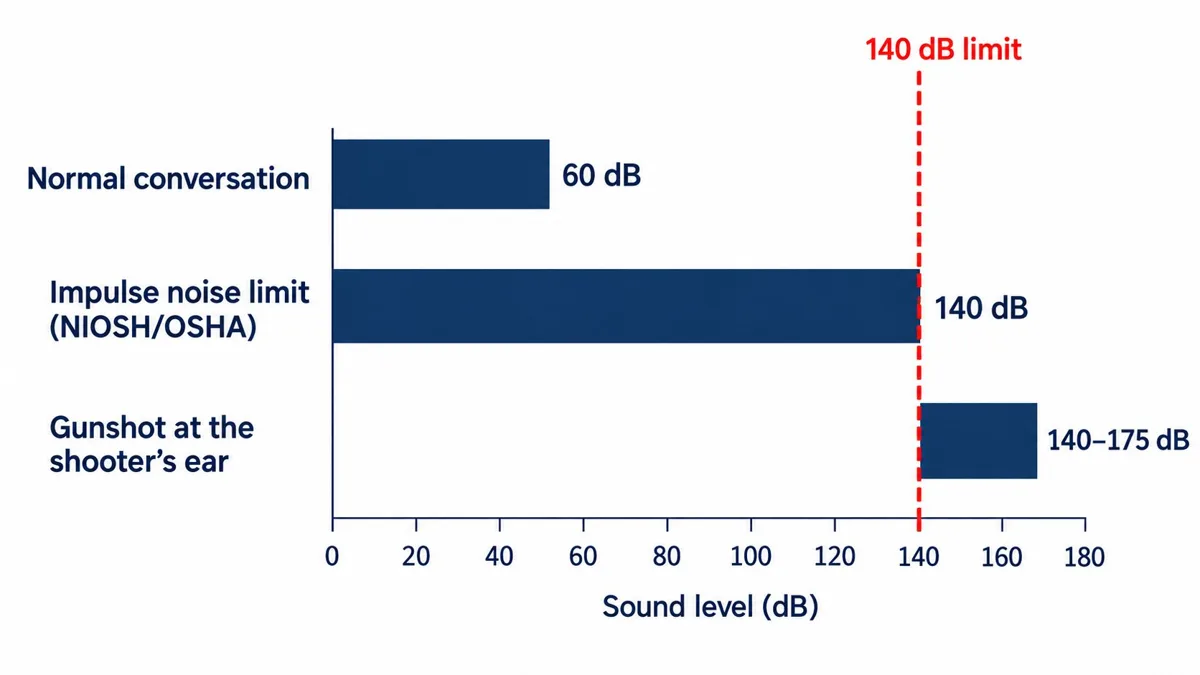
The physics explain the numbers. According to NIOSH, small arms produce peak sound levels of about 140 to 175 dB at the shooter, and large-calibre weapons can go above 185 dB. NIOSH and OSHA both set the limit for impulse noise at 140 dB peak, so a single unprotected shot from most rifles already crosses the line where permanent damage becomes possible.
Foam earplugs solved only half of the problem. They cut gunfire, but they also cut voices, footsteps, engines and radio traffic. Soldiers who could not hear orders or an approaching vehicle often pulled their plugs out and accepted the damage as the price of staying aware.
How electronic hearing protection changed the trade-off
Level-dependent headsets were built to remove that choice. Microphones on the outside of each ear cup pick up ambient sound and play it back inside, often amplified, so a whispered command or a footstep becomes easier to hear than with bare ears. When a sound crosses a set threshold, such as a gunshot or a blast, the electronics compress it to a safe level within milliseconds, while the cups keep providing passive insulation.
A modern tactical headset typically combines:
- level-dependent ambient listening through stereo microphones, which keeps the direction a sound comes from;
- passive attenuation from the cups themselves, which works even with a flat battery;
- radio integration through a downlead cable and a push-to-talk adapter, with a boom microphone on communication versions;
- an earplug mode that raises playback volume when plugs are worn underneath for double protection;
- a choice of mounting: a headband or rail adapters for a helmet.
The Peltor ComTac line shows how far the category has come. The current ComTac VIII adds Mission Audio Profiles that adjust playback to the acoustic environment, a soundscape function aimed at keeping speech intelligible in noise, and an earplug mode for situations where double protection is needed. It can also be converted from a headband to an ARC rail attachment (Peltor part P3ADG47-F SV/2), so the headset clips straight onto the helmet. Anyone comparing 3M Peltor ComTac headsets usually runs into this decision first: headband or helmet mount.
Why the headset moved onto the helmet
A headband worn under a helmet competes with the helmet’s suspension pads and retention straps. The band lifts the shell, creates pressure points on the crown of the head, and over a long shift the combination gets uncomfortable enough that people start loosening something they shouldn’t.
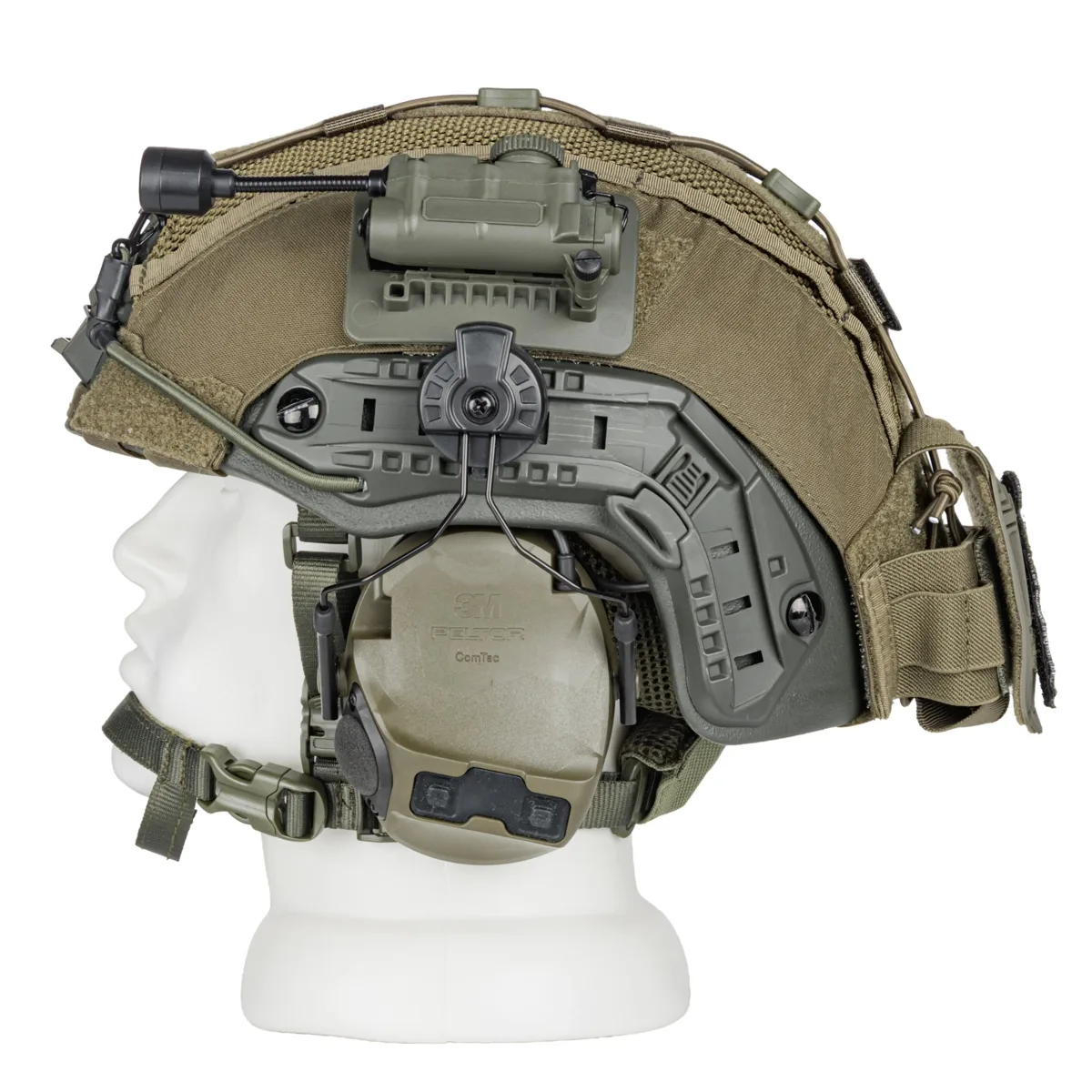
Side rails fixed this. Most modern high-cut helmets, including the FAST-style shells widely bought by police units, security teams and civilian shooters, carry accessory rails on both sides. The headset arms slide into those rails, and the cups can pivot away from the ears when they are not needed. Rail mounting brings four practical gains:
- No band sits between the scalp and the helmet, so the suspension fits the way it was designed to.
- The ear cups can be rotated into a parked position during rest or quiet tasks without removing anything.
- The headset’s weight rests on the helmet shell instead of the top of the head.
- Cables and the boom microphone stay in fixed positions, which means fewer snag points.
The high-cut shape is part of the same logic. Older full-cut helmets covered the ears; high-cut shells are trimmed at the sides precisely so a headset can sit there. That is a deliberate trade: slightly less coverage on the side of the head in exchange for hearing protection and communications that people actually keep wearing.
The US Army’s newest helmet was designed around integration
Military procurement points the same way. In February 2024 the US Army began fielding the Next-Generation Integrated Head Protection System (NG-IHPS), with about 2,000 soldiers of the 82nd Airborne Division’s 1st Brigade Combat Team receiving it first. The Army states that the helmet offers more ballistic and fragmentation protection while cutting by 40% the weight previously needed to reach that level, largely thanks to polyethylene replacing aramid in the shell. Across five sizes it weighs between 2.92 and 3.92 lb.
What stands out is how the Army describes the helmet: as a base for other equipment. Its boltless retention system and night-vision bracket are designed to accept a mandible protector, hearing protection, communications and head-up displays such as IVAS and ENVG-B. Because the accessories attach without bolts through the shell, adding them does not weaken the helmet’s structure.
What this means for buyers outside the military
The same reasoning now shapes how law enforcement, private security and civilian shooters equip themselves. The main configurations compare like this:
| Configuration | Hearing | Radio | Fit and comfort | Where it fits |
|---|---|---|---|---|
| Helmet + foam earplugs | Protected, awareness lost | Difficult | Simple, cheap | Basic range use |
| Helmet + passive headband muffs | Strong attenuation, no awareness | None | Band conflicts with suspension | Not a good match with a helmet |
| Helmet + electronic headband headset | Protection with awareness | Optional | Works, but pressure points on long wear | Range days, short duty |
| Rail helmet + rail-mounted electronic headset | Protection with awareness | Integrated | Best weight distribution | Duty, training, extended wear |
Before buying, it is worth checking a few points in this order:
- Protection level and standard. Under the new NIJ Standard 0123.00, the familiar Level IIIA designation has been replaced by HG2, and Level II by HG1. Many helmets on the market are still described as IIIA under the earlier system, so ask which standard was used and request the test documentation.
- Rail type. Helmet rails are not universal. The headset adapter has to match the rail on the shell, otherwise the cups will not lock in place.
- Fit and suspension. A helmet that moves on the head will pull a rail-mounted headset off the ears. Size and pad configuration matter more once accessories are attached.
- Total weight. Shell, headset, light and cover add up quickly. The NG-IHPS figures above are a useful reference point for what a modern full system weighs.
- Legal status. Rules on owning and importing body armour and helmets differ between countries and, in the US, between states.
When comparing ballistic helmets, it pays to look at the rails and the mounting hardware as carefully as the protection rating, because the headset will spend its whole life attached to them.
The head as a single system
The shift from separate items to one integrated head system is a response to measurable harm. Hearing injuries remain the most common lasting cost of military service, and the equipment that prevents them only works if people keep it on. Putting the headset on the helmet, rather than under it, makes that far more likely. For soldiers, police officers and anyone else who spends long hours in a helmet around gunfire, the lesson is the same: choose the helmet and the hearing protection together, not one after the other.