
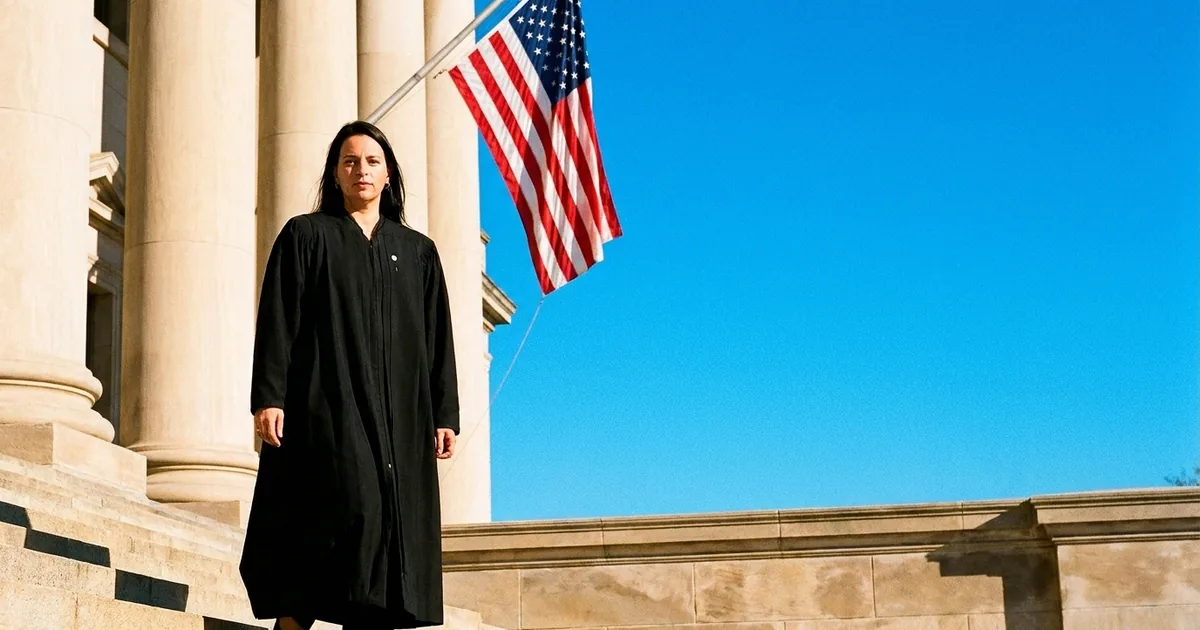
“Chairman Carr has taken President Trump’s rhetoric as his marching orders.”
Judge Loren AliKhan, opinion of November 25
A federal judge in Washington barred the FCC on Wednesday from continuing its early review of the licenses held by ABC’s eight owned stations. Most headlines stopped at “blocked.” The 45-page opinion is narrower than that, and the record it recites shows the damage was done before the judge arrived.
Judge Loren AliKhan did two things. She denied the FCC’s motion to dismiss. And she granted Disney’s request for an injunction only in part, limiting it to acts “pertaining to the early license renewal proceedings.”
She turned down the rest. Disney had asked her to bar “any actions, formal or informal, to coerce or threaten” ABC over its editorial choices. Disney, she wrote, had not specified what those actions “are or might be,” and a court cannot enjoin “injuries neither extant nor presently threatened, but only merely feared.”
What the order stops
Any further action on the early renewal of ABC’s licenses, including a hearing designation order. That covers WABC in New York, KABC in Los Angeles, WLS in Chicago, WPVI in Philadelphia, KTRK in Houston, KGO in San Francisco, WTVD in Durham and KFSN in Fresno.
What it leaves open
The FCC’s diversity investigation of Disney. The Media Bureau’s inquiry into The View. And the tools the FCC’s own lawyers listed in a supplemental filing: administrative subpoenas, forfeiture orders, standalone evidentiary hearings and license revocation proceedings. The judge wrote that the relief “is not permanent” and that the FCC can use other investigative tools.
Look at the dates the opinion lays out. On April 23, Jimmy Kimmel did a skit about Melania Trump. On April 27, Trump posted that Kimmel “should be immediately fired by Disney and ABC.” On April 28, the FCC’s Media Bureau ordered all eight licenses in for early renewal.
“It is no coincidence,” AliKhan wrote.
The order itself says the move was essential to an investigation into discrimination. It does not say how Disney’s answers fell short. That explanation came May 15, seventeen days later, in an email from the Enforcement Bureau. The judge did not buy the FCC’s account of its motives, writing that she “does not find that explanation to be credible on the record before the court.”
The FCC’s lawyers also conceded, in that supplemental filing, that the Enforcement Bureau could have ordered an evidentiary hearing with public input under its general investigative authority. No unprecedented step required.
The president’s side of the call-and-response is in the record too. AliKhan counted eleven public calls by Trump over two years to strip ABC’s licenses, the latest in July. One, from Christmas Eve: “shouldn’t their very valuable Broadcast Licenses be terminated? I say, YES!” Another, to an ABC reporter in the White House: “I think the license should be taken away from ABC because your news is so fake and it’s so wrong.”
The Part Nobody Is Leading With
The opinion treats ABC’s own behavior as evidence. Since the Media Bureau opened its inquiry into The View in February, “no candidate for public office has appeared on The View” for several months. ABC passed on booking several. It dropped clips it would otherwise have aired.
When Kimmel interviewed Senate candidate James Talarico, ABC put it on YouTube instead of broadcasting it. ABC told the court that was partly because “the FCC has no control over YouTube.” In July, ABC streamed Trump’s address online rather than carrying it, because the administration “might take some adverse action.”
We think that is the finding that matters. A regulator never has to revoke a license to decide what a network airs. Eleven public calls and one early-renewal order were enough, and an injunction against one proceeding does not return the candidates ABC turned down or the clips it cut.
It does not protect anyone else, either. The posts AliKhan quotes name NBC and CBS in the same breath, and neither is a party. Six weeks ago a different judge ruled for CNN, MS NOW and Politico on White House access. The administration is appealing, and the White House still limits their access.
Carr should withdraw the early-renewal order rather than appeal it. ABC’s stations serve six of the ten largest US markets, and every month the order stays alive is another month the licenses sit under a threat the court has already called retaliation. Read our earlier coverage of Disney’s decision to sue and of the Kimmel skit that preceded the order for how it got here.
Carr did not respond to NPR’s request for comment on the ruling Wednesday evening. The test from here is easy to watch: whether a candidate for office books a seat on The View again.