
White House and Justice Department officials have spent recent days warning Democrats that their planned investigations could expose them to criminal scrutiny under 18 U.S.C. 241, the “conspiracy against rights” statute Jack Smith used to charge Trump, Politico reported Tuesday.
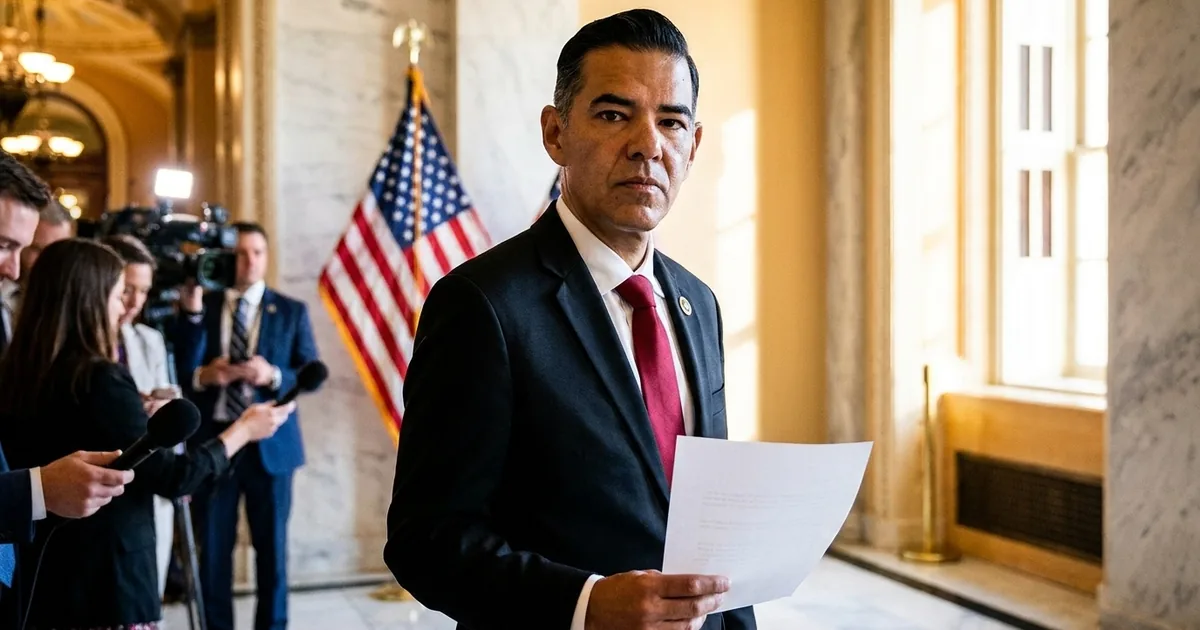
Aaron Reitz, the U.S. attorney for the Southern District of Texas, cited the statute in letters to seven Democratic lawmakers, up from the four we counted last week. White House counsel Will Scharf wrote Rep. Robert Garcia, in line to chair House Oversight: “Issuing unlawful subpoenas with the intention of depriving citizens of their constitutional rights and privileges may warrant further investigation.”
We Read the Statute and the Clause
Section 241 reaches people who “conspire to injure, oppress, threaten, or intimidate any person” in exercising a right the Constitution secures. It says nothing about oversight. Garcia has sent preservation notices, which are requests, and no subpoena exists because the new Congress is not seated until January.
Article I, Section 6 of the Constitution says that “for any Speech or Debate in either House, they shall not be questioned in any other Place.” A prosecutor’s demand that Sen. Adam Schiff preserve records about his “intent to weaponize Congressional investigations” is a question put to a senator about what he plans to do in the Senate. We are not claiming a court has said that crosses the line. We think it is hard to read it any other way.
The Justice Department’s own accounts do not agree. Reitz told CBS News Texas he had begun a preliminary inquiry under Sections 241 and 242 and had “reason to believe, although we are not yet alleging” a conspiracy. Attorney General Todd Blanche told reporters there are “no ongoing criminal investigations into words that the incoming senators or congressmen have said.” One of them is wrong.
“It’s been pushed way outside, doubly doubly so, outside the banks of what it was intended to do.”
Mark Brown, a law professor at Capital University, on the administration’s reading of Section 241
We think this is intimidation with a citation attached. A letter costs nothing to send and a great deal to answer, and the lawmakers it targets belong to a party that won the House three weeks ago. Mike Davis, the former Senate Republican aide Politico quoted, put the logic in one line: “what’s good for the goose is good for the gander.” That is an argument about payback, not about what the statute says.
The test arrives with the first subpoena in January, and the question then is whether anything follows the letters.