
German public broadcasters NDR and WDR and the newspaper Süddeutsche Zeitung reported Monday that Western intelligence believes Russia has built a nuclear-armed satellite, code-named Sputnik-S, and could launch it within 60 days. Nothing public confirms that, but one date makes the report hard to wave off: the warnings were reportedly moving between NATO capitals in early November, so they were already in circulation when Vladimir Putin joined Donald Trump and Xi Jinping on November 19 in a declaration against nuclear war.
What the German outlets reported
Citing anonymous German military and intelligence sources, the three outlets reported that the satellite carries a nuclear warhead and has sat in storage near Moscow for years. Intelligence shared among NATO members in early November put a launch inside 60 days, and Germany’s Space Command judged a December launch plausible. In orbit, it could disable communications, navigation and surveillance satellites, commercial ones included.
What is on the record
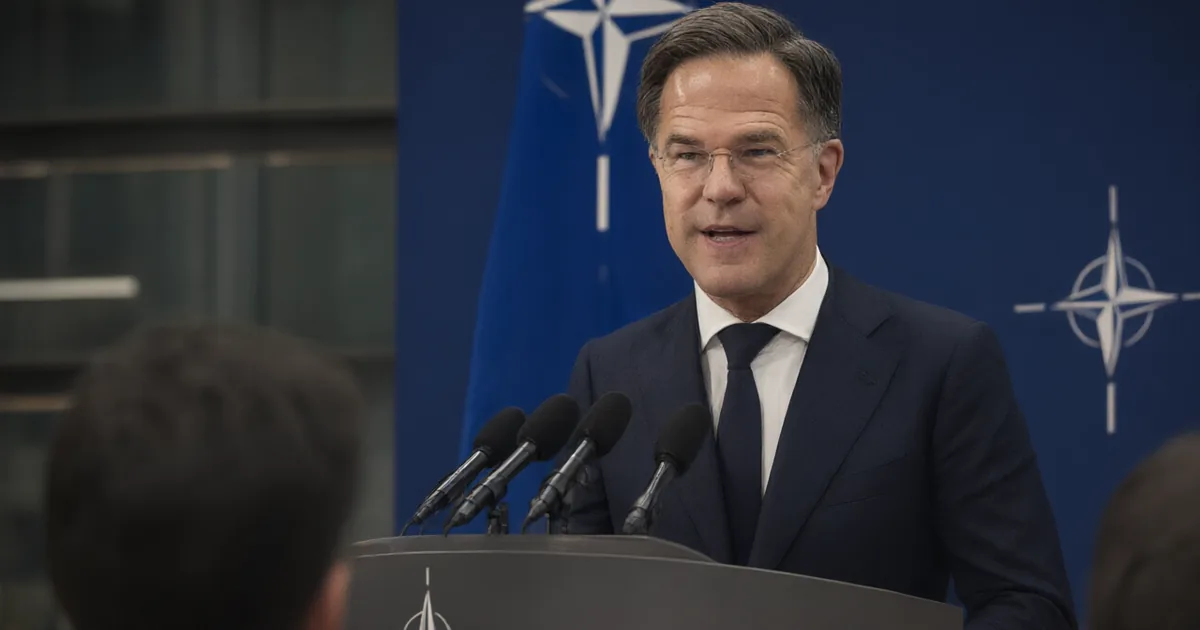
NATO Secretary General Mark Rutte answered questions about it in Berlin on Monday without confirming it. Chancellor Friedrich Merz neither confirmed nor denied it. Kremlin spokesman Dmitry Peskov said the report was “hardly worth taking seriously,” and Russia’s embassy in Berlin called it propaganda. The one on-the-record US finding, from October, says only that Russia is developing such a satellite.
The Treaty Says It in One Sentence
Article IV of the 1967 Outer Space Treaty, to which Russia is a party, reads in part:
States Parties to the Treaty undertake not to place in orbit around the earth any objects carrying nuclear weapons or any other kinds of weapons of mass destruction, install such weapons on celestial bodies, or station such weapons in outer space in any other manner.
There is nothing to litigate in that sentence. A satellite carrying a nuclear warhead is exactly what it describes, which is why the Defense Intelligence Agency’s October assessment is so blunt. The agency said “Russia is developing a satellite designed to carry a nuclear weapon despite its obligation to comply with the 1967 Outer Space Treaty.” That is a US intelligence agency saying on the record that the program exists. What the German reporting adds is a name and a clock.
Moscow has denied this before. When the US made the accusation in 2024, Putin said Russia was “categorically against the deployment of nuclear weapons in space”. Two years later the DIA still describes the work as under way. The Kremlin’s denial settles nothing in either direction.
What Rutte Said, and What He Left Out
Rutte told reporters NATO would “always make sure we defend every inch of NATO territory, and that includes making sure we are safe when it comes to the space element.” He said the alliance has a variety of response options and will “make updates where necessary” to its deterrence and defence.
That is a pledge, not a confirmation. Rutte did not say the satellite exists. Merz went a step closer without crossing the line: he did not confirm or deny the reports, but called them “not new, yet they remain no less shocking” and said they “reveal the level of escalation Russia is evidently prepared to pursue.” We read that as a man choosing his words. A chancellor who believed the story was invented would have said so, and his own government spokesman, Stefan Kornelius, pulled the other way by warning against “excessive nervousness regarding hypothetical dangers.”
What One Blast Did in 1962
Every comparison reaches for Starfish Prime, and this one holds up. On July 9, 1962, the US detonated a 1.4-megaton warhead 400 kilometers above the Pacific. Telstar 1, the first commercial communications satellite, launched the next day into the radiation that blast left behind, and by the following February it had been “completely fried” by high-energy electrons, at a flux a Bell Labs engineer on the project remembered as a hundred times what was predicted.
Durham University’s Bleddyn Bowen put the number of active satellites today at more than 15,000, and the DIA warns that radiation belts from a space detonation could persist for years, wearing down spacecraft that at first suffered only temporary disruption. Bowen also made the strongest case against panic: the effects would be indiscriminate and would take out a lot of Russia’s own space infrastructure. That is an analyst’s argument that the weapon is leverage rather than a plan. It is not an intelligence finding, and no one should read it as reassurance.
How the Dates Line Up
- July 9, 1962: the US detonates Starfish Prime, a 1.4-megaton blast at 400 kilometers.
- 1967: the Outer Space Treaty bans nuclear weapons in orbit.
- February 2022: Russia launches Cosmos 2553 into an isolated orbit no other spacecraft uses. Moscow said it was testing radiation effects on electronics; the DIA flagged it in its latest assessment.
- 2024: the US accuses Russia of developing a nuclear-armed anti-satellite weapon. Putin denies it.
- October 2026: the DIA states that Russia is developing a satellite designed to carry a nuclear weapon.
- Early November 2026: warnings of a possible launch within 60 days are reportedly shared among NATO members.
- November 19, 2026: Trump, Xi and Putin release a “peace declaration” in Shenzhen. Xi says beforehand that “nuclear war cannot be won and must not be fought.”
- November 23, 2026: NDR, WDR and Süddeutsche Zeitung publish; Rutte and Merz are asked about it in Berlin.
What We Think
Hold two things at once. The report is one investigation resting on unnamed sources, and no government has confirmed a launch date, so nobody should write that Russia is about to put a bomb in orbit as though it were settled. And the program itself is not a leak: the DIA put it in a public assessment a month ago, in language that leaves no room to read it as anything but a violation of Article IV.
Where we would not be patient is the summit. Putin joined a declaration against nuclear war on November 19, and the intelligence about Sputnik-S was, if the German reporting is right, already being passed around NATO. A declaration with no timetable and no binding arms-control commitments, from a government the DIA says is developing a nuclear satellite in breach of the treaty, is a photograph, not arms control. We did not find a US government response to the German reporting in the coverage we read, and Washington is the party best placed to say whether the intelligence holds. It should say so.
Counted from early November, the 60-day window runs out around the turn of the year. If nothing launches, the story turns into who leaked what and why. If something does, the first thing to check is whether it goes somewhere other spacecraft do not, the way Cosmos 2553 did in 2022.