
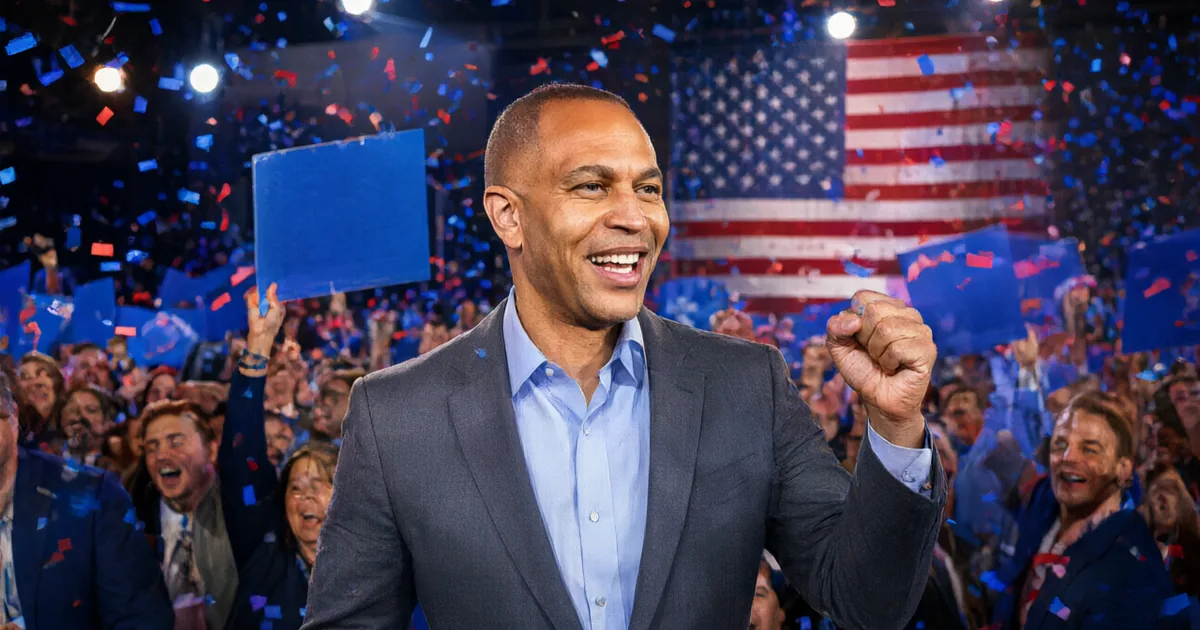
Democrats now hold at least 258 House seats, the most the party has won since 1992, after Chuck Hubbard unseated Republican Rep. Virginia Foxx in North Carolina by 330 votes following a recount, CBS News reported Sunday. Every write-up of the milestone compares it to Bill Clinton’s 258 in 1992 and Barack Obama’s 257 in 2008, and that comparison flatters the party into the wrong lesson.
Both of those majorities were gone two years later. The one that actually resembles this House, a big Democratic class facing a Republican president, is the post-Watergate class of 1974. It had 32 more seats than this one, and those 32 seats are the whole story.
Three Majorities, Three Different Endings
We pulled the party split for each Congress from the House Historian’s official party-division table and lined up what happened next.
| Congress | Democratic seats | President | Democratic seats two years later |
|---|---|---|---|
| 94th (elected 1974) | 291 | Gerald Ford (R) | 292 |
| 103rd (elected 1992) | 258 | Bill Clinton (D) | 204 |
| 111th (elected 2008) | 257 | Barack Obama (D) | 193 |
| 120th (elected 2026) | 258, up to 260 | Donald Trump (R) | Decided in 2028 |
The 1992 and 2008 majorities lost 54 and 64 seats. Both belonged to the president’s party heading into a midterm, which is the most reliable way in American politics to lose seats.
This majority is the opposition. Its next test is a presidential year, with Trump term-limited off the ballot.
The Number Nobody Printed: 290
Article I, Section 7 of the Constitution lets Congress override a veto with two-thirds of each chamber. With all 435 members voting, that is 290.
Democrats have 258. If the two Democrats leading in Minnesota and Tennessee hold on, they have 260.
That is 30 to 32 votes short, which means about 30 Republicans would have to cross Trump on any given override. House Republicans just picked Jim Jordan as their leader. Plan accordingly.
The Senate math is worse in one direction and closer in another. Democrats won 56 seats there, after flips that included Ohio and Mary Peltola’s Alaska win. That leaves them 11 short of the 67 needed to override and four short of the 60 that ends a filibuster.
The 1974 class cleared 290 with one seat to spare. Gerald Ford still vetoed bills. The difference is that the House could answer.
What 258 Seats Actually Buys
Quite a lot, as it happens, just not laws over Trump’s objection.
Hakeem Jeffries can lose dozens of Democrats on a vote and still pass it. That ends the hostage politics of the last two years, when a handful of holdouts could sink any Republican bill.
The gavel controls subpoenas. Jamie Raskin, the incoming Judiciary chair, called impeachment a “critical tool in the constitutional toolbox” and said Democrats “will not hesitate to use it if we think that the benefits exceed the costs,” Yahoo News reported.
It also controls spending. Every appropriations bill starts in the House, and Trump needs those bills signed to keep his government open.
Jeffries Sounds Like He Read the Table
Jeffries celebrated on X: “House Democrats have just secured the largest majority any party in Congress has held this century. BOOM.”
Then, on Face the Nation, he sounded more like a man who knows how 1994 went: “Can you imagine how angry the American people will be with Washington if, over the next two years, we fail to do anything about affordability, fail to do anything about healthcare, and fail to do anything about immigration?”
House Democrats nominated him last week for the speakership Mike Johnson is losing. He would be the first Black speaker.
The Wave Was Bigger Than the Seat Count
Democrats won the national House vote by 14 points, the widest margin in any midterm since 1974, Yahoo’s results tally shows.
So the vote looked like 1974 and the seats look like 1992. Even so, the wave reached deep: Foxx’s district was one Republicans won by nearly 19 points in 2024, and it still fell.
Trump sat at 32 percent approval in a Reuters/Ipsos poll, Al Jazeera noted, and he has already promised to veto what this Congress sends him.
Our Read: Make Him Veto It
We think the honest pitch to voters is the one nobody wants to make on a victory lap. Democrats cannot restore the Medicaid money or the Affordable Care Act credits over a veto with these numbers.
They should pass those bills anyway, fast, and put each one on Trump’s desk. A veto of cheaper health insurance from a 32 percent president is a 2028 ad that writes itself.
What they should not do is sell a 258-seat majority as a governing mandate it is not. That is what 1993 did, and the table above shows how it ended.
Still Counting
Four races remain open. Jake Johnson leads Republican Rep. Brad Finstad by 324 votes in Minnesota’s 1st, with a recount running November 30 to December 3. Victoria Broderick leads Rep. Scott DesJarlais by about 280 votes in Tennessee’s 4th. Louisiana’s 5th and 6th go to a December 12 runoff.
Our interactive midterm results map tracks the final calls.
Quick Answers
How many House seats do Democrats have after the 2026 midterms?
At least 258 of 435, with Republicans at 173 or more and four races uncalled as of November 22, 2026. The count could reach 260.
Can House Democrats override a Trump veto?
Not on their own. An override needs 290 votes in a full House, about 30 more than Democrats hold, plus 67 senators against their 56.
When does the new Democratic majority take over?
The 120th Congress is sworn in on January 3, 2027, when the House is set to elect Hakeem Jeffries speaker.
When did Democrats last hold more House seats?
In the 102nd Congress (1991 to 1993), with 267 seats. The 1992 election cut that to 258, the number Democrats have now matched.