
Suppose you hold $10 million of Oracle bonds and want to insure them against default for five years. On Oct. 15 that cost about $288,000 a year, a record, up from roughly $260,000 a week earlier. Here is what is established about why:
- Oracle’s five-year credit default swap closed at 288 basis points on Oct. 15, a record for the company.
- S&P cut Oracle to BBB- in July, one notch above junk, citing a forecast free cash flow deficit near $42 billion for fiscal 2027.
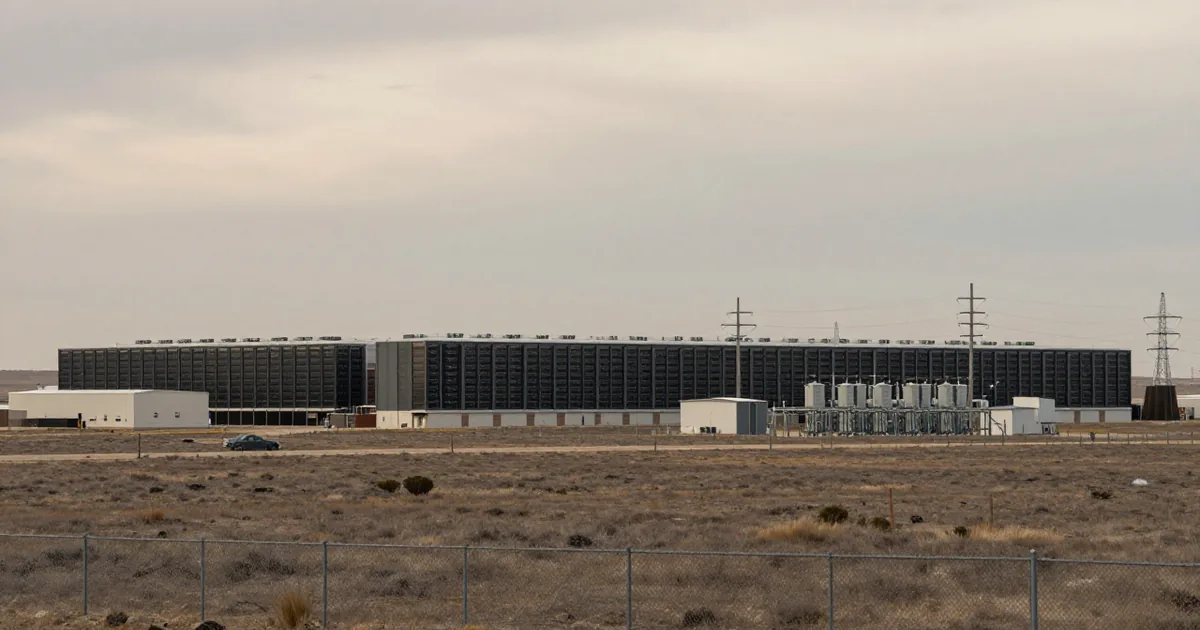
- A group of banks including JPMorgan and MUFG has spent more than six months trying to distribute $38 billion of construction debt tied to a Texas and Wisconsin data center leased to Oracle, and some lenders will sell pieces to non-bank buyers at a discount.
The arithmetic is the part the “AI bubble” headlines skip. A spread of 288 basis points means 2.88% of the insured amount per year, which is $28,800 for every $1 million. A week ago it was $26,000. That is not panic pricing. CoreWeave’s insurance costs roughly $119,500 per $1 million, more than four times Oracle’s, and its bonds trade near 80 cents on the dollar with yields around 16%. Oracle is being treated as a worry. CoreWeave is being treated as a patient.
Yet Oracle is the bigger systemic fact, and the reason is a single number. OpenAI accounts for roughly half of Oracle’s $638 billion in remaining performance obligations, the contracted backlog that justifies the building. Half of $638 billion is about $319 billion resting on one customer’s ability to keep paying. GuruFocus, citing Reuters, notes that investors are asking whether these projects earn enough to repay their debt, and that is the right question to ask of a backlog with one name on half of it.
Now the banks. The $38 billion is not Oracle’s own borrowing, it is construction debt for a facility Oracle leases. The stress shows up in a quieter place than Oracle’s bond spread: lenders bumping against internal limits on how much AI exposure any one bank can hold, which is the stated reason for the discount sales. A bank that cannot sell what it underwrote has not removed the risk, it has just kept it.
Context matters here. Big Tech has issued $182 billion in investment-grade bonds this year while the five largest cloud providers plan capital spending above $690 billion, and the 10-year Treasury yields around 5%, so every new tranche costs more than the last. Meta’s Hyperion data center bonds already trade near 91 cents on the dollar.
We think the loud debate has the wrong target. Whether the models are worth building is a question for the companies that build them. The question for everyone else is who is holding the paper, and on that the public record is thin. Banks that underwrote tens of billions in data center construction debt should have to say, in plain language, how much of it they still hold and how concentrated it is in a single tenant’s customer. Until they do, a cheap-looking credit default swap is the only honest thermometer we have, and it just hit its highest reading. As recently as May, Wall Street had Oracle racing toward a $1 trillion market cap. The bond market is now asking what is underneath it.