
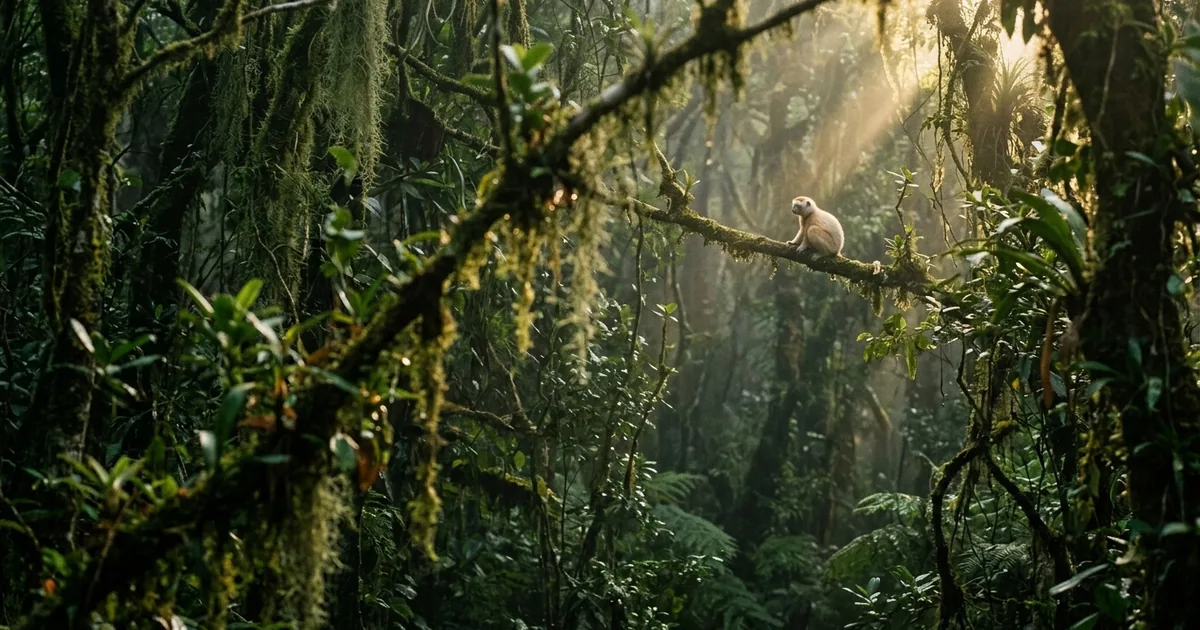
Leonardo DiCaprio’s Re:wild and the Bezos Earth Fund launched the Phoenix Species Project on Tuesday with $200 million split evenly between them, aimed at 100 critically endangered species across 30 countries.
The headline number is the largest ever committed philanthropically to species recovery, and it is not the part of the announcement that will determine whether any of this works.
Five Years Per Species Is a Structural Fix, Not a Line Item
The design choice buried in the Bezos Earth Fund’s own announcement is that funding runs five years per species. Anyone who has worked in conservation will recognize why that sentence matters more than the $200 million above it.
Conservation biology runs on grant cycles that are typically one to three years. A field team spends the first year hiring, permitting and building relationships with the community that actually lives next to the animal. Year two produces the first usable data. Year three is spent writing the next grant application, because if it does not land, the team disbands, the local staff take other jobs, and the institutional knowledge about a specific population in a specific valley evaporates. Then someone gets funded again in year five and starts over from nothing.
Species recovery does not operate on that clock. A slow-breeding vertebrate might produce one measurable generational signal in the time a standard grant lasts. Five years of guaranteed money does not make the science easier. It makes it possible to keep the same people in the same place long enough for the science to mean something.
What They Picked, and What the Picks Reveal
The 100 species span mammals, amphibians, reptiles, birds, fish, invertebrates and plants. Named targets include the golden-crowned sifaka lemur in Madagascar, the Visayan warty pig in the Philippines, the pink land iguana that exists only on Wolf Volcano in the Galapagos, and the Hickory Nut Gorge green salamander in North Carolina.
That list is doing something deliberate. Two of those four are charismatic enough to put on a poster. The other two are a pig and a salamander. Conservation funding has a well-documented bias toward large mammals with expressive faces, and the money follows the fundraising appeal rather than the extinction risk. A portfolio that puts a North Carolina salamander next to a Madagascar lemur is either a genuine correction of that bias or very good marketing, and the five-year structure suggests it is at least partly the former. You do not need a salamander to raise money. You need it if you are optimizing for species saved.
Re:wild was co-founded by DiCaprio and the biologist Wes Sechrest, and Variety noted the additional backing from DiCaprio personally, Age of Union and the Todd Graves Family Foundation. Rolling Stone’s write-up framed it as the largest single philanthropic commitment ever aimed at recovering critically endangered species, which appears to be accurate.
Private Money Filling a Public Hole Is Still a Hole
Here is the uncomfortable frame. Two hundred million dollars is enormous for philanthropy and small against the problem. It is also, structurally, a substitute for something that used to be a government function in most of these 30 countries and increasingly is not.
That substitution has a cost that does not show up in the press release. Public conservation funding is accountable to legislatures and, eventually, to voters. Philanthropic conservation funding is accountable to a board and to the preferences of the people writing the checks. When a private fund decides which 100 species are worth saving, that is a genuinely defensible list assembled by scientists, and it is also a decision about global priorities made by a very small number of people with no mechanism for anyone else to contest it.
None of that is an argument against the money. It is an argument for noticing what the money is replacing. The species on this list do not care about the governance question and do not have time for it either.
Discovery and Extinction Are Running at the Same Time
The strange thing about this era is that we are still finding species while losing them at an accelerating rate. Researchers described a new deep-sea ghost shark off Costa Rica in June, one of a steady stream of new descriptions coming out of ocean work that barely registers as news anymore.
Both facts are true at once: the catalog of known life is growing, and the number of populations small enough to vanish inside a single bad decade is growing faster. A five-year funding commitment does not resolve that. It does mean that for 100 specific populations, somebody will still be counting them in 2031, which is more than most of them had on Monday.