
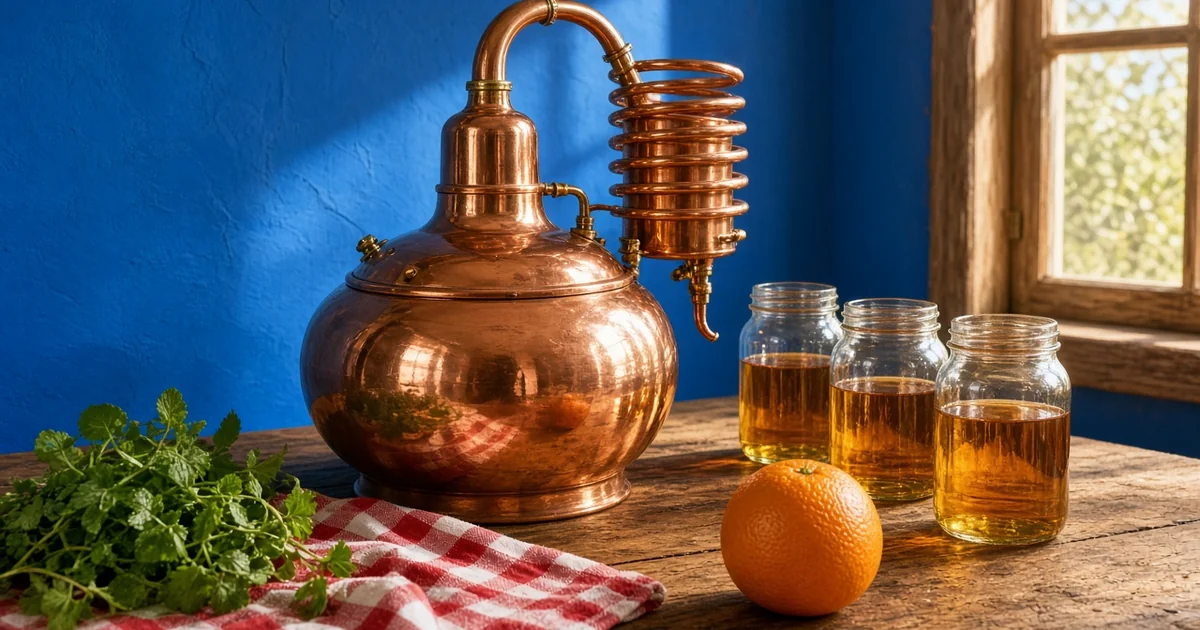
Scott McNutt owns a still. He has used it to make fuel alcohol, which federal law allows with a permit, and he says he wants to “tinker around” with making spirits at home, which it does not. The Supreme Court agreed Monday to hear his case, and the wire stories cover the 1868 history well. What they skip is the part a reader can act on: whether it is legal to distill in your own kitchen today, which depends on the state you live in, because two federal appeals courts have given opposite answers.
What Federal Law Allows Today
The statute is blunt. Section 5601 of the tax code makes it a crime to use a still to make distilled spirits in “any dwelling house,” or in any shed or yard connected to one, and sets the penalty at up to five years in prison, a $10,000 fine, or both for each offense. Beer is treated completely differently. Under section 5053(e), an adult can make beer for personal or family use tax-free, up to 100 gallons a year in a one-adult household and 200 in a household with two or more.
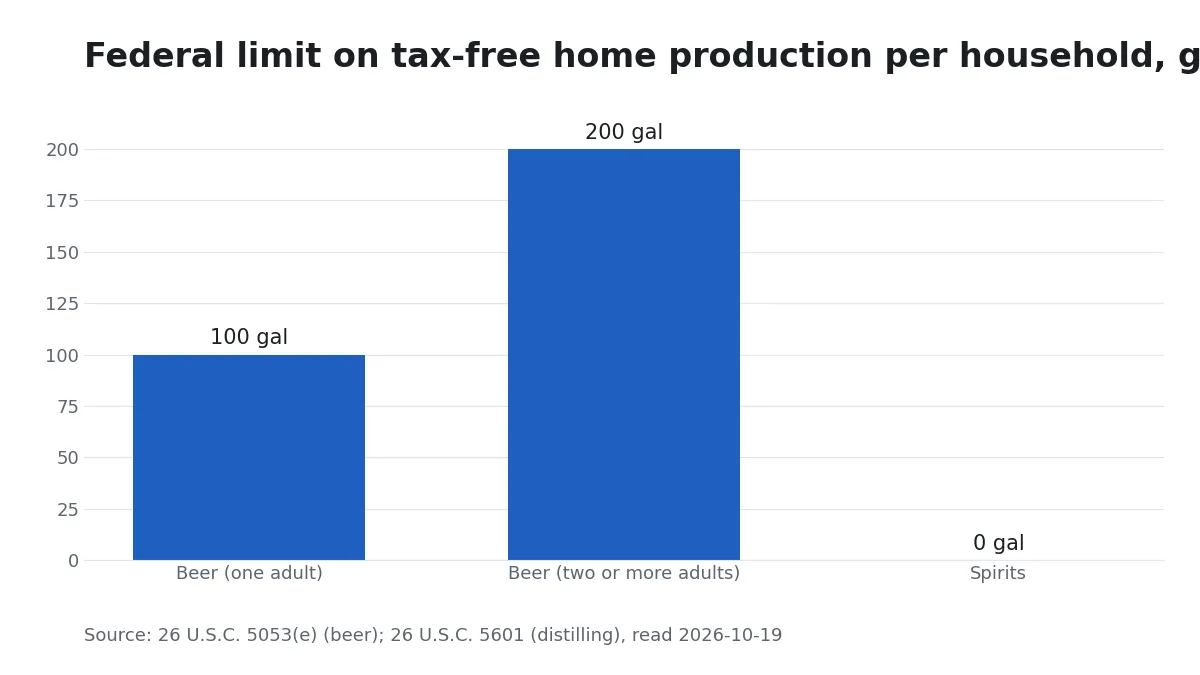
There is one lawful route to a still, and it is not for drinking. The Treasury’s Alcohol and Tobacco Tax and Trade Bureau issues Alcohol Fuel Plant permits to people who make distilled spirits “exclusively for fuel use,” and says that distilling without a permit is a crime. For beverage spirits at a home address, Husch Blackwell’s legal summary notes that the bureau will not even consider a permit application.
Here is where you stand, by court, drawn from that same summary:
| Where you live | What the court said | Status of the ban |
|---|---|---|
| Texas, Louisiana, Mississippi | 5th Circuit affirmed April 10, 2026, calling the law a ban that “prohibits and penalizes distillation” | Unenforceable |
| Kentucky, Michigan, Ohio, Tennessee | 6th Circuit upheld it in Ream, April 2026, in a divided ruling | Valid law |
| Everywhere else | No ruling yet | Still on the books until the justices decide |
The 5th Circuit case is McNutt, which the justices took up; the Trump administration is defending the ban, and Reuters reports it argues the law channels distilling to places where tax evasion is harder. Arguments are expected in the coming months and a ruling by the end of June.
Why We Think the Government Has the Weaker Side
The ban is defended as a tax measure, and that is the problem with it. A tax law gets its authority from collecting money. This one tells a home distiller there is no way to pay, because the bureau will not take an application from a house, and then makes the attempt a felony. We think the 5th Circuit read that correctly: a rule that refuses to let anyone pay the tax is a prohibition with a tax label on it, and Congress has no clean power to prohibit a private person from making a drink in their own home. The 6th Circuit’s answer, that Congress can reasonably protect its tax base from a historically rampant source of evasion, is an argument about 19th-century moonshine, and we do not think it fits a hobbyist with a countertop unit.
Nothing changes for you today. The still in a Houston garage is no longer chased in federal court, and the same still in Columbus is a felony. Until the justices rule, we would not run a batch anywhere, and a ruling for McNutt would not make the beer rules apply to whiskey: it would more likely send Congress back to write a licensing system, as it already did for beer.
Can I buy a still legally?
Section 5601(a)(1) reaches a still that is “set up” and not registered, and the bureau says distilling without a federal permit is illegal. The fuel alcohol permit is the one lawful use for a still on federal paper. We are not lawyers, so check your state’s rules too.
Does the case affect home brewing beer or making wine?
No. Husch Blackwell notes that Congress exempted home beer and wine making from tax and licensing for personal use. The 100 and 200 gallon beer limits in section 5053(e) are the ones we checked, and the case does not touch them.
When will the Supreme Court decide?
The justices are expected to hear arguments in the coming months and rule by the end of June 2027.