
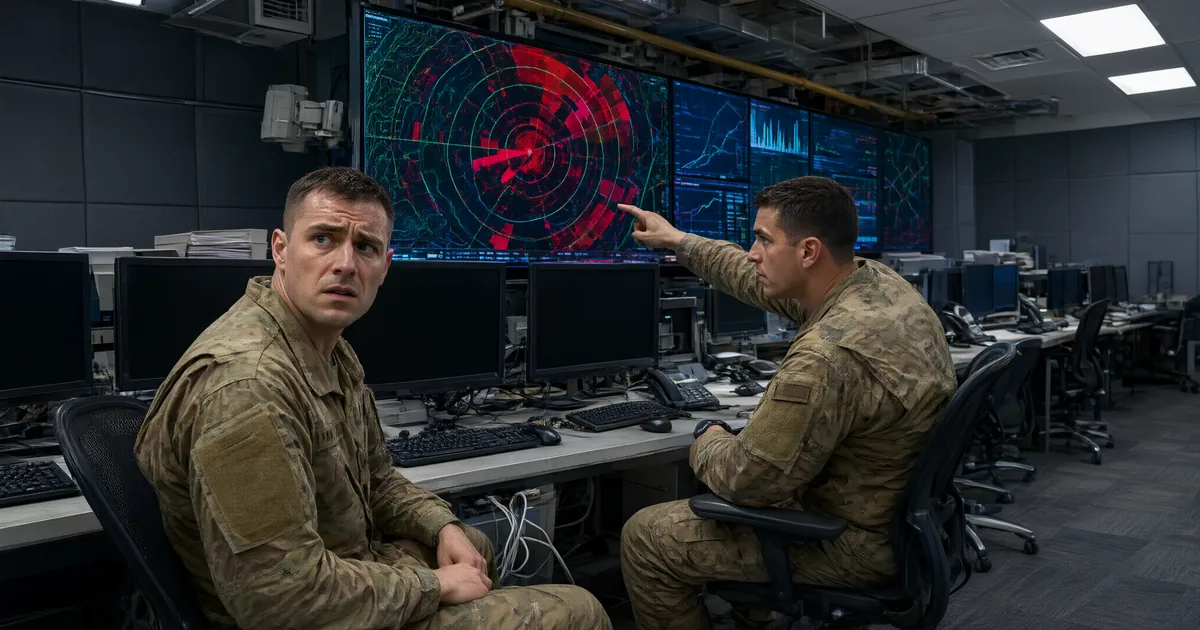
Hackers broke into Cloud One, the Air Force’s flagship cloud platform, which hosts everything from pay systems to North American air-defense radar data, Reuters reported on Friday, and a U.S. official confirmed the hack to NBC News; by our count it is the eighth federal intrusion reported since September.
- Three people familiar with the matter told Reuters the breach was found within roughly the past month, during a platform upgrade, and has disrupted the service.
- Reuters could not establish who the hackers are, how far they got or whether any data was taken. The Air Force said only that it “does not comment on the security posture, vulnerabilities, or operational status of specific networks and systems.”
- Migration of back-office applications onto Cloud One has been paused, updates to applications already running there were blocked, and some users lost administrator rights.
- One source said the attackers used a software flaw to reach the control plane, the layer that manages the platform, and compared that access to a universal remote control.
- U.S. Cyber Command has been asked to assess the damage, according to one source.
What Runs on Cloud One
The Air Force started Cloud One in 2017 as one home for its IT, built on Microsoft, Amazon, Oracle and Google clouds. Two of the applications on it show why the break-in matters: a command-and-control system that merges air-defense radar feeds from across North America, and the system that tracks bombs and missiles at more than 200 Air Force sites worldwide.
SAIC ran the platform until Leidos took over. Leidos won a potential six-year, $454.9 million order last December to maintain and modernize Cloud One’s architecture across all four clouds, and it has referred questions to the Air Force. Nothing reported links the hand-off to the breach. It only names who is now on the hook for finding out what happened.
“A breach here is a big deal,” one of the sources told Reuters.
Eight Intrusions Since September
The coverage we read mentions the other federal breaches in passing, mostly without dates. We put them in order, working from each outlet’s own report. It is our list, not an official count, and there may be others.
| Date | Target | What was reported |
|---|---|---|
| Sept. | FBI job portal | The hacking group ShinyHunters claimed it stole data on nearly every FBI agent |
| Sept. 28 | Pentagon, Defense Manpower Data Center | Personal data on 2.76 million living people and 294,000 deceased, including Social Security numbers; access ran from October 2025 to July |
| Oct. 28 | Homeland Security | Names, phone numbers and addresses of more than 40,000 agents, operatives and associates exposed |
| Nov. 19 | Agriculture Department | A system used to pay farmers was hit |
| Nov. 20 | FBI, National Crime Information Center | The FBI is investigating an apparent breach of the database police nationwide use; here is what it actually holds |
| Nov. 24 | CIA and Office of the Director of National Intelligence | An open-source intelligence analysis system was breached, exposing unclassified information |
| Nov. 25 | Treasury, FinCEN | FinCEN is investigating “unauthorized access to a limited subset of its systems” and took some systems offline |
| Nov. 27 | Air Force, Cloud One | This story |
Five of the eight surfaced in the nine days from Nov. 19 to Nov. 27. NBC notes it is unclear whether any of the breaches are related, and nothing we found ties them together.
Keep these apart from the six tech outages that hit government and private systems from Nov. 12 to Nov. 17. Officials blamed those on patches and failures inside the operators’ own systems, not on attackers, as we laid out when the White House pushed out its national cyber director. Every row above is an intrusion.
A Press Release Is Not an Answer
The White House’s reply was a Wednesday news release touting its “historic effort to strengthen America’s cyber capabilities”, issued after Sean Cairncross was out as national cyber director and Kirsten Davies, the Pentagon’s chief information officer, was named to take the job. Two of the eight incidents in our table, the personnel database and Cloud One, are Pentagon systems.
That is spin. So was the president’s reaction to the FBI hack, when he told Fox News he hoped it would expose “the Russia, Russia, Russia hoax,” a wish the system cannot grant.
The Air Force is entitled to decline to discuss a network’s security posture. The public is still owed one accounting from the administration: which of these incidents are linked, what was taken, and who is in charge of finding out. If Davies gets a confirmation hearing, both Pentagon incidents belong at the top of the list.
Reuters could not establish who did this, how far it went or whether anything was taken. Those are the three answers that matter, and so far the government has offered none of them.