
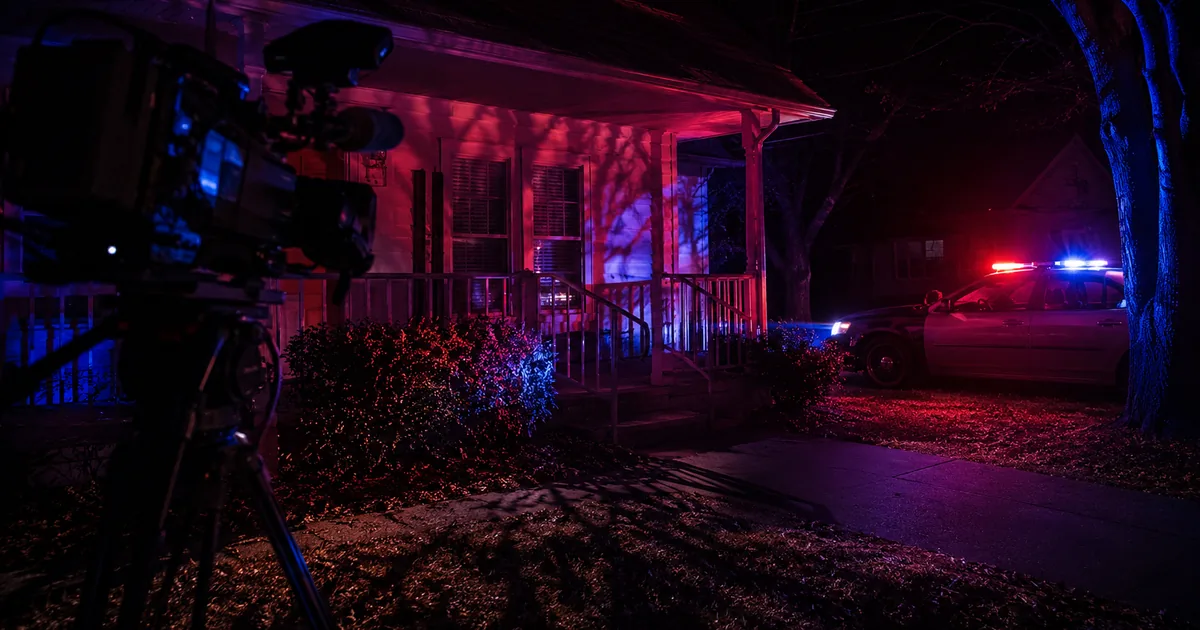
Donna Dillon was standing on her front porch in Knox County, Tennessee, when she saw roughly 10 officers in her driveway, flanked by a cameraman filming for the REELZ channel show “On Patrol: Live.” They were there to arrest her on a three-year-old misdemeanor assault charge that has since been dropped. Her lawsuit against the Knox County Sheriff’s Office says the whole thing was theater.
What Happened to Donna Dillon
According to CNN’s reporting on the lawsuit, Dillon was arrested in June 2025 on a warrant stemming from a dispute with former neighbors who had already moved away and never pursued the case. Officers placed her in handcuffs on her front steps next to her 17-year-old son while cameras rolled.
Dillon, who had recently undergone shoulder replacement surgery, pleaded with deputies to handcuff her with her arms in front. They did not adjust the cuffs for approximately five minutes, and she remained restrained in the back of a patrol car in severe pain for over four hours. The charge was later dropped entirely.
The lawsuit alleges that the arrest was not driven by any genuine public safety concern. A three-year-old misdemeanor warrant from a dismissed case does not typically trigger a 10-officer response with a camera crew. It triggers a phone call, or a notice to appear. The deployment of that many officers for that kind of charge, while a reality show films, suggests the arrest was selected for its entertainment value, not its legal urgency.
The “On Patrol: Live” Problem
“On Patrol: Live” is the successor to “Live PD,” the A&E show that was canceled in 2020 amid the racial justice protests after George Floyd’s murder. The show moved to REELZ and resumed the same format: real police officers conducting real operations while cameras broadcast the encounters.
The format creates a structural incentive problem that Dillon’s case illustrates perfectly. When police departments partner with reality TV producers, the officers on camera have two audiences: the public they serve and the viewers they entertain. Those interests do not always align. A routine warrant service on a grandmother is not good television. A dramatic arrest with a full tactical response is.
REELZ has not commented on the lawsuit but says Dillon’s arrest has not aired and there are no plans to air it. That detail is telling. If the footage was never going to air, the production apparatus was still present, still shaping the encounter, and still creating an environment where officers performed for cameras rather than exercising proportionate judgment.
What the Lawsuit Seeks
Dillon is suing Knox County, the sheriff, and four individual deputies. The complaint alleges excessive force, false arrest, and civil rights violations. Knox County and the named defendants have until early September to respond.
The legal theory is straightforward: a law enforcement agency cannot outsource its judgment about who to arrest and how to arrest them to a television production schedule. WBIR reported that the lawsuit specifically challenges the department’s policy of allowing reality TV crews to ride along during arrests, arguing that the presence of cameras transformed a routine police action into a performance that prioritized spectacle over the safety and dignity of the person being arrested.
Why This Keeps Happening
The police reality TV pipeline has been a civil liberties flashpoint for years. “Live PD” faced multiple lawsuits over similar allegations before its cancellation. The fundamental tension is simple: police departments get favorable media coverage and, in some cases, direct compensation from production companies. In return, they provide access to real encounters with real people who did not consent to being on television.
Donna Dillon did not audition for reality TV. She was standing in her own home when the state showed up with cameras. Whether or not a court finds the arrest was specifically engineered for television, the lawsuit forces a question that police departments partnering with reality shows have been dodging: at what point does the camera become the reason for the arrest?