
A federal judge in Brooklyn sentenced Ismael “El Mayo” Zambada to life in prison on Sunday, closing a case that took the U.S. government decades to build against one of the most powerful drug traffickers in history.
The 76-year-old co-founder of Mexico’s Sinaloa Cartel will die behind bars, but the circumstances that put him there say more about the cartel’s internal fractures than about American law enforcement.
A Life Sentence and $15 Billion Nobody Can Find
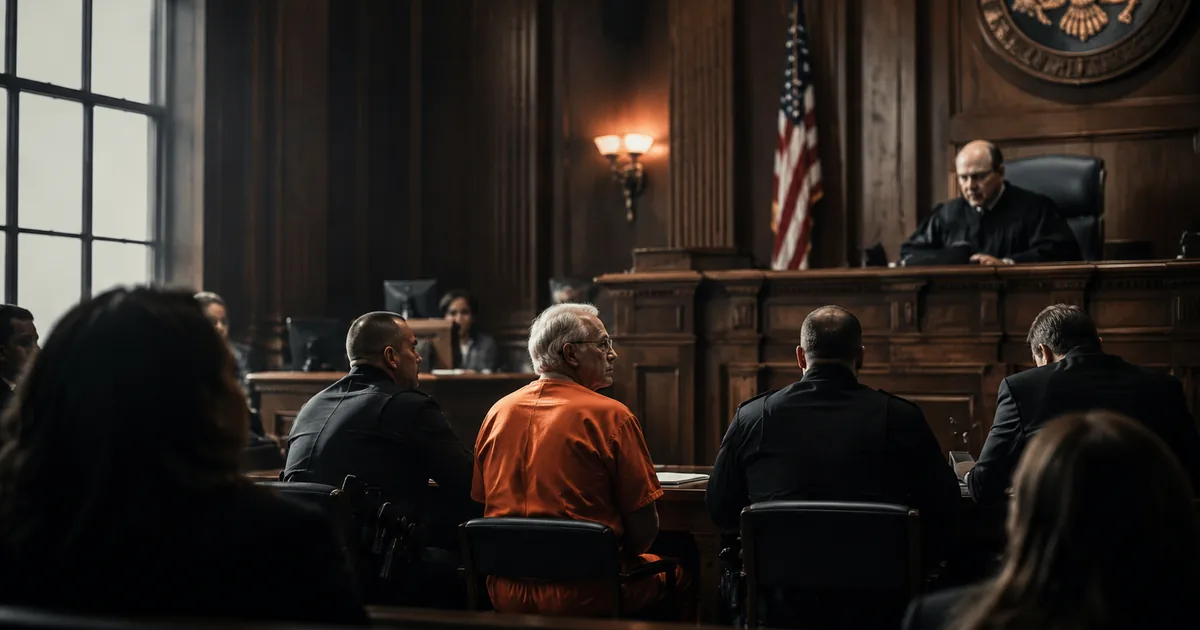
U.S. District Judge Brian Cogan handed down the mandatory life sentence at a hearing in federal court in Brooklyn, New York. On top of the prison term, Cogan ordered Zambada to forfeit $15 billion in financial penalties tied to the cartel’s decades of cocaine, fentanyl, and heroin trafficking. Prosecutors told the court they have yet to identify or recover any of those assets.
Zambada pleaded guilty in August 2025 to charges including racketeering conspiracy and continuing criminal enterprise after the Justice Department agreed not to seek the death penalty. The plea capped a prosecution that the DEA had pursued, in various forms, for more than two decades.
The judge ordered Zambada’s medical records sealed but disclosed that the aging kingpin suffers from “progressive illnesses” and that his mental state is “drifting toward cognitively impaired.” None of that moved the needle on the sentence. Under federal law, the charges carry a mandatory life term with no possibility of parole.
How El Mayo Finally Got Caught
What makes Zambada’s case extraordinary is not the sentence itself but the bizarre way he arrived in U.S. custody. For decades, Zambada was the cartel leader who never got caught. While his co-founder Joaquin “El Chapo” Guzman was captured, escaped, recaptured, and ultimately sentenced to life in 2019, Zambada operated in the shadows, running the cartel’s logistics with a quiet efficiency that made him arguably more dangerous than his flamboyant partner.
That changed in July 2024 when Zambada boarded a small plane alongside Joaquin Guzman Lopez, one of El Chapo’s sons, and landed at an airstrip in New Mexico where federal agents were waiting. Zambada has maintained since his arrest that he was kidnapped in Mexico and flown to the United States against his will, a claim the Guzman faction disputes.
The internal power struggle matters because it exposes the real mechanism at work. The U.S. did not track Zambada down after a decades-long manhunt. A rival faction within the Sinaloa Cartel, the sons of El Chapo known as “Los Chapitos,” appear to have handed him over, likely to curry favor with American prosecutors as their own legal exposure mounted. The Trump administration’s decision to designate cartels as terrorist organizations only sharpened the incentives: cooperate or face the full weight of a counterterrorism apparatus.
The Cartel Survives Its Founders
Zambada addressed the court before sentencing and, according to reporters present, denounced violence. The statement lands with a particular kind of hollowness. The Sinaloa Cartel under Zambada’s leadership was responsible for shipping what prosecutors described as millions of kilograms of cocaine into the United States over decades, along with heroin, methamphetamine, and the fentanyl that now kills more than 100,000 Americans annually.
The DEA’s administrator released a statement calling the sentencing “a landmark moment.” And in the narrow legal sense, it is. Zambada is the most high-profile Mexican drug lord sentenced in a U.S. court since El Chapo. But the operational question has always been whether decapitation works. El Chapo’s imprisonment did not slow the Sinaloa Cartel. It fractured it into warring factions that are now fighting each other across Mexico’s northwest, a civil war within the cartel that has killed hundreds in Sinaloa state since Zambada’s arrest.
The real lesson of the Zambada sentencing is structural. The U.S. can lock up cartel founders for life and order forfeiture judgments in the billions, but the trafficking infrastructure they built generates revenue that no single arrest can disrupt. Demand is the engine, and the engine is domestic. Until that changes, the next El Mayo is already running logistics somewhere that extradition papers cannot reach.
What Comes Next
The Guzman Lopez case remains active. Joaquin Guzman Lopez, who landed on that New Mexico airstrip alongside Zambada, faces his own federal charges and is reportedly cooperating with prosecutors. His brothers, Ovidio and Ivan Guzman, are also in U.S. custody awaiting trial. The Sinaloa Cartel’s founding generation is now almost entirely behind bars or dead, and the organization they built is tearing itself apart.
For Zambada, Sunday’s hearing was the final chapter. He will serve his sentence at a federal facility yet to be designated, likely a high-security medical unit given his declining health. The $15 billion forfeiture order will almost certainly go uncollected, a number that exists mainly to quantify the scale of what the Sinaloa Cartel moved through the global economy while its co-founder lived quietly in the mountains of Sinaloa, untouched, for half a century.