
President David Adeang stood at the United Nations General Assembly on Tuesday and told the room that the country the world has spent a century calling Nauru has a different name, and always did. “Say our name,” he said. “Naoero.” The wire copy moving around the story this morning treats it as a small, warm moment of heritage reclamation, and stops there.
What none of that coverage puts in the same paragraph is how this government currently pays its bills. Naoero is selling citizenship at a discounted $90,000 a passport through the end of December, and it is taking A$2.5 billion from Australia over thirty years to house people Australia has decided it does not want. The sovereignty being reclaimed at the podium is, at the same moment, being sold by the unit. That is not hypocrisy on the island’s part. It is the arithmetic the rest of the room handed it.
A Name the World Kept Because It Was Easier
The change itself is straightforward and overdue. As AP reported from the General Assembly floor, Adeang told delegates that “Nauru is how our name sounded to those who found it hard to say, and the world kept it,” and that it was never the name the island’s own people used among themselves. The international code moves from NRU to NRO. The people are dei-Naoero rather than Nauruan. Now-roo becomes Now-ero.
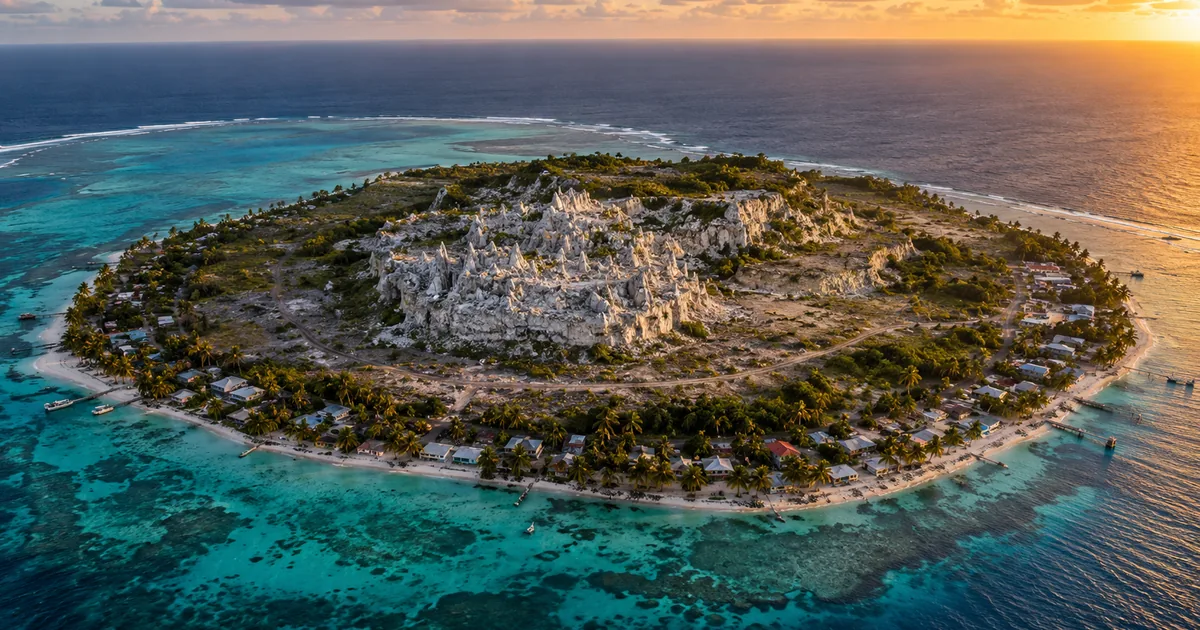
Eight square miles, roughly twelve thousand people, independent since 1968 after passing through German, Australian, British and New Zealand hands. The renaming was announced in August and signalled back in February, so Tuesday was the formal moment rather than the news itself.
Nauru is how our name sounded to those who found it hard to say, and the world kept it. But it is not the name our people used among themselves.
What the Applause Skips
Start with the ground. Roughly eighty percent of the island’s surface was strip-mined for phosphate, most of it shipped out to fertilize Australian and New Zealand farmland, leaving a moonscape of coral pinnacles that will not grow crops or hold buildings. The island bought its own mining rights back from Australia in 1970 for A$21 million and briefly had one of the highest per-capita incomes on earth. The Nauru Phosphate Royalties Trust that was supposed to outlive the phosphate peaked near A$1 billion and then was spent into nothing on property speculation and, memorably, a West End musical about Leonardo da Vinci. By 2000 the commercial mining was finished and so was the money.
So the island went looking for other things to sell, and what it had left was its legal personhood.
Australia signed a thirty-year agreement in September 2025 to send deportees there, reported at the time as a A$2.5 billion arrangement covering up to 354 people Canberra says have no right to remain. It comes with a A$400 million upfront endowment and A$70 million a year after that. RNZ covered the first transfers in October 2025, and the Refugee Council of Australia called it a dark new chapter in a policy the island has been absorbing the reputational cost of for more than a decade.
Running alongside it is the passport program. The standard contribution is $115,000, currently marked down to $90,000 through December 31, no residency required, visa-free or visa-on-arrival access to more than eighty-five destinations. The government’s target is five hundred applicants, which would raise something over AU$60 million, or roughly a fifth of all government revenue. The stated purpose is the Higher Ground Initiative, the plan to move the population off a flooding coastal strip onto the mined-out interior locally known as Topside.
Read that sequence again. The island’s habitable ring is going under water. The only place left to move to is the wasteland the fertilizer trade made. And the money to do the moving is coming from selling passports and renting out the right to hold other countries’ deportees.
Say the Name, Then Settle the Bill
Use the name. Naoero. It costs nothing and it is theirs, and a general assembly that can manage Eswatini, Türkiye and Czechia can manage this. LiveNewsChat’s position is that the easy part being easy is exactly the problem.
The states that will most enthusiastically adopt the new spelling are the ones that took the phosphate, and the one currently writing the cheques to keep a deportation problem eight thousand kilometres offshore. Naming rights are the cheapest form of respect available. A country that has to auction citizenship to fund relocating its own people uphill has not had its sovereignty restored to it, it has been handed the invoice for somebody else’s century, and told to be resourceful.
There is a version of this week where the applause means something, and it is not rhetorical. It looks like loss-and-damage climate finance that actually lands in a Pacific treasury instead of a pledge column, and it looks like Australia resettling the people it is currently paying to keep out of sight. Neither is on the General Assembly’s agenda. The renaming was, and it got a warm round of applause, because that is the item that does not cost anybody anything.
Adeang asked the world to say the name properly. Fine. Now watch who says it loudest, and check whether they have sent anything else.