
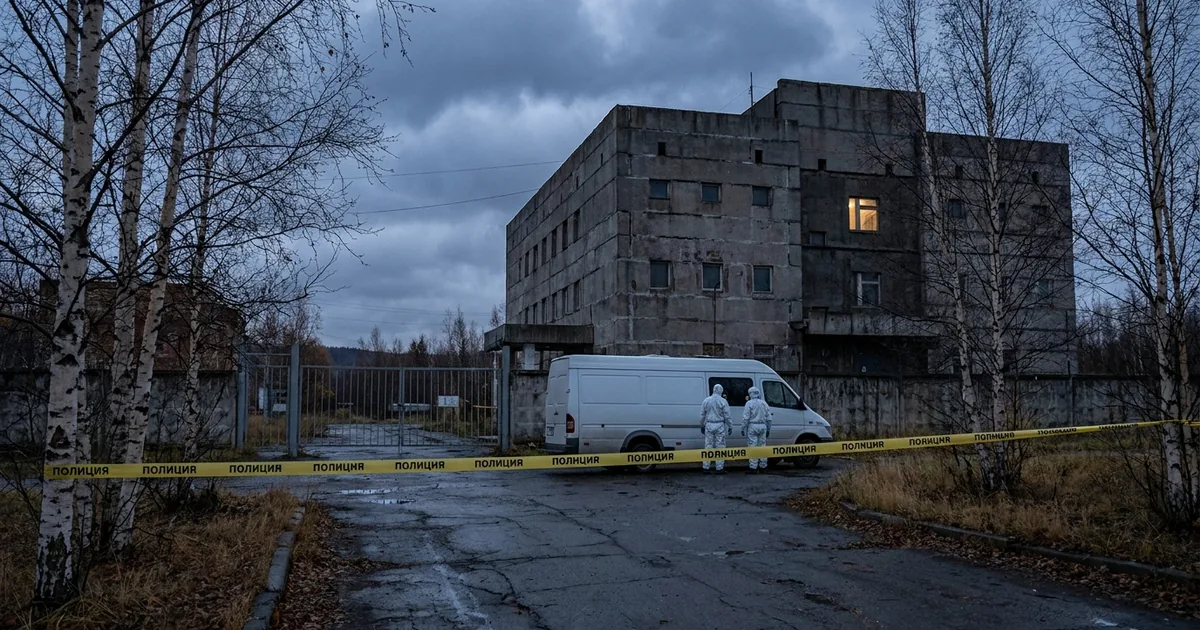
Officials say the cause was pneumonia of unknown origin. Everything they did afterward says otherwise.
A 28-year-old technician at the Irkutsk Anti-Plague Research Institute in Siberia died on October 2, and Russian authorities are calling it pneumonia of unknown origin while quarantining hospitals, masking factory floors and putting nearly 200 people under observation. That gap, between the official diagnosis and the official behavior, is the story, and it is the part the first wave of coverage mostly passed over.
The institute is in Shelekhov, next to Irkutsk, and its job is to hold dangerous pathogens, plague among them. NBC News reported that Russia’s consumer safety regulator described the death as “pneumonia of unknown etiology” and called the regional situation “stable.” Governor Igor Kobzev went further, saying no microorganisms linked to her professional duties were found in samples taken from her, according to the Kyiv Independent. That is a narrow statement. It says nothing about whether a test for plague was run, which test, or when.
What officials say
- The cause is pneumonia of unknown origin.
- No microorganisms tied to her work were detected in her samples.
- The sanitary and epidemiological situation is stable.
- The aluminum plant’s mask rule is routine seasonal-illness policy.
What regional reports say
- She broke a test tube holding the plague pathogen about a week before she died.
- She was hospitalized September 29 with severe pneumonia and died October 2.
- Four Irkutsk hospitals were closed for a three-week quarantine.
- A travel warning went up in Baykalsk and was deleted within two hours.
The Paper Trail Points One Way
Take the timeline the Kyiv Independent assembled. The Irkutsk Aluminum Plant’s director ordered masks on October 2, the day she died, and later described it as an ordinary response to seasonal illness. A pro-Kremlin broadcaster deleted Telegram posts that reported hospitalization numbers. The governor of neighboring Buryatia confirmed a plague death, then edited his post to say “possibly.”
None of that proves plague. A lab worker can die of ordinary pneumonia, and regional officials panic. A competing account relayed by KOMO has her admitted with pneumonic plague after a trip to Thailand, which would mean a very different incident. The broken-tube story itself comes from regional outlets and has not been confirmed by any official. So treat it as unconfirmed, because it is.
But we do not need to settle the cause to say what the response shows. Governments do not close four hospitals for three weeks over an illness they believe is routine, and they do not scrub posts about it. Either they know something, or they fear what the number of cases would imply. Both are a reason for the rest of the world to ask for the lab results.
The State Department said it is “closely monitoring the situation” and urged Russia to “share accurate information quickly and openly,” per NBC. Dr. Ashish Jha told the network that if this stays one case with no further deaths, “it will probably end there.” That is the right medical read. Pneumonic plague spreads person to person only through close contact, it responds to common antibiotics when caught early, and a 200-person contact list is manageable.
The right political read is harsher. The Soviet Union blamed the 1979 Sverdlovsk anthrax leak on tainted meat for years, and a facility that exists to study plague is exactly where outsiders cannot check the work. Moscow can end the speculation in a day by publishing the diagnostic result and stating whether Yersinia pestis was ruled in or out. If it does not, the silence becomes the answer, and the coming week, long enough for any infected contact to show symptoms, will show whether the observation list holds at 200 or grows.