
An enjoyable road trip across northern France works best when the sea crossing is treated as part of the journey rather than as an additional task.
Ferries from Dover sail regularly between Calais and Dunkirk throughout the year; Calais provides quick access to the Opal Coast and western Normandy areas. Ferry schedules show that the Dover to Calais crossing takes about 1 hour and 30 minutes, while Dover to Dunkirk usually requires 2 hours.
These crossings are for vehicles only, so you won’t be able to travel as a foot passenger. Before setting off, check that your passports, vehicle documents and insurance are up to date, and take a look at the latest Dover-France ferry schedules to find a crossing that suits your plans.
Set Your First French Base
After landing, most travellers choose Calais, Dunkirk or a village along the coast as their initial French base. Calais provides fast access to Cap Blanc Nez, Wissant and Cap Gris Nez. At the same time, Dunkirk caters to travellers interested in wider beaches, maritime history and an easy road south towards Saint Omer. A peaceful first night will help drivers adjust to right-side driving, French road signs and kilometre-based distances more quickly – for short trips Boulogne sur Mer or Calais may suffice. Meanwhile, for longer journeys, it’s important that parking, dinner options, as well as a simple road out in the morning can all make for successful travels!
Follow the Opal Coast
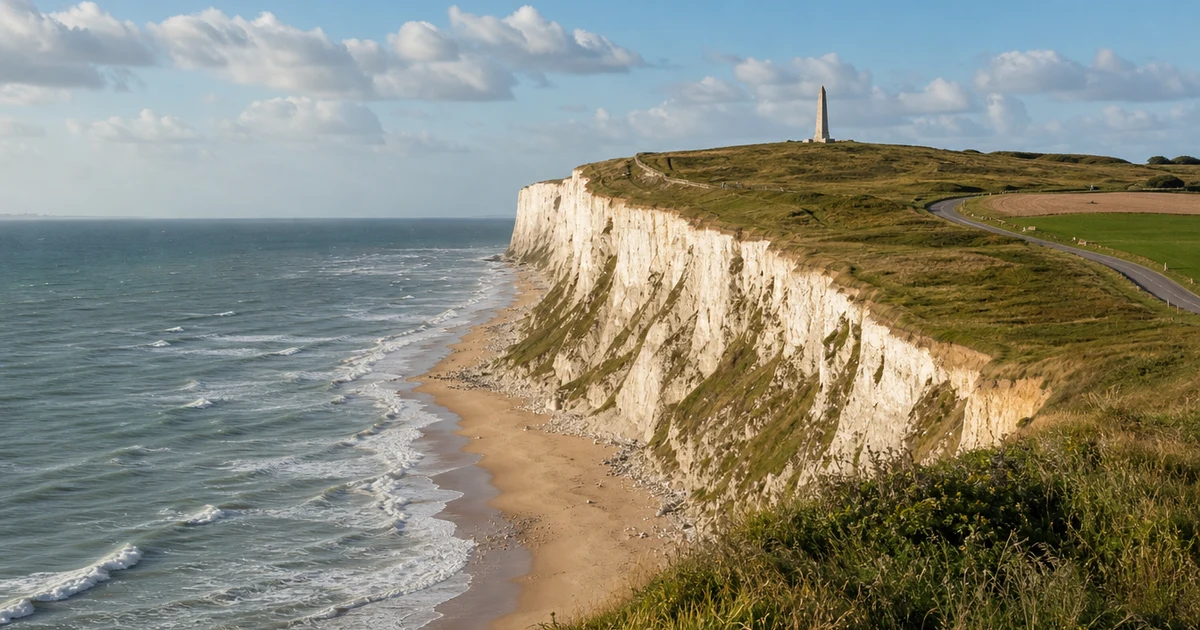
The Opal Coast provides the perfect opening scene for this journey, offering dunes, cliffs, beaches and fishing towns that allow for an unhurried start without long motorway drives. Cap Blanc Nez and Cap Gris Nez form the Two Capes area – protected coastal landscape with cliff walks and sea views that extends along this section of coast – Wissant is a good stopover between them for travellers seeking fresh air or small beach town atmosphere; Boulogne sur Mer offers old upper town, ramparts and harbour views which should not be rushed; rather short walks, safe parking spots and tide checks make this trip much better than racing between viewpoints!
Shape Your Route Around Time
An enjoyable Northern France road trip can last from two to seven days. A weekend can cover Calais, the Two Capes, Boulogne sur Mer and Saint-Omer; four days can get to the Bay of Somme and Amiens; while seven days allows you to explore Rouen, Etretat, and Honfleur. Once your route is set, daylight, meal times and rest stops should all play a role in your itinerary. Additionally, in summer, coastal car parks can fill quickly, so a morning start may make all the difference!
Add Somme Bay and Amiens as points of interest in your itinerary.
South of the Opal Coast lies the Bay of Somme with its open skies, marshland, birds, and soft light. Saint Valery sur Somme and Le Crotoy lie on opposite sides of this bay, making them great destinations for nature walks or boat trips, so drivers should plan a scenic loop to visit both. Further inland, Amiens makes an excellent overnight stop. Its stunning UNESCO-listed cathedral and charming canalside lanes offer a perfect cultural counterbalance to your coastal drive.
Rouen Is an Ideal Destination
Rouen makes for an excellent second stop because it feels distinct from the coast. With the River Seine and timber-framed streets running along it, as well as the cathedral and Gros Horloge clock providing its signature sense of place, and Joan of Arc having strong links with Rouen’s history, it feels rather immediate rather than distant. Drivers should treat Rouen like any urban stop instead of driving through town; parking on the edge and walking from there often works better than trying to locate space near major sights; travellers should check current low-emission zone rules prior to entering, as certain French clean air zones require Crit Air stickers in order to enter and arrive safely at their final destination.
Finish in Honfleur or on a Normandy Loop
Honfleur provides an ideal final stop before returning north, with its old harbour, narrow lanes, and rich art history making it one of the best-known coastal towns in Normandy. Travellers with more time may wish to add Deauville, Trouville or D Day coast; however a scenic road trip works better when each day has one main aim and one backup option; for instance if returning to Calais or Dunkirk the final day should include buffer time for fuel, traffic, border checks, ferry terminal or buffer time if returning via Calais/Dunkirk; while Northern France rewards slow travel; ensure your plan allows room for weather changes, local market days, and long, relaxed lunches.
Driving Tips for UK Tourists
UK drivers in France should be prepared for right-side driving, metric speed limits, and unfamiliar road signs. To ensure a smooth journey, keep these essentials in mind:
- Mandatory Safety Gear: Cars must carry warning triangles and reflective vests for extra visibility.
- Key Documents: Keep your valid driving licence, proof of insurance, and vehicle registration (or rental/leasing permission papers) close at hand.
- Toll Booths: Be ready for toll roads (péages). Have cash, a card, or an electronic tag ready, and slow down to select the correct lane.
- Local Currency: Keep small amounts of euros handy for rural areas or small car parks.
Final Planning Advice
A well-laid plan must be clear but flexible. Every day should include an outing on its own with time for parking, meals and weather changes – leaving enough time for ferry times, French driving rules, low emission zones, toll methods and local opening hours all to be checked prior to leaving port. Travellers should plan so the final night does not lie too far from Dover port – where Northern France boasts picturesque roads which allow travel through its beautiful cliffs, bays, Gothic streets, river towns and Normandy coast without feeling rushed or overwhelmed!