
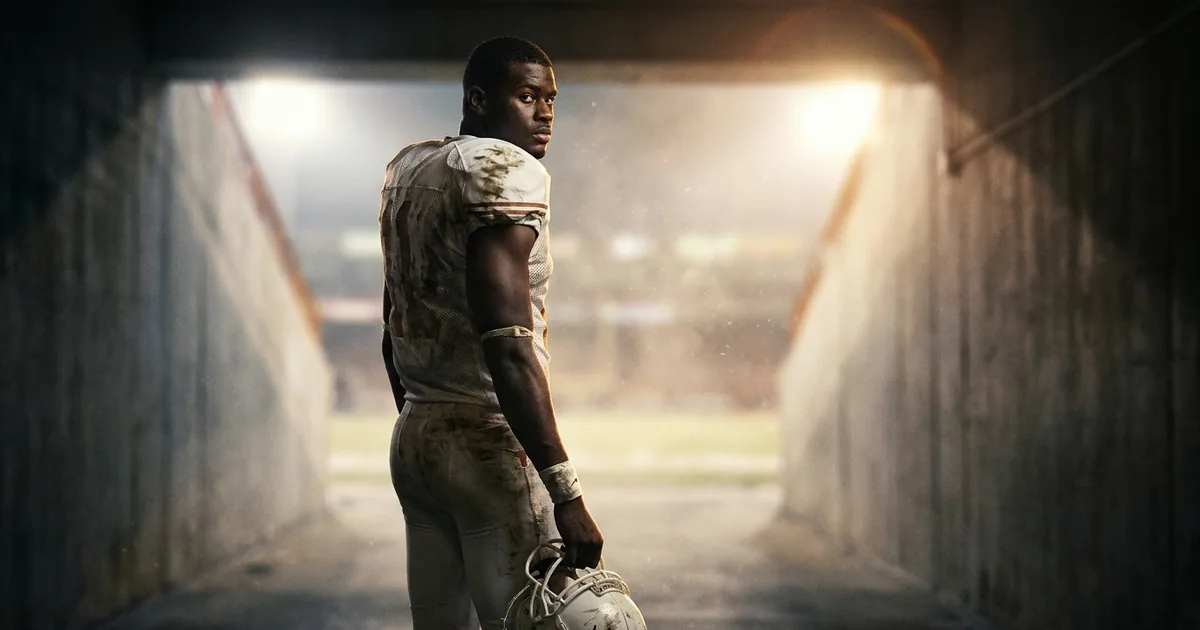
“Untold: The Testimony of Vince Young” landed on Netflix on Tuesday, a 78-minute film about a quarterback whose career has been explained by other people for two decades.
The title does a lot of work. Nobody calls a documentary a testimony unless somebody has already been on trial.
If you were watching football on January 4, 2006, you do not need the setup. Texas trailed USC by five with under half a minute left, faced fourth-and-5 from inside the Trojans’ 10, and Young took the snap out of the shotgun, drifted right, found nothing, and simply ran to the pylon. Nineteen seconds on the clock. Texas 41, USC 38, first national title in Austin since 1970. ESPN later ranked that performance the single greatest moment in college football history, and the numbers still look like a typo: 267 yards passing, 200 rushing, three touchdowns.
The Story Everyone Told About Him Started Before He Threw an NFL Pass
Three months after that game, something leaked out of the NFL Combine. Word went around that Young had scored a 6 on the Wonderlic, the 50-question, 12-minute quiz the league has long treated as a proxy for whether a quarterback can think. He reportedly retook it and put up a 16. Neither number was ever officially confirmed by anyone, which did not slow the story down for a second.
NPR was already asking in 2006 whether the test measured anything at all. Two decades later the league has quietly moved on from it. But the damage model is worth remembering, because it is the whole reason this film needed to exist. A confidential score gets leaked. It attaches to a young Black quarterback who had just played one of the great games in the sport’s history. And from that moment forward, every bad throw he made had a ready-made explanation waiting for it.
The Titans drafted him third overall anyway, and Texas marked the pick that April. He won Offensive Rookie of the Year. He made two Pro Bowls in five seasons in Tennessee. By any ordinary standard that is a good career. It was received as a disappointment, because the standard he was measured against was a January night in Pasadena that nobody was ever going to repeat, including him.
The Part That Is Not About Football
The film’s participant list is why it works. Mack Brown, who coached him at Texas. Jeff Fisher, who coached him in Tennessee and eventually could not coexist with him. Matt Leinart, the USC quarterback on the losing end of the Rose Bowl. That is not a friendly-voices lineup. Fisher in particular has a version of events that has never squared with Young’s, and putting both in the same 78 minutes is the closest thing a sports documentary has to a cross-examination.
And then there is Steve McNair. Netflix’s own writeup describes the moment that a young Young, having stormed out of practice and driven back to Houston ready to quit, got a phone call from McNair that turned him around. McNair was the veteran he was drafted to replace, and he became the person who kept him in the building.
McNair was murdered in July 2009. Young’s decline in Tennessee accelerated in the years right after. The film does not appear to draw a tidy causal line between those facts, and it should not, but you cannot watch a 24-year-old lose his only real anchor in a brutal workplace and then act surprised that the next few seasons went badly.
Twenty-Six Million Dollars and What It Bought
The other half of the Vince Young story is the money, and it is the part the internet has been cruelest about. He earned somewhere north of $26 million. By 2014 he had filed for Chapter 11 bankruptcy, with debts tracing back to a $1.8 million loan taken during the 2011 lockout. Sports Illustrated later reconstructed how the debt piled up: an advisor and a relative handling the accounts, a player who did not look closely, and a lockout that stopped the paychecks while the spending kept running.
That has been packaged for a decade as a punchline about a guy who could not manage a checkbook. It is more accurately a story about a 23-year-old handed generational money and pointed at the people who would manage it for him, in a league that runs financial-literacy seminars and then washes its hands.
The Houston Chronicle spoke with the film’s director about what drew him to the material, and the pitch is essentially that the received version was assembled by everyone except the subject. That is a fair read. It is also, to be clear, Young’s version, and a documentary built on a subject’s testimony is going to be generous to that subject. Watch it that way.
But there is something worth sitting with in the fact that it took twenty years and a streaming service for the most electric college football player most of us have ever seen to get an uninterrupted turn at the microphone. The Rose Bowl run needed no narration. Everything after it got nothing but.