
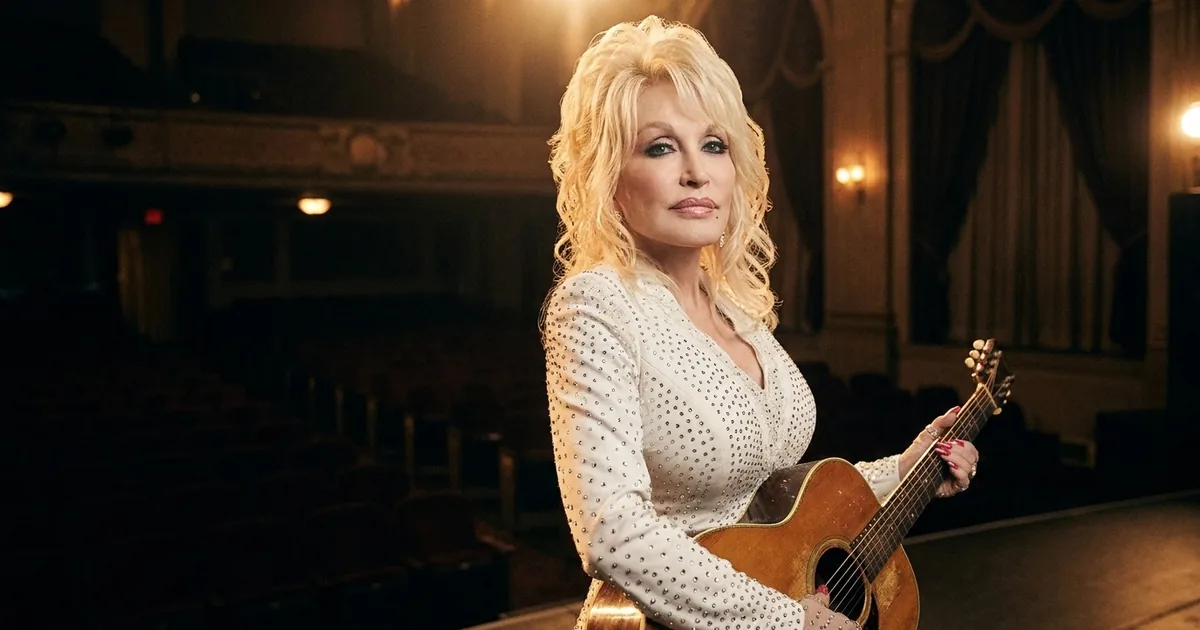
Dolly Parton died peacefully in Nashville on Tuesday at the age of 80, her family said, ending a life that carried her from a one room cabin in Sevier County, Tennessee to a song catalog she guarded for fifty years.
The obituaries running today lead with the rhinestones and with “Jolene,” and they are not wrong, but the decision that paid for everything else was a contract fight she won in her twenties against the most powerful manager in American music.
Her nephew Bryan Seaver announced the death in a video message posted to Instagram and did not give a cause. In the family statement that TODAY published Tuesday, her relatives called it “a rhinestone life that shone bright enough for the world to see,” and Seaver placed the grief with the living rather than with her. “Sadness lies with us, not with Dolly,” he said.
It was not entirely a surprise. Parton postponed a run of Las Vegas residency shows in September 2025, telling fans her doctors wanted her close to home in Tennessee for procedures, and NBC News reported she had missed the unveiling of a new Dollywood attraction earlier this month while dealing with health issues. She had said publicly that the decline set in while she was caring for her husband, Carl Dean, who died in March 2025. They married on Memorial Day 1966 and stayed married for nearly sixty years.
The Refusal That Paid for the Next Fifty Years
Parton wrote “I Will Always Love You” in 1974 as a goodbye to Porter Wagoner, the television host and duet partner whose show had made her famous and whose control she was leaving. It went to number one on the country chart. Then Elvis Presley wanted to record it.
What happened next is the most instructive story in her career, and she told it the same way for decades. Colonel Tom Parker, Presley’s manager, laid out the terms. In a 2006 CMT interview that American Songwriter has documented, Parton recalled his exact words: “Now, you know we have a rule that Elvis don’t record anything that we don’t take half the publishing.”
She was in her twenties. Nashville in 1974 ran on young songwriters signing away precisely that. She said no.
“Well, now it’s already been a hit,” she remembered telling him. “I wrote it and I’ve already published it, and this is the stuff I’m leaving for my family when I’m dead and gone.”
It cost her something real. “I wanted to hear Elvis sing it, and it broke my heart I cried all night,” she said years later. “But I had to keep that copyright in my pocket. You have to take care of your business.”
Eighteen years after that conversation, Whitney Houston recorded the song for The Bodyguard. Her version spent fourteen weeks at number one on the Billboard Hot 100 and became one of the best selling singles ever released. The songwriting and publishing money ran to the woman who had refused to split it.
That is the structural fact sitting underneath the theme park, the book charity, and the folksy public warmth that made her the rare American figure with no real enemies. Parton did not get rich because she was beloved. She got rich because she owned things other people wanted and declined, repeatedly and at genuine personal cost, to sell them cheap.
“These are my songs. They’re like my children. And I expect them to support me when I’m old.”
She Was Never the Character She Played
The persona did enormous work, and it was built to. Parton spent sixty years being underestimated by people who read the wigs, the accent, and the jokes she made about her own figure as evidence that she was not paying attention to the terms of the deal. She said the quiet part out loud so often that it stopped registering as strategy: “I’m not offended by dumb blonde jokes because I know I’m not dumb. I also know I’m not blonde.”
Underneath it she ran a company. She kept her catalog, built Dolly Parton Enterprises around it, licensed her name narrowly, and arranged to be the operating partner in her ventures rather than the talent hired into them. The version of her that circulated in public, giggling and deflecting, was the most profitable piece of misdirection in American entertainment, and she wrote it herself.
What the Copyright Actually Bought
Parton opened Dollywood in 1986 in Sevier County, the eastern Tennessee county where she grew up as one of twelve children in a family that had close to nothing. The park became a year round economic engine for a place that had been poor when she left it, which is the part she pressed hardest in interviews.
In 1995 she started the Imagination Library, which mails a free book every month to every enrolled child from birth to age five. She founded it as a tribute to her father, who could not read. It had given away more than 150 million books by 2020 and now reaches roughly three million children a month. During the pandemic she quietly put $1 million toward the research that produced the Moderna coronavirus vaccine.
Her family has asked that donations go to the Imagination Library in lieu of flowers.
She Was Still Making Deals Three Days Ago
Three days ago we reported that Parton was still greenlighting projects from home: a digital avatar, a museum, a Broadway show, all moving forward while her doctor kept her in Tennessee. That detail is worth sitting with. She was eighty, unwell, and still structuring deals.
The tributes started within minutes of Seaver’s video. “This really really hurts,” Kacey Musgraves wrote. CNN led with the word humanitarian alongside the word queen, which lands closer to the truth than the country-legend framing most outlets reached for first.
What happens now to the catalog is a real question, and so is what happens to a book charity that has run for thirty one years on the reputation and the checkbook of one person. Parton spent her entire career making sure those songs would outlast her and take care of the people she left behind. She was explicit about that in 1974, and she turned out to be right about all of it except how long she was going to need them.