
A missile struck the domestic terminals of King Khalid International Airport in Riyadh on Saturday afternoon, and when President Donald Trump was asked outside the White House whether the United States would join Saudi Arabia’s strikes on Yemen’s Houthis, he answered, “We may. We’re going to look at it.”
What is established so far, and how firmly:
- The missile hit the complex that houses terminals 3 and 4, which handle domestic flights. It was the third attack on the airport in a week.
- Twelve people are dead and dozens wounded, on the word of three people briefed on the strike, two of them Western officials, who told Reuters the count was not final. Hours earlier a Riyadh hospital source had confirmed two deaths: an Egyptian flight attendant and a Palestinian traveling on Egyptian documents.
- Saudi Arabia’s aviation authority at first reported only “a number of injuries.” Iran International later quoted the authority as saying 12 people were killed and 309 injured. We have not seen the 309 matched anywhere else.
- Nobody has claimed it. The Houthis did claim the two earlier strikes on the airport this week, which killed four people.
- Trump’s full answer: “We just found out about the recent attack. So we’ll make a decision. We move very quickly.”
Every account of that exchange we read treats it as a president meeting a new question. He has met it before. Twenty days ago he had the answer loaded onto aircraft.
Twenty Days Ago the Bombs Were Already Loaded
On Thursday, September 17, Saudi Crown Prince Mohammed bin Salman called Trump. One day earlier, Trump had told his advisers he did not favor strikes on the Houthis. After the call he told the Pentagon to prepare them. By Sunday, September 20, commanders had approved target lists and bombs were going onto American warplanes when he held off. That sequence is New York Times reporting, sourced to people briefed on the operation and laid out by Stars and Stripes the following day. The reporting gives no reason for the reversal. What Trump had told Fox News was that Washington was in constant contact with the Houthis, who had promised not to attack the United States.
So “we’re going to look at it” describes a file that is already open. Two days before Saturday’s missile, Time summed up his position: he “has thus far declined requests for direct U.S. strikes against the Houthis” and has supplied intelligence instead. Even that undersells the American role. Officials have told the Associated Press that U.S. help covers intelligence sharing, target identification and planning for the offensive the Saudi-led coalition opened a week ago, the one these airport strikes have followed. The United States is already helping choose what gets hit in Yemen. “We may” is about whose jets carry the bombs.
Why the Missiles Keep Getting Through
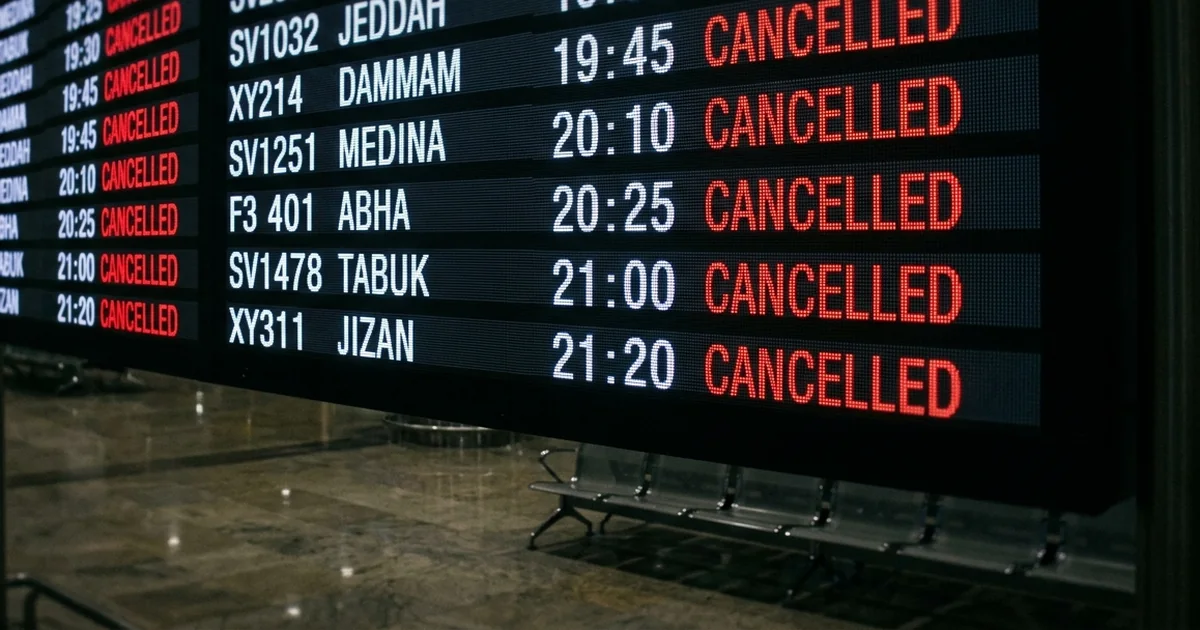
Start with the number that explains the others. Saudi Arabia is running low on missile interceptors and has asked France, Britain, Pakistan and Egypt to send air defenses, and one of the regional officials who disclosed that last month added that the American stockpile has shrunk during the war with Iran. Saturday’s missile arrived with no alert from the kingdom’s warning system. At least 291 flights at the airport were canceled in 24 hours, and the Houthis have told airlines “for the last time” to stay out of Saudi airspace. Add Saturday’s 12 to the four killed earlier in the week and one airport has lost 16 people in seven days.
A capital whose shield is thinning went to four governments for cover, and the ally with the deepest magazine has been emptying it over Iran. The Houthi promise Trump described to Fox News covers Americans. Twelve people in a domestic terminal died outside its terms.
We think “we move very quickly” is the most alarming thing he said on Saturday. Quickly, in September, meant ordering strikes one day after telling his advisers he opposed them, then shelving them three days later with the bombs already on the aircraft. The Houthis absorbed more than 50 days of American bombardment in the spring of 2025 and came out of it with a ceasefire, and the same force now reaches the busiest airport in Saudi Arabia three times in a week. That record argues for a debate before a second war, and for a vote. The midterms are 24 days off, the war with Iran is still running, and Trump’s answer on Saturday did not contain the word Congress. A president who orders airstrikes after one phone call and calls them off the same weekend should not be the only person in the room when the order comes up again.
Three things will show which way this goes: whether Riyadh publishes a toll under its own name, whether the Houthis claim the strike, and whether the target lists approved on September 20 come back out before anyone on Capitol Hill is asked.