
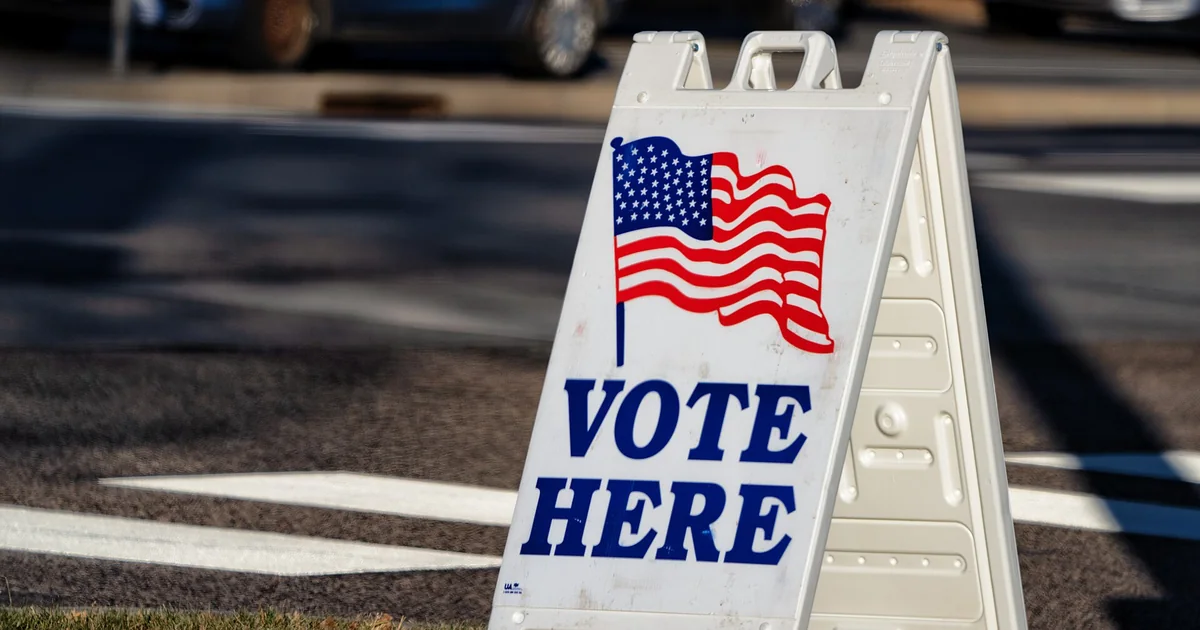
In Marion County, Indiana, the clerk says a Justice Department monitor has to stay 50 feet from the door of a polling place, and that line will decide what the department sees today.
- The department is sending about 1,000 monitors to all 50 states, a record: 3.5 times the 289 of the 2022 midterms and 1.4 times the 714 of 2024 (1,000 divided by 289 is 3.46, and by 714 is 1.40).
- Federal law does give some people a right to walk into a polling place, and the word it uses is “observers.” The Office of Personnel Management assigns them, only where a court has authorized observers or the Attorney General has certified a jurisdiction, and they may “enter and attend at any place for holding an election.” We searched the text of 52 U.S.C. § 10305: “observer” or “observers” appears seven times, and “monitor” never.
- A department declaration filed in the NAACP’s lawsuit says the monitors include employees of the Bureau of Prisons, the DEA and the ATF. FBI and ICE employees are not among them, and none will carry a firearm.
- A federal judge declined late Monday to bar the department from using law-enforcement employees as monitors, finding the NAACP had not shown enough evidence of intimidation.
- The department has said it will publish its full list of counties on Election Day. It has not yet.
The Statute Has a Word for Them, and It Is Not “Monitor”
“Monitor” sounds like a federal power. It is a job title. Congress wrote a power of entry for observers and attached conditions to it, and a monitor outside that framework has what a poll watcher has, which is whatever the state allows.
Pennsylvania’s Department of State put it in plain terms: Justice Department monitors “are not legally entitled to any greater access to polling places than members of the general public.” Michigan’s attorney general’s office said federal law “does not expressly provide for Justice Department monitors,” and the state treats them like poll watchers, who cannot talk to voters, touch ballots or equipment, or interfere with election administration.
The observer program, the version with a real right of entry, is largely diminished, as of August.
What the States Have Said So Far
Indiana’s election agency says state law “does not give federal monitors access to enter any voting location,” so the dozen or so monitors assigned to each of Marion and Lake counties stay outside. Indiana’s Republican attorney general, Todd Rokita, welcomed the deployment anyway.
Kentucky’s Jefferson and Fayette counties have barred monitors from polling places, and Jefferson’s clerk said routine federal monitoring inside is not authorized under state law without other legal authority. The Republican secretary of state, Michael Adams, said the monitors agreed not to communicate with voters inside voting locations, which suggests that where they do go in, it is by agreement and not by right. In Washington County, Arkansas, the election commission voted 3-0 to deny access, leaving monitors outside a 100-foot boundary.
Pennsylvania received a letter on Oct. 22 naming Philadelphia, Allegheny, Luzerne and Lehigh counties. The monitors will wear business casual with no Justice Department identification, will be unarmed, and are told to call a team lead and not speak to voters. Michigan has banned no one, and Attorney General Dana Nessel and Gov. Gretchen Whitmer called monitors a standard or expected part of the process.
That is a patchwork of permissions. It is not a federal inspectorate.
Prison and DEA Staff Fill a Division That Has Emptied
More than 70 percent of the Civil Rights Division’s career staff had taken early retirement or resigned as of August, and the department had not said how it would reach 1,000 monitors beyond asking federal employees to volunteer. Our inference: a headcount 3.5 times the 2022 level is unlikely to come from a division that has lost most of its career lawyers, so a large share had to come from elsewhere in the government. The declaration says where.
The NAACP’s complaint, filed Oct. 16, makes the legal case more bluntly than the department’s lawyers would like:
There is no federal statute that gives Defendants the authority to turn polling places into interrogation rooms.
Our reading of the observer statute supports the narrow version of that claim, since it creates entry rights for observers and says nothing about monitors. The department’s answer in court was that the Voting Rights Act’s intimidation provision does not apply to the federal government at all. That argument goes to whether the statute reaches the government, a separate question from whether voters will feel intimidated.
What We Think
Whatever the department intends, a record number of federal employees, drawn in part from the agencies that run prisons and make arrests, are being posted at polling places in a year when, by August, the Civil Rights Division had filed 31 suits for states’ unredacted voter files and won none. It arrives a day after the Supreme Court refused to let the department set aside California ballots, and days after a judge barred it from threatening election workers nationwide. We think voters will read that pattern as a message.
The judge’s ruling was about evidence, made the night before polls opened. It was not a finding that voters will not feel it. We think the department should publish where each monitor is and under what authority, now and not at closing time, and that every state election office should do what Pennsylvania did and put in writing what a monitor may and may not do.
How to Read the List When It Comes Out
The department’s stated enforcement targets include racial discrimination, intimidation and language access. Test the list against that. Counties with a record of language-access or discrimination complaints fit the stated purpose, and Philadelphia’s city commissioner, Omar Sabir, said monitors came in 2024 to check language access. Counties that match the department’s voter-roll lawsuits fit something else.
Voters who see a problem can call the nonpartisan Election Protection hotline at 866-OUR-VOTE (866-687-8683) or their state election office. The number everyone is quoting is 1,000. The number that matters is how many of them are allowed through the door.
Photo: Tony Webster, via Wikimedia Commons, CC BY 2.0.