
The claim. Donald Trump signed an executive order on March 31 directing the Postal Service to refuse mail ballots from voters not on a federal list, after promising to “lead a movement to get rid of MAIL-IN BALLOTS.”
The fact. On October 3 the first American pope requested an Illinois mail ballot from his residence in Vatican City. On Friday the Holy See said he has sent it back.
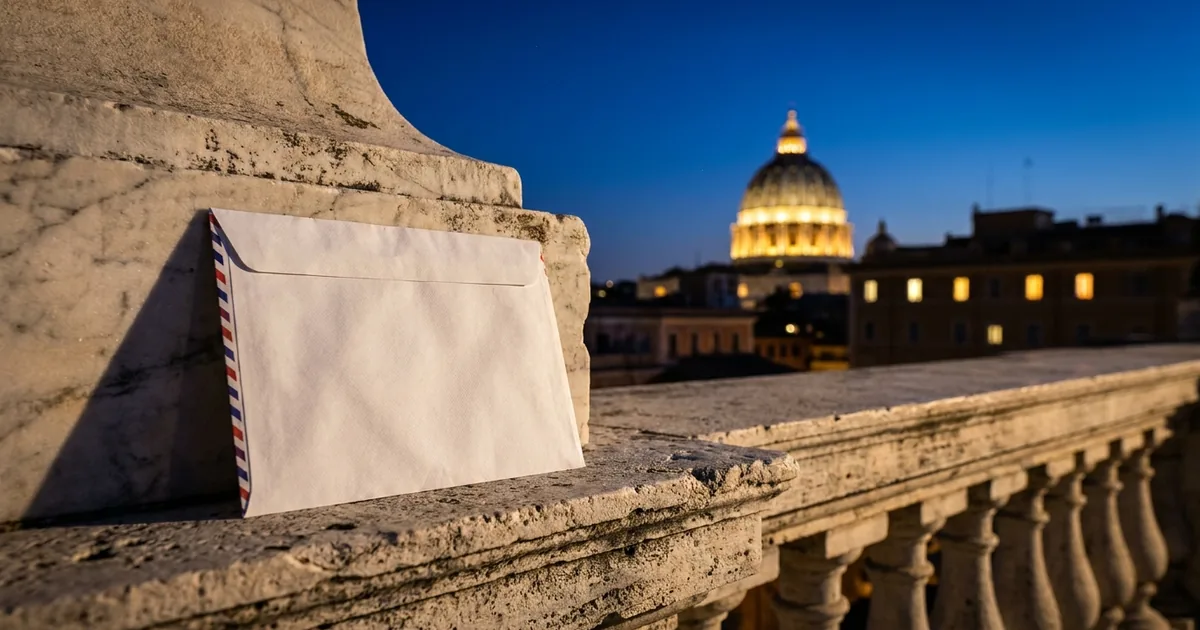
Pope Leo XIV has voted in the midterms, by mail, from Rome. The Holy See confirmed Friday that he submitted his Illinois ballot, which makes him the first pope to vote in a United States election and, for this one week, the most famous overseas mail voter in a country whose president has spent 2026 trying to make that exact ballot harder to cast and easier to throw out.
The coverage has treated it as a charming first. It is also a test case. Set the dates of the pope’s ballot against the dates of the administration’s campaign on mail voting and the two lines run straight through each other.
| Date | What happened |
|---|---|
| March 31 | Trump signs an order telling the Postal Service to block mail ballots from anyone not on a new federal voter list |
| June 29 | The Supreme Court, 5-4, rejects the RNC’s bid to kill grace periods for ballots mailed by Election Day; Illinois keeps its 14 days |
| September 14 | The Supreme Court blocks the Postal Service rule for November, with only Alito and Thomas dissenting |
| October 3 | Robert Francis Prevost, registered at a New Lenox address, asks the Will County clerk for a vote-by-mail ballot from Vatican City |
| October 26 | Trump offers $1 million for tips on voter fraud “in the past Elections, or the upcoming 2026 Midterm Election” |
| October 29 | A federal judge refuses the Justice Department’s demand to set aside 20,000 California mail ballots |
| October 30 | The Holy See says the pope has voted; Will County had not yet logged the envelope the day before |
The paper trail is thin and specific. Kim Fladhammer, chief of staff at the Will County clerk’s office, said that “Robert Francis Prevost is on the list of individuals who requested a vote by mail ballot for the upcoming election,” that the request came on October 3, and that as of Thursday the office had not received a completed ballot. The envelope has to travel from Vatican City to Joliet. The Holy See’s statement says he “has exercised his right to vote as a United States citizen, whenever he was eligible to do so,” including while he lived in Peru, and that he “expresses his belief in the right and the duty of citizens to participate in democratic processes.”
Illinois records show general-election votes in 2012, 2014, 2018 and 2024, Republican primary ballots in 2012, 2014 and 2016, Democratic ones in 2008 and 2010, and no vote in this year’s March primary. Nobody outside the envelope knows how he voted. Gov. JB Pritzker’s reaction was the only one that mattered politically: “If the Pope can vote all the way from Vatican City, you can too!”
What Happens to the Envelope Now
Here is where the dates stop being trivia. If the ballot was postmarked by November 3 and reaches Joliet within 14 days, Illinois counts it. That grace period exists in November only because the Republican National Committee lost Watson v. RNC in June, a case it brought to stop states from counting exactly this kind of late-arriving ballot. The Postal Service barcode scheme Trump ordered in March, which would have let the agency reject an entire mailing after one failed check, is frozen because the Supreme Court said the government was “unlikely to succeed on the merits.” And the Justice Department spent this week in a California courtroom asking a judge to quarantine 20,000 mail ballots it called suspect, a request the judge turned down.
The president is “not a big fan of Pope Leo,” as he put it in April after Leo opposed the Iran war. We think the vote matters more than the feud. Every argument the administration has made this year against mail ballots, that they are unverifiable, that overseas envelopes are a fraud vector, that a late arrival is a stolen vote, now has a face attached to it, and it belongs to the most scrutinized Catholic on earth, voting from the most famous foreign address in the world, through the ordinary Illinois system Trump’s lawyers have been trying to dismantle. If his envelope arrives on November 6 and is counted, it is counted under rules the RNC asked the Supreme Court to strike. The administration cannot say that ballot is illegitimate without saying the pope’s is.
Watch the Will County clerk’s received-ballot list next week. The date stamped on that envelope will say more about the mail-voting fight than anything Trump posts about it.