
Pennsylvania’s health department confirmed on Tuesday that two Lancaster County residents have died of measles, the state’s first deaths from the disease in 35 years and the first anywhere in the United States this year.
Both were unvaccinated, which is the detail that moves this out of the category of tragedy and into the category of policy outcome.
The Pennsylvania Department of Health said in its announcement that it would not release identifying details about either person, including their ages. What the department did release is the shape of the outbreak around them: 393 confirmed measles cases across 28 counties so far in 2026, with children making up roughly a third of the patients, and Lancaster County sitting at the center of it. Not one of those 393 patients was fully vaccinated.
The Last Time Pennsylvania Buried a Measles Patient, Ronald Reagan Had Just Left Office
Thirty-five years is a long enough gap that most working physicians in the Commonwealth have never seen a measles death. The state’s previous fatalities trace back to the 1990 and 1991 Philadelphia outbreak, an event severe enough that it still functions as the historical marker every Pennsylvania health official reaches for. The disease did not get less dangerous in the intervening decades. The vaccination rate simply got high enough that the danger stopped being visible, and a hazard you cannot see is a hazard people stop budgeting for.
Debra Bogen, the state’s Secretary of Health, put the problem plainly in the department’s statement.
Because measles was largely eliminated in the Commonwealth for more than three decades, people are not familiar with this disease and don’t fully understand the potential severity of the illness.
That is a precise description of how public health defeats itself. Two doses of the MMR vaccine confer 97% lifetime protection, a number so good that it eventually erases the memory of what it is protecting against. The parents making vaccination decisions in Lancaster County this year have no lived reference for a measles death, because the vaccine worked on their parents.
393 Cases in a State That Logged 16 Last Year
The scale of the jump is the story that the death toll obscures. Pennsylvania recorded 16 measles cases in all of 2025. It is at 393 and counting in 2026, which is a twenty-fourfold increase in a single year and enough to make Pennsylvania the third-worst state in the country by case count, behind only Utah and South Carolina. The Philadelphia Inquirer reported that neighboring Delaware has logged 22 cases, its first in a decade.
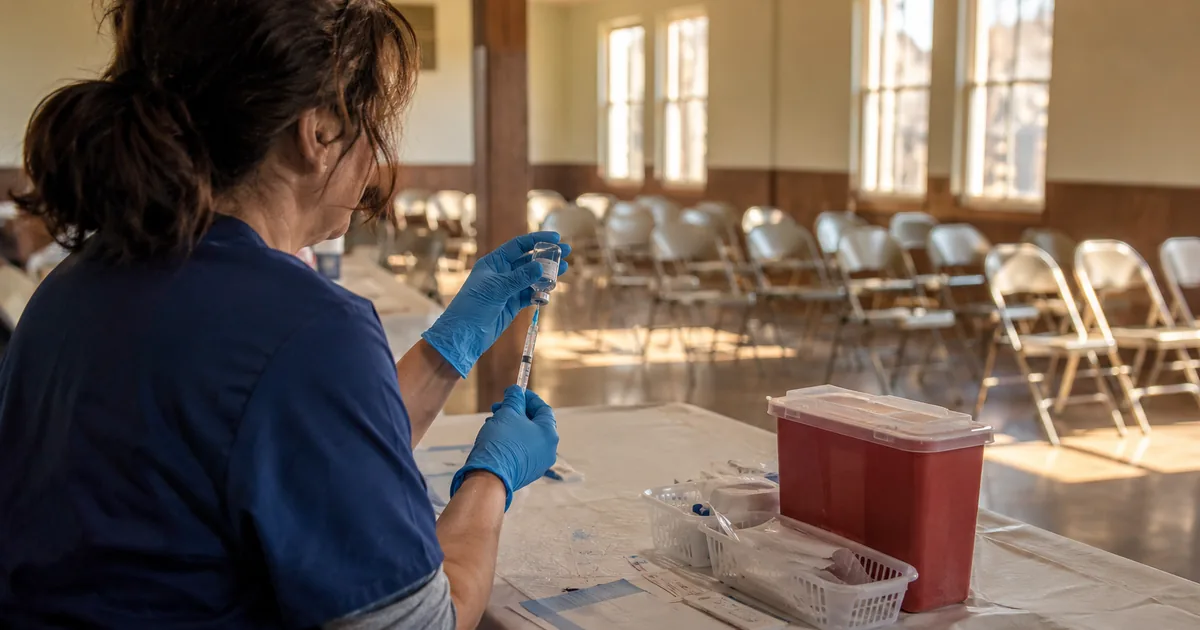
An outbreak that grows twentyfold does not do so quietly, and it did not do so here. Local and state officials have been running pop-up vaccination clinics across the Lancaster and Lebanon region since the cluster there was first identified in late April, and the health department has recommended that physicians in affected areas start vaccinating infants early, at six months rather than the standard twelve. Those are the moves of an agency that saw this coming. They were not enough, and the reason they were not enough is that a vaccination campaign launched during an outbreak is competing against the outbreak’s own transmission speed.
Elimination Was Never a Trophy. It Is a Maintenance Contract.
Here is the part of this story that will outlive the news cycle. The United States declared measles eliminated in 2000, and “eliminated” is a technical term with a technical test: no continuous domestic transmission for twelve months or more. The country has now had confirmed measles cases every single week since January 2025. That is roughly twenty consecutive months of transmission, which is not a near miss on the standard. It is a failure of it, twice over.
The bureaucratic consequence is already in motion. A national verification committee reviewed the CDC’s measles data in mid-August and forwarded its assessment to the Pan American Health Organization, whose Regional Verification Commission is expected to rule in November on whether the United States still qualifies as having eliminated the disease. Writing in STAT, the epidemiologists who sit on these panels laid out what they would be looking for, and the honest read of their criteria is that the answer is close to foreordained.
The national numbers are not ambiguous either. CDC had confirmed 2,465 cases as of August 6, already past the 2,289 logged in all of 2025, which itself was the worst year since 1991 when CNN reported it in July. Ninety-three percent of this year’s patients were unvaccinated or had unknown vaccination status. Seven percent were hospitalized. Three Americans died of measles in 2025. The two in Lancaster County are the first of 2026, and August is not over.
Washington Spent This Outbreak Arguing About Who Was Responsible
The federal posture through all of this has been the wobbliest variable in the equation. Health and Human Services Secretary Robert F. Kennedy Jr. gave what was widely read as his clearest endorsement of the measles vaccine on August 2, telling CNN’s Dana Bash on State of the Union that parents should get their children vaccinated and that he has never questioned the MMR vaccine’s efficacy. In the same interview, which CNN’s own political desk characterized as a vehicle for medical misinformation, he answered “absolutely not” when Bash asked whether he accepts any responsibility for the country’s rising case count.
Three weeks later, two people are dead in a state that had not lost anyone to measles since 1991.
Blame is the wrong frame, though, and it is the frame Washington keeps choosing because it is the one that resolves into a cable segment. The more useful question is what the federal government was doing with the levers it actually controls. It spent this year revisiting the childhood immunization schedule by executive order, a review LNC covered when the administration’s own health officials could not produce evidence supporting the change, and it spent the year before cutting the CDC’s outbreak-response capacity, which we tracked across the cyclospora, screwworm and Ebola responses. An HHS secretary saying the right thing on a Sunday show in August does not undo a vaccination rate that was shaped by eighteen months of the department’s own signaling.
Elimination status is not a plaque on a wall. It is the accumulated result of a few million routine decisions made in pediatricians’ offices, and those decisions respond to what people believe about risk. Two families in Lancaster County are now carrying the cost of a shift in that belief, and in November a commission in Washington will formally record what the rest of the country lost along with them.